A scoreless half in Arlington and the quiet case for taking the slow game seriously
Argentina and Austria went into the break goalless in Arlington on 22 June 2026, and a half of near-misses said more about the tournament's emerging shape than any highlight reel could.
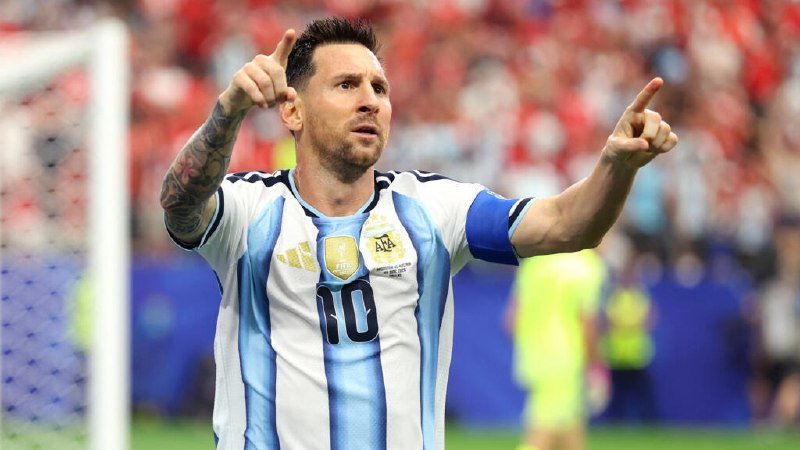
Arlington, Texas — At 17:10 UTC on 22 June 2026, the live ticker for the Argentina–Austria group-stage fixture at the FIFA World Cup recorded a familiar image: Lionel Messi driving forward, the finish off target. By 17:35 UTC, twenty-five minutes later, the board still read 0–0, with Austria preparing a free kick in the Argentine half after Sabitzer had again been denied at the other end. A half of football, told in twelve-yard increments, became a small case study in how the modern World Cup actually decides who survives the group.
The opening forty-five minutes were not uneventful. They were, in the understated sense that often defines this stage of the tournament, instructive. Argentina carried the weight of expectation; Austria carried the discipline of a side that knows precisely what it is. The scoreline at the interval was the honest ledger of that exchange.
What the half actually showed
Argentina's threat was almost entirely concentrated in two channels: Messi's wandering runs from the right half-space and Thiago Almada's vertical passing between the lines. Almada's evening was effectively over by 17:04 UTC, when the offside flag went up against him in Arlington, the first of several Argentine moments strangled at source. Two of Messi's three efforts in the period — at 17:10 UTC and again at 17:20 UTC, when his finish was saved — travelled in the right direction but not the right shape. The pattern is familiar: possession without penetration, territory without territory converted into shots that trouble the goalkeeper.
Austria, for its part, did the unglamomatic work well. Marcel Sabitzer's two attempts on goal — at 17:16 UTC and 17:24 UTC — were both off target, but they were also both arrived at: the team was getting into the right areas, and at the corners Sabitzer stood over the ball at 17:30 UTC with the posture of a side that had decided, before the match, that this was going to be a 0–0 it could live with and a 1–0 it could win. The free kick at 17:35 UTC, in the Argentine half, was the punctuation mark.
Why the wire read it the way it did
The minute-by-minute services that fed the world this half had a single, consistent register: chance created, chance missed. That framing is accurate, but it flattens the second-order story. A team can spend a half creating chances and still be losing the deeper match; a team can create almost nothing and still be dictating the terms. Argentina had the ball. Austria had the shape. On a neutral pitch that distinction is, more often than not, decisive.
This is the quiet bias in World Cup coverage: we narrate the tournament through the highlight reel, and the highlight reel rewards the side that attempts the spectacular. Austria did not attempt the spectacular. It attempted to be difficult to play through, and on the evidence of the first half it succeeded.
The structural frame, in plain prose
Group-stage football at a World Cup is, increasingly, a game about restraint. The teams that arrive in North America with a fully developed plan to either press high or sit deep — and to do one of those things for ninety minutes without deviation — are the ones that survive the round of sixteen. Argentina's problem in Arlington was not a lack of talent; it was a question of tempo. When the world champion is the favourite, the opposition's plan is to slow the game down to a tempo at which the favourite's advantage compresses. Austria's two off-target Sabitzer efforts, and the spate of throw-ins and free kicks in the Austrian half, are the visible residue of that compression.
There is a wider parallel in international sport that the football desk rarely draws. The incumbent order — the side that has the trophies, the brand, the players at the elite clubs — tends to play to a tempo. The challenger order plays to a different one. When the two meet, the game is decided less by individual brilliance than by which tempo holds. Arlington, at 17:35 UTC, was an early round of that contest, and the score was genuinely 0–0.
What the second half will tell us
Argentina, on the evidence of forty-five minutes, needs two things in the second period: a channel of attack that does not run through Messi's right foot, and a defensive shape that does not concede the first set piece in a dangerous area. The Austrian free kick at 17:35 UTC was a small warning shot — the kind of moment that decides these matches when they are otherwise deadlocked. Austria, by contrast, needs only to keep doing what it has been doing. Its discipline, more than its creativity, was the point of the first half.
The wider stakes are modest but real. A win for Argentina settles the group and confirms the pre-tournament consensus; a draw keeps things interesting and lengthens Argentina's path through the bracket; a win for Austria reshuffles the entire pool and signals that this World Cup's middle tier is wider than the bookmakers expected. None of those outcomes would be a surprise. All of them remain possible at the interval.
What remains uncertain
The sources available to Monexus at the time of writing cover the first half only — the live updates from the wire that concluded with the Austrian free kick at 17:35 UTC. The score at half-time is therefore reported here as a 0–0 draw on the basis of those minute-by-minute updates rather than from a confirmed official line, and the second-half pattern, including any goals, substitutions, or tactical changes, lies outside the present source set. Readers looking for the final scoreline and the group-table consequences should consult the post-match wire.
This piece was written from the live wire only. Where the half was ambiguous, Monexus has said so; where it was legible, Monexus has said that too. The instinct, in a tournament this size, is to reach for the narrative before the ball is in the back of the net. The half in Arlington was a useful reminder that sometimes the honest story is the one that is still being played.
Wire provenance
This editorial synthesis draws on the following public wire/social posts:
- https://t.me/telesurenglish
- https://en.wikipedia.org/wiki/2026_FIFA_World_Cup
- https://en.wikipedia.org/wiki/Argentina_at_the_2026_FIFA_World_Cup