Ben-Gvir's 'all of Lebanon' remark and the cabinet problem Israel can't keep ignoring
A sitting Israeli minister says 'all of Lebanon should become our playground.' The political fallout inside Israel — not the diplomacy — is now the story.
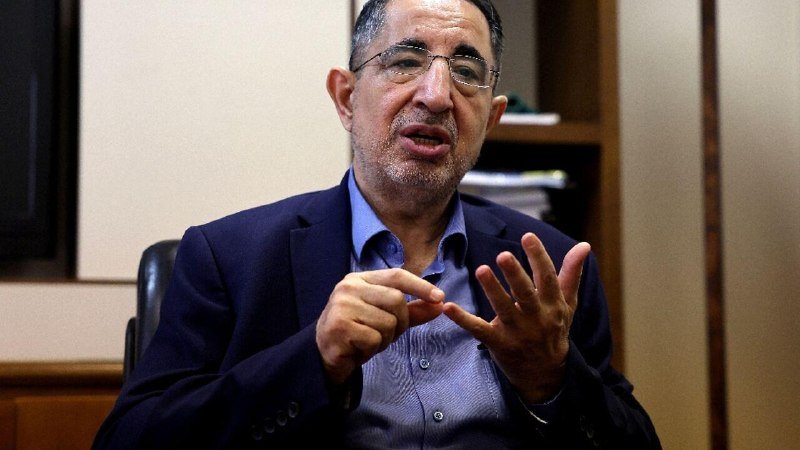
Itamar Ben-Gvir is not a backbencher, not a fringe voice, and not someone who can be dismissed as a provocateur without a portfolio. He holds one of the most sensitive jobs in the Israeli government — National Security Minister — and on 22 June 2026, video circulated by The Cradle Media and amplified across X showed him saying that "all of Lebanon should become our playground" and rejecting any distinction between the Lebanese state and Hezbollah. The remark is on the record. The question it forces is no longer rhetorical: what does it mean when an incumbent minister, seated in a war cabinet, publicly endorses the open-ended targeting of a neighbouring country?
The line between Israeli security doctrine and Israeli political theatre has been narrowing for two years. Ben-Gvir's rhetoric has consistently pushed against the constraints that professional military and diplomatic actors say they need — restraint in operations, signalling to mediators, room for de-escalation. Each time the line is crossed, the conventional wisdom in Jerusalem is that the system will absorb it. Each time, the absorption has cost something.
The remark, plainly stated
In the clip circulated by The Cradle Media at 08:28 UTC on 22 June, Ben-Gvir calls for "full-scale military targeting of Lebanon" and explicitly rejects the distinction between Hezbollah, as the armed non-state actor that has fired into northern Israel, and Lebanon as a sovereign state. The framing — that the entire territory of a UN member state should be treated as a battlespace — is not a stray comment about a specific operation. It is a doctrinal proposition: no separation between armed group and the country in which it is embedded, and no ceiling on what Israel should do about it.
That posture has an internal Israeli audience. It is designed to satisfy a hardline constituency that views any restraint in the north as concession, and it is meant to constrain the prime minister's negotiating space by raising the domestic cost of any deal that stops short of maximum pressure on Beirut.
What the counter-narrative gets right
The Western wire read of Ben-Gvir tends to flatten him into a single category: far-right extremist, marginal, theatrical. The framing is convenient, because if he is a clown, his words do not bind the state. The problem with that read is that it cannot account for the policy outcomes that have followed his interventions. Settler activity in the West Bank accelerated under his watch. Funding streams tied to his office have flowed to actors the professional security establishment has previously warned about. He is not on the margins of the governing coalition; he is a load-bearing pillar of it.
There is also a counter-read, common in Lebanese and Iranian-aligned commentary and echoed in the X posts aggregated by analysts like S. M. Marandi, that treats remarks like this as the unfiltered truth of how the Israeli state actually thinks — and that the more measured language of the prime minister's office and the IDF Spokesperson is the public-facing filter, not the reality. That read is politically convenient for its proponents in a way that makes it easy to dismiss. But it captures something the polite read does not: when a minister of state says "all of Lebanon should become our playground," the international community's response tends to be a press readout and a closed-door phone call. The gap between the remark and the response is itself the message.
The structural frame, in plain language
Israel's security cabinet is not a technocratic body insulated from coalition politics. It is a coalition artefact, and the National Security portfolio has been allocated to a party whose base expects escalation, not restraint, in every direction that lacks a final-status agreement. The northern front with Lebanon is exactly that kind of direction. The structural problem is not that one minister holds an extreme view; it is that the view is institutionally embedded in a coalition whose survival depends on the ministers who hold it.
A serious reading of the situation has to confront two facts at once. First, Israeli civilians in the north have been displaced from their homes for months by rocket and drone fire, and the state has a legitimate obligation to address that. Second, the policy instruments available to address it run through a cabinet in which the loudest voice on the subject is openly dismissive of the distinction between a hostile armed group and the country it operates inside. The two facts do not cancel each other. They coexist, and the cost of pretending they don't falls on northern Israeli civilians and on Lebanese civilians simultaneously.
Stakes, and what remains uncertain
If Ben-Gvir's framing becomes operational doctrine, the northern front stops being a counter-terror campaign against a specific armed group and becomes something closer to a campaign of pressure on a state. That has a different casualty arithmetic, a different diplomatic cost, and a different set of obligations under the laws of armed conflict. The mediator track — wherever it sits this week — depends on a notional Israeli interlocutor who can credibly accept a deal that leaves the Lebanese state standing. A minister of state publicly stating that the Lebanese state should be treated as a playground is, in practical terms, an announcement that no such deal will be honoured if his coalition partners ever need his votes again.
What remains genuinely uncertain is whether the prime minister will treat the remark as a disciplinary matter inside the coalition, or as a free option. The sources available to this publication — The Cradle Media's video, the X amplification, the diplomatic readouts that have not yet been published — do not yet show the answer. They show the question, which is the more important thing to be clear about at this hour. The next 72 hours will tell whether the cabinet treats its own minister's stated doctrine as a problem to be managed, or as a brief to be executed.
Desk note: This publication treats the remark as a serious policy signal because of the office its author holds, not because of the source that first broadcast it. The Cradle Media's editorial line is openly adversarial toward the Israeli state; that is why the clip surfaced there first. It is also why the wire services will treat the same clip with more caution than it deserves.
Wire provenance
This editorial synthesis draws on the following public wire/social posts:
- https://t.me/thecradlemedia
- https://t.me/thecradlemedia/0