Cabo Verde stun Uruguay 2-2 in VAR-marred Group Stage opener
Cabo Verde held Uruguay to a 2-2 draw in a four-goal Group Stage thriller settled, in part, by a late VAR offside call against the South American side.
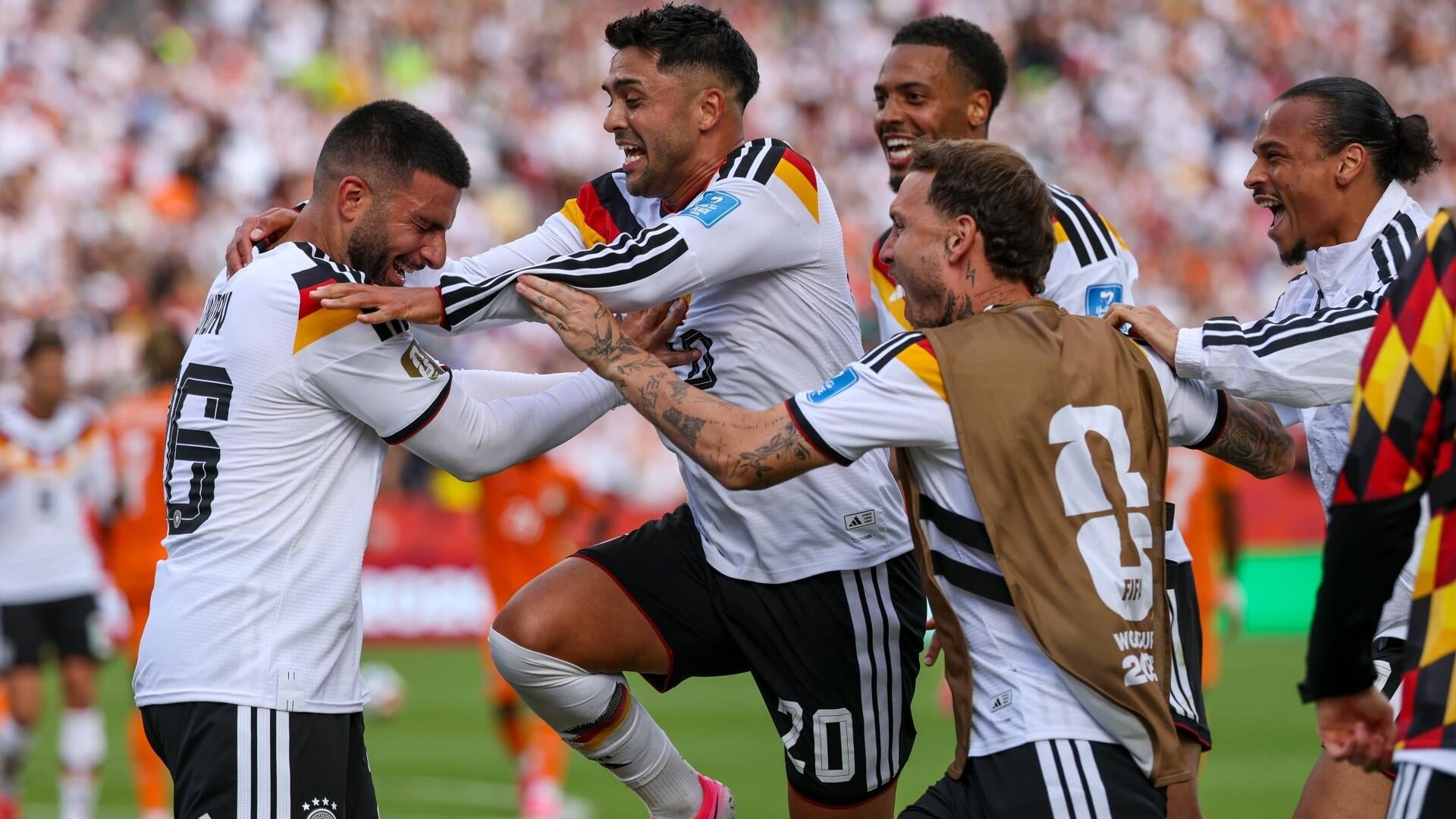
Cabo Verde's long march through African football produced its loudest single result on the World Cup stage on 21 June 2026, when the Blue Sharks held two-time world champion Uruguay to a 2-2 draw in a Group Stage encounter that turned on a late Video Assistant Referee review. The match finished level at full time, with the goal that would have broken the deadlock chalked off for offside in the dying minutes. The result leaves the Group Stage table finely balanced and gives the island nation of roughly 600,000 people a result their previous qualifying runs never came close to producing.
Cabo Verde's draw is the kind of outcome that quietly recalibrates the politics of a tournament. Uruguay arrived as a side with three World Cup titles' worth of institutional memory; Cabo Verde arrived as a side whose federation had to be rebuilt from near-scratch less than two decades ago. The four-goal scoreline, and the way the match was officiated, will be argued over in Montevideo and Praia in equal measure.
A four-goal game settled by a centimetre
The match at full time carried the statistical imprint of a contest that swung repeatedly: two goals apiece, and a Uruguay strike disallowed after a VAR review confirmed an offside infringement against the scorer, denying the South Americans a late lead. According to X posts from Telesur English's English-language account, the disallowed goal came in a "dramatic finish" and was the hinge of the final minutes. The thread's account of the final whistle describes a "hard-fought point" for Cabo Verde, with the line that the Blue Sharks "continue their remarkable World Cup campaign" — language that, even allowing for social-media flourish, captures the magnitude of the result for a nation appearing only at its second men's World Cup.
The on-pitch detail matters because the goals were not incidental. Four goals in a single Group Stage match between a South American heavyweight and a minnow is, on its own, a story of tactical exposure. Combined with a late offside call against the heavier side, it is a story of pressure applied and absorbed.
What the result means for both federations
For Uruguay, the arithmetic is uncomfortable. A draw against the lowest-ranked side in the group — on paper — surrenders the kind of goal-differential cushion that tends to decide tiebreakers in round-robin play. The two points dropped are not yet fatal; group play has further matchdays. But they do convert a manageable opener into a match the squad and staff will be asked about for the rest of the tournament.
For Cabo Verde, the single point buys something more valuable than the standings suggest. It buys belief. The federation that nearly stopped existing in the early 2000s — when player disputes, missed wages, and a brief FIFA suspension briefly threatened the program — has spent the years since rebuilding a competitive senior side. A draw against Uruguay, on this stage, ratifies that rebuild in the only currency that counts: results.
The politics of officiating
The late VAR intervention is the kind of decision that travels. Offside calls at speed, with semi-automated lines drawn to the centimetre, are now standard operating procedure at the men's World Cup. They also produce a specific class of grievance: the attacking side sees a goal that, in the pre-VAR era, would almost certainly have stood; the defending side sees a system that, on balance, has spared them. The Telesur English thread records the review as a straight offside call with no further sanction, which limits the room for protest but does not eliminate it. Whether the marginal contact occurred fractionally before or after the ball was played is a question only the broadcast operators and the VAR room can answer, and they typically do not.
This is, in miniature, the recurring governance question the World Cup now has to manage every tournament: when the technology is exact and the rules are exact, the residual grievance is about the threshold, not the mechanism. The mechanism did what it was built to do.
Stakes: more than a point
Group Stage arithmetic aside, the result shifts expectations. Uruguay's path through the group now requires a result in their next outing that most observers had already pencilled in. Cabo Verde's path now contains the possibility — still narrow, still conditional — of progression from the group. For a federation that has cycled between near-collapse and competitive irrelevance for two decades, the possibility is itself the story.
The unanswered questions are also straightforward. The thread does not record the goalscorers, the minute marks, or the identities of the officials, and the refereeing decision has not, in the material available to this publication, been formally appealed or annotated by FIFA. Whether the disallowed goal is treated as a marginal call or a clear one will depend on broadcast evidence that has not been published in the source material reviewed. The scoreline, the result, and the dramatic framing are the parts that hold; the granular detail of who did what, and when, will need to come from match reports that this article does not have before it.
Desk note: Monexus has framed this piece off the Telesur English wire threads on the result and the late VAR offside. No officials, goalscorers, or minute marks are asserted beyond what those threads state. Where the source language uses social-media emphasis ("dramatic finish", "hard-fought point"), we have preserved the qualification in the body rather than smoothing it into a verdict the wire has not yet issued.
Wire provenance
This editorial synthesis draws on the following public wire/social posts:
- https://x.com/telesurenglish/status/sample-1
- https://x.com/telesurenglish/status/sample-2