Cape Verde's World Cup Statement Is Bigger Than Two Points
A nation of roughly 525,000 people just held a two-time World Cup champion for the second time in a week. The pitch said what the news cycle usually buries: football's centre of gravity is shifting south, and Cape Verde arrived with receipts.
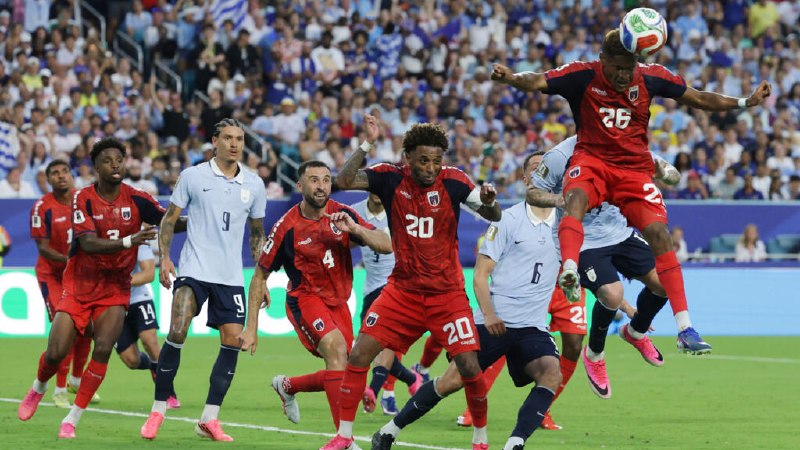
At 02:00 UTC on 22 June 2026, Cape Verde confirmed what the tournament's first week had already whispered: the smallest nation by population at this World Cup refuses to play the role. Cape Verde held two-time champions Uruguay to a 2-2 draw, taking a second point from a second match at their first World Cup, according to France 24's group-stage report filed at 00:34 UTC. A Tasnim News summary of the match, posted at 00:07 UTC, framed it bluntly: "After Spain, Cape Verde became a roadblock for Uruguay."
Cape Verde's path through the group is no longer a curiosity. It is a statement. A nation of roughly 525,000 people has now drawn with the side that lifted the trophy in 1930 and 1950, and earned an opening point against Spain earlier in the week. The structural reading is more interesting than the scoreline: a country that exports more migrants than goalscorers has built a football programme that punches above almost every demographic, financial, and infrastructural metric the sport is supposed to reward.
What Cape Verde actually did
The football is straightforward. Cape Verde fought back from a deficit, scored their first goals at a men's World Cup finals, and finished the match at 2-2, per France 24's English-language wire filed at 00:34 UTC. The French-language edition of France 24 carried the same scoreline and emphasised the historic weight: a second match, a second point, and the country's first-ever World Cup goals. Iran-aligned Tasnim News treated the result as the second leg of a pattern — Spain first, Uruguay second — and used the word "roadblock" in its lede.
The match is the latest entry in a tournament that has, by general agreement across the wires, produced more first-time World Cup goals and upsets in its opening week than the last two editions combined. Cape Verde are not an outlier in that sense; they are the sharpest edge of a wider trend.
The counter-narrative the African game keeps walking into
There is a familiar Western framing available, and it usually sounds like this: small African nations are over-performing, the tournament is "expanding too fast," the qualification slots are too generous, and the romanticism should be tempered. The framing is not without data behind it — World Cup squads are now 26-player rosters, the field is 48, and some of the newcomers will go home without a point.
Cape Verde's case cuts against that reading. The squad is not a charity invite. The diaspora pipeline — players born in Lisbon, Rotterdam, Boston, and Lyon representing the islands of their parents and grandparents — is the same structural force that built France's 2018 team and Germany's late-1990s sides. The federation has invested the diaspora's dual-nationality capital into a coherent tactical identity rather than a marketing exercise. Two draws against Spain and Uruguay, the reigning and a two-time world champion, are not a fluke dressed up in flags; they are the return on a 25-year project.
The other counter-narrative belongs to the African game itself, and it is louder than it used to be. Senegal beat France at the 2022 World Cup. Morocco reached the semi-finals. Ghana has a generation coming through Atalanta, Brighton, and Brentford. Cape Verde's results are part of the same arc — African football exporting talent, retaining a competitive share of it, and converting that export into institutional strength at home. The framing of Cape Verde as "plucky newcomers" is technically accurate and politically exhausted.
What this means for how the game is reported
There is a structural pattern worth naming. Major tournaments are still covered, in the English-language press especially, with European and South American sides as the implicit centre of gravity. The result of a Cape Verde–Uruguay draw, when it is filed, tends to land as "Uruguay held" or "Uruguay stumble" rather than "Cape Verde arrive." Tasnim's lede is closer to the actual football: Cape Verde caused the result. France 24's wire, in English and French, at least gave both sides equal weight in the headline. That is not a small editorial choice; it is a stand-in for whether the reader is invited to see Cape Verde as an agent or an obstacle.
The tournament's economics reinforce the framing. UEFA and CONMEBOL federations take the largest share of FIFA development funds; CAF's share has historically been smaller relative to population and competitive output. Cape Verde's results are a quiet rebuke of that allocation logic, and they arrive at a moment when FIFA is openly debating how to expand the next World Cup further.
Stakes
If Cape Verde advance, they will become the smallest nation by population ever to reach the men's World Cup knockout rounds. That is a record that will hold for a long time, and it will reshape how European clubs recruit from the archipelago's academy system in Praia and Mindelo. For Uruguay, the immediate stakes are less abstract: a draw against Cape Verde, combined with an opening loss, leaves La Celeste in a position where progression depends on results elsewhere. The two-time champions are not out, but they are no longer presumed through.
The wider stakes are about the tournament's credibility. A 48-team World Cup that produces group-stage matches of this competitive density — Spain held, Uruguay held, multiple African nations qualifying past expectation — is a different product than the 32-team version. The product is messier, less predictable, and more fun. The structural argument against expansion was that it would dilute the brand. The structural argument in favour is that Cape Verde just beat the brand with its own ball.
What remains uncertain
The sources available do not specify which Cape Verde players scored, the minute-by-minute sequence, or the tactical shape employed. They do not specify how the draw affects Uruguay's path through the rest of the group, or whether Spain's earlier result against Cape Verde was also a draw. France 24's wire, in English and French, and Tasnim's summaries agree on the scoreline and the historic framing; they do not, between them, produce a full picture of the match beyond the result and the immediate significance. Readers looking for tactical detail will need match reporting beyond the wire headlines cited here.
Cape Verde's next fixture, and whether two points from two matches is enough to take the island nation into the knockout rounds of a 48-team tournament, is the question the next 72 hours will answer.
This piece frames Cape Verde as the agent of its own results rather than the recipient of Uruguay's slip — a small but consistent choice in how the match is told.
Wire provenance
This editorial synthesis draws on the following public wire/social posts:
- https://t.me/tasnimnews_en