Beijing holds its fire on rates and turns up the heat on supply chains — what the week's twin moves actually say
On the same June morning Beijing froze its benchmark lending rate for the 13th month and added US defence contractors to its export-control ledger — a double signal that reads less like escalation than choreography.
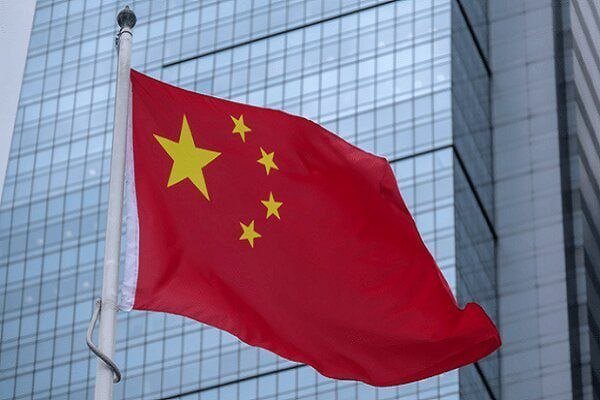
On 22 June 2026, two policy moves from Beijing landed within an hour of each other and pointed in opposite directions. The People's Bank of China kept its one-year and five-year loan prime rates unchanged for the thirteenth consecutive month, according to a Reuters wire report published at 03:30 UTC. Ninety minutes later, Reuters reported that China's commerce ministry had added US rare-earth and other firms to its export-control regime. By mid-morning, a prediction market run on Polymarket put the implied probability of a US–China tariff agreement by 31 December 2026 at roughly ninety per cent — a number that says more about investor positioning than about anything either government has actually agreed to.
Read separately, each decision looks like the kind of incremental adjustment Beijing makes all year. Read together, they sketch a deliberate posture: hold the cost of capital down at home while quietly tightening the screws on the foreign suppliers Washington cannot easily replace.
The rate that didn't move
A thirteen-month hold on the loan prime rate is, by global standards, an unusually long pause. It signals a central bank that has decided the marginal benefit of further easing is now smaller than the cost — in currency weakness, in capital outflow, in the message it would send to households still repairing balance sheets. Reuters's wire does not attribute the decision to a named policymaker, but the pattern is consistent with what Chinese official commentary has argued for several quarters: that the binding constraint on growth is no longer the price of credit but demand for it.
The structural reading is straightforward. Chinese industry is operating with substantial spare capacity across steel, chemicals, electric vehicles, batteries and shipbuilding. Cheaper credit would feed that capacity rather than ignite fresh demand. The PBoC's preferred lever, instead, has become targeted re-lending through policy banks and selective reserve-requirement cuts for smaller lenders — moves that do not show up in the headline LPR but that get cheaper money to the sectors Beijing wants to scale. Holding the benchmark steady while quietly easing underneath it is a posture, not a pause.
The list that did
The export-control announcement, by contrast, was about visibility. Reuters reported on 22 June that China's ministry of commerce had placed new restrictions on dozens of US firms — including, per a Polymarket-curated summary of the same package, ten defence contractors — framed as retaliation for recent US actions. The substance sits in two places. First, rare-earth processing capacity: even after a decade of well-publicised Western efforts to onshore the supply chain, the mid-stream separation and refining of heavy rare earths remains concentrated in China, and the licensing regime is the lever Beijing uses to allocate it. Second, the explicit naming of defence primes — General Dynamics, Lockheed Martin and similar houses are the predictable targets — turns a commercial measure into a strategic message aimed at the US defence industrial base and, by extension, at any European or Asian government weighing how tightly to align with US export controls on semiconductors.
The Chinese framing, as carried by outlets from Global Times to Xinhua in similar recent episodes, treats such lists as legitimate instruments of reciprocity rather than as economic coercion. That framing deserves airtime on its own terms: if Washington maintains an entities list of its own — and it does, run by the Commerce Department's Bureau of Industry and Security — then a Chinese mirror list is at minimum a defensible policy of symmetry. Whether one agrees with the underlying premise or not, the legal architecture on both sides is the same kind of architecture, applied to different vendors.
What the market is actually pricing
The ninety-per-cent figure on a 2026 tariff deal is the most revealing data point of the week, and not for the reasons the headline suggests. Prediction markets do not forecast policy; they aggregate the bets of participants who think they know something about timing. A ninety-per-cent implied probability by year-end is consistent with one of two readings: either the tradable view is that the political incentives for both capitals point toward a managed de-escalation ahead of US midterm dynamics, or the trade is simply cheap protection for an outcome that has looked likely for months.
Both readings carry the same implication for Beijing's policy mix. If a deal is more likely than not, the marginal value of aggressive export controls rises — they become negotiating capital to be spent down in a future round. If a deal is less likely than the market suggests, the same controls become a long-duration constraint on the US supply chain that compounds over time. Either way, listing more US firms costs Beijing little and gives it optionality.
What the twin moves actually signal
Stitch the day's signals together and the picture is one of deliberate choreography rather than crisis. Beijing is keeping domestic financing cheap enough to sustain the industrial build-out that underwrites its negotiating position, while tightening the export-control screws on the foreign inputs that Washington is least able to substitute. The market is reading the result as progress toward a deal; the policy text reads more like preparation for one that may or may not arrive on the implied timeline.
The honest uncertainty here is about who blinks first on rare-earth licensing. The sources do not specify which US defence firms are named or which rare-earth categories the new restrictions bite hardest; both will become clear in the next seventy-two hours as compliance departments translate the announcement into specific shipment holds. Until then, treat the rate hold as the message and the entity list as the instrument, and read the prediction-market number as the cost of being wrong about which one matters more.
How Monexus framed this: where the wire cycle treated 22 June as two separate stories — a rates decision and a trade action — Monexus read them as a single posture statement, and gave the Chinese reciprocity argument the structural weight it is usually denied in Western copy.
Wire provenance
This editorial synthesis draws on the following public wire/social posts:
- http://reut.rs/4uLIQHF
- http://reut.rs/3SEcpO2