Egypt's first World Cup win is a milestone, not a movement — yet
A 3-1 comeback over New Zealand gives Egypt its first ever World Cup victory. What the result actually tells us about the Pharaohs — and what it does not — depends on what comes next.
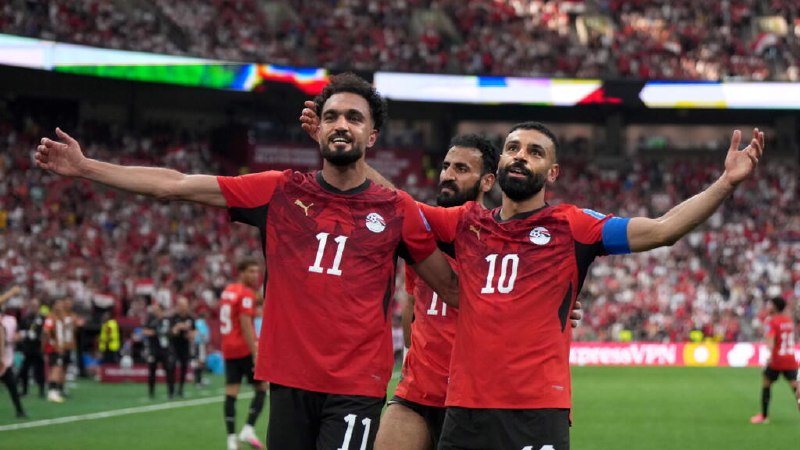
On 21 June 2026, in a group-stage match the rest of the world had pencilled in as a footnote, Mohamed Salah scored in the 67th minute to put Egypt ahead of New Zealand 2-1. By full time the score was 3-1, and the Pharaohs had done something no Egyptian national team had ever done in the history of the World Cup: they had won. The achievement, confirmed by Al Jazeera English at 03:46 UTC on 22 June, is the headline. Whether it amounts to anything larger depends on what one thinks a World Cup result is supposed to measure.
The result, plain
Egypt trailed at half-time. The turnaround came in the second half, with Salah's strike the pivot. The framing from both Al Jazeera and France 24's Arabic wire is consistent: a 3-1 comeback, Salah on the scoresheet, and Egypt's first three points in the tournament's history — not a first appearance, not a first goal, but a first win. The match also strengthened, in the words of Al Jazeera's match report, Egypt's case for progression to the knockout rounds.
That last clause is what gives the result its real weight. A single group-stage victory, in a tournament of 48 teams, is not in itself evidence of footballing transformation. It is evidence that Egypt belongs on the field, and that the gap between the continent's heavyweights and the tournament's structural floor is narrower than the historical record suggests.
The milestone trap
The temptation, on nights like this, is to read a result as a verdict. Egypt has spent decades producing world-class individuals — Salah the most visible of the current generation — and decades more watching the national side return from major tournaments with respectability intact but silverware absent. A first win feels like the breaking of something. It usually is not.
The honest framing is that the World Cup has expanded. More teams, more groups, more fixtures, more opportunities for the historical record book to be rewritten by a side that previously would not have been on the pitch at all. A New Zealand side that has its own developmental project, but is not, on current evidence, in the same footballing tier as the Pharaohs, is the opponent on the night. That context does not diminish what the Egyptian players did; it locates the achievement on a sensible scale.
What the wire saw
It is worth noting how uniformly the global wire carried the result. Al Jazeera led with the comeback framing and Salah's goal; France 24's Arabic service used the phrase "great operation" to describe the second-half performance; Iran's Fars news agency and Tasnim's English wire both treated Salah's 67th-minute strike as the lead image of the result. The fact that Iranian state-adjacent outlets, with no particular stake in Egyptian football, ran the goal as breaking news tells its own story. Salah remains a transnational media property, and his first World Cup win is a globally legible headline.
What the coverage does not yet contain is any of the harder questions: the tactical identity of the side, the shape of the squad beyond its stars, the long-term implications for the Egyptian Football Association, or whether this Pharaohs generation can translate group-stage form into knockout football. The sources reviewed for this piece reported the result and the goalscorer, and stopped there.
The stakes, and the silence
For African football, the milestone is real even if the result is modest. Egypt's previous best, prior to 22 June 2026, was a draw — three points earned in any other sport, but in World Cup terms a thin record for a country that has won the Africa Cup of Nations multiple times. The gap between continental success and global-tournament results has been a long-standing talking point in Cairo's sports press, and a 3-1 win over a fellow group-stage entrant does not close it, but does put a marker down.
The harder question — whether the Egyptian federation can build a structure around this generation, whether the domestic league can retain talent against the European pull, whether the Pharaohs can advance to a round where they face a side in the world's top ten — sits beyond the available reporting. The result is in the books. The movement, if there is to be one, has not started yet.
This publication noted the result at 03:46 UTC on 22 June 2026, with corroboration from wire reporting in Arabic and English. The desk framed it as a milestone, not a verdict; the record will do the rest.
Wire provenance
This editorial synthesis draws on the following public wire/social posts:
- https://t.me/france24_fr
- https://t.me/farsna
- https://t.me/tasnimnews_en