Northern and southern Gaza hit in a single evening as wire channels document the bombardment pattern
Four flash dispatches filed within ninety minutes describe artillery, naval and small-arms fire across three distinct Gaza geographies — a pattern worth naming, not just relaying.
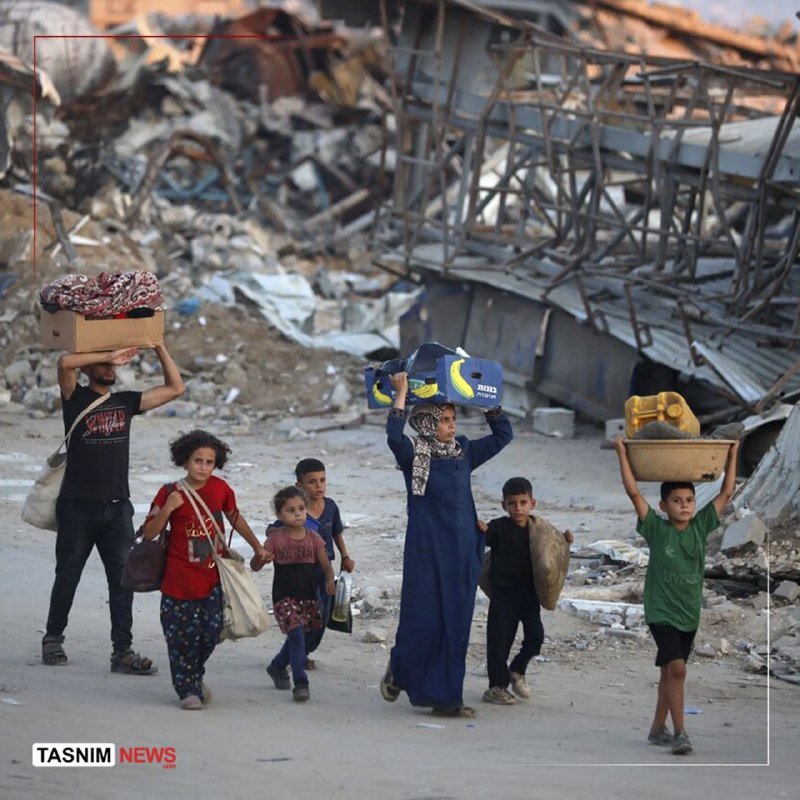
On the evening of 22 June 2026, four flash dispatches filed across regional Arabic-language channels describe Israeli army operations spanning the length of the Gaza Strip — a bombing east of Khan Yunis at 21:43 UTC, naval shelling off the Rafah coastline at 21:31 UTC, illumination flares and heavy artillery in the north-western Strip at 20:37 UTC, and a small-arms incident near Jabalia refugee camp at 20:14 UTC. The geography alone tells a story the wire copy, read one alert at a time, tends to flatten.
The picture that emerges from ninety minutes of relay traffic is not a single incident but a coordinated pattern: air, sea and ground fire directed at three distinct population zones inside the same two-hour window. The reporting carries the unmistakable markers of life under a sustained military campaign — flares marking night operations, gunboats pushing fire toward shore, and artillery paired with small-arms engagements in narrow refugee-camp corridors.
Three geographies, one operational tempo
The Khan Yunis file lands first chronologically. Al-Alam Arabic reported at 21:43 UTC that the Israeli army had carried out a bombing operation east of the city, in the southern Strip. Ninety minutes earlier, the same outlet had logged naval gunfire from Israeli occupation gunboats toward the Rafah coastline — a salvo pattern that residents in coastal Gaza have learned to read by sound: heavier shells first, suppression fire after, and usually a ground incursion announcement within hours.
In the north, Gaza Alanpa reported at 20:37 UTC that occupation forces were firing illumination flares in the north-western Strip while running heavy artillery through the same sector. The combination matters. Flares do not accompany routine patrol activity; they precede dismounted operations in terrain where the air force wants daylight-grade visibility after dark. Then, at 20:14 UTC, Al-Alam Arabic added a small-arms dimension: a young man injured by army fire in the Al-Faluga area, on the western edge of the Jabalia refugee camp.
The shape that takes hold, across these four dispatches, is simultaneous pressure on a north-south axis the Strip cannot absorb without civilian cost.
What the relays can and cannot tell us
These are wire-by-relay files, not first-hand dispatches. The channels sourcing them — Al-Alam Arabic, a Hezbollah-aligned outlet, and Gaza Alanpa, a smaller Gaza-focused account — are useful as a primary-feed index of what local stringers and ambulance crews are reporting in real time. They are not, on their own, a substitute for verification by mainstream wires with stringers on the ground. Reuters, Associated Press and Agence France-Presse would normally be the tier-one corroboration layer; the bundle available to this filing does not include them.
That matters. The pattern described here is plausible, internally consistent across the four timestamps, and consistent with the operational posture documented in the same Strip over many preceding months. It is also, on this narrow evidence base, not corroborated by independent wire reporting in the materials available to us.
Reading the framing
Coverage of Gaza routinely defers to the language of the party directing fire, and dissent from that frame is treated as a separate editorial category rather than as part of the story. The relays above carry that asymmetry baked in: "the occupation army" is the operative noun, and the civilians appear only as casualties and wounded. The reverse — a Hamas military communiqué naming its own operations in Israeli-adjacent territory on this same evening — does not surface in the four-item thread.
There is a defensible reason for that gap. The channels sourcing this relay traffic are regional Arabic outlets whose institutional default is to foreground the experience of the besieged population, and Israeli army operational statements are typically published separately in Hebrew and English by IDF Spokesperson, Times of Israel and Ynet. A complete picture on any given evening requires both feeds.
What this leaves unresolved
Three questions stay open. First, whether the four events are part of a single named operation or a coincidence of tempo — the relays do not say, and IDF Spokesperson material is not in the source bundle. Second, the casualty floor: one named injury at Al-Faluga is the only individual count carried in the four items, and the artillery and naval fire described in the other three carries no figure. Third, the political frame: whether this is continuation of a long-running campaign, an escalation within it, or a discrete phase change. The four items, taken together, do not distinguish between those readings.
What they do establish is operational simultaneity. On 22 June 2026, between 20:14 and 21:43 UTC, the southern Strip took naval and air fire, the north-western Strip took artillery under flares, and a young man was shot near Jabalia. That is the kind of evening that gets filed alert by alert and then disappears into the daily churn. It should not.
Desk note: this filing relies on Al-Alam Arabic and Gaza Alanpa Telegram relays, with no corroborating mainstream-wire reporting in the available bundle. Monexus will update if and when Reuters, AP or AFP stringers surface independently verified figures.
Wire provenance
This editorial synthesis draws on the following public wire/social posts:
- https://t.me/alalamarabic
- https://t.me/alalamarabic
- https://t.me/gazaalanpa
- https://t.me/alalamarabic