Hormuz has a plan. The question is whether the plan has a Strait.
An Iranian-mediated mechanism for safe passage in Hormuz was announced in the small hours of 22 June 2026 — hours after Berlin pointed the finger at Washington for the closure that prompted it.
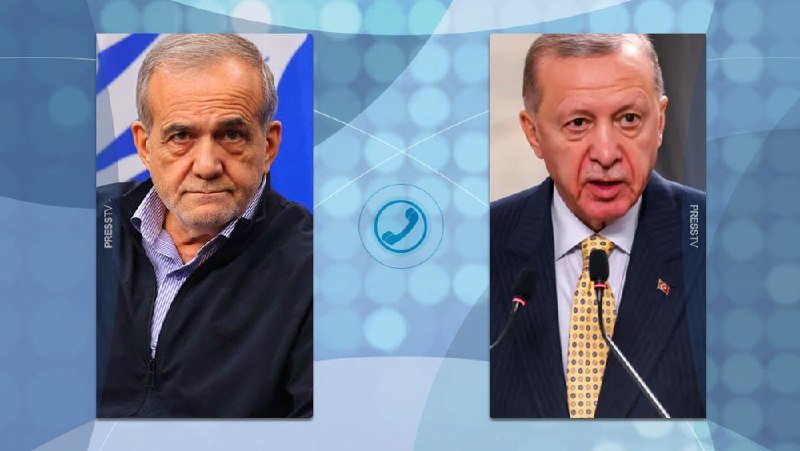
At 01:07 UTC on 22 June 2026, an Iranian state-affiliated outlet broadcast the line that global shipping desks had been waiting to hear: a mechanism for the safe passage of vessels through the Strait of Hormuz had been agreed. The announcement, attributed by the channel to one "Baqai" — a name associated with Tehran's mediation machinery — came paired with a second dispatch moments later promising that the two mediators would publish a text of the general points "as a document of the agreements reached within 18 hours." A third wire, timestamped 00:59 UTC, said only that the "remaining items necessary to begin final negotiations" had been discussed and that technical teams would continue their work.
Strip away the cryptic, abbreviated framing — the kind of clipped bulletin Iranian state media uses when a deal is half-broken and half-born — and the structure of a deal is visible: a transit-corridor arrangement, a mediators' communiqué, technical follow-up. The shape is familiar from earlier mediation rounds involving the same channel. What is new is the political backdrop: roughly three hours before the mechanism was announced, Germany's defence minister had publicly placed the blame for Hormuz's effective closure at the door of the Trump administration, in remarks carried by al-Alam Arabic at 22:21 UTC on 21 June.
What was actually agreed, and what wasn't
The most that can be said with confidence is that a procedural mechanism now exists on paper. The Baqai line, as transmitted by the channel at 01:07 UTC on 22 June 2026, is a statement of intent: ships will be permitted safe passage under agreed terms. The follow-up at 01:07 UTC — that a written text would be produced within 18 hours — implies that the substance of the terms is still being drafted, not that it has been locked. The 00:59 UTC item is the most honest of the three: it concedes that what was discussed is the "remaining items necessary to begin final negotiations," and that technical teams carry the work forward. None of the three dispatches names the counterparties to the deal, the maritime jurisdiction under which the mechanism operates, or the enforcement architecture that would turn a paper corridor into a functioning one.
That gap is the story. Iran's official channels have an interest in presenting movement as resolution. Western ministries, when they confirm anything, will tend to lower expectations back to "talks are ongoing." Both habits are familiar. The hard question is whether the mechanism announced in the early hours of 22 June 2026 corresponds to a binding arrangement with teeth — naval coordination, hotlines, agreed rules of identification and passage — or whether it is the diplomatic equivalent of a holding pen: a face-saving device that allows tankers to move while the underlying dispute continues to fester.
Berlin names Washington
The German defence minister's intervention at 22:21 UTC on 21 June is the most consequential single line in the cluster. To publicly attribute the closure of one of the world's most strategic maritime choke-points to the conduct of the United States is a diplomatic act with cost. It places on the record, in a NATO capital, a position that European foreign-policy establishments have so far preferred to leave implicit: that the present Hormuz disruption is downstream of American decisions in the broader Iran file, not a spontaneous Iranian choice.
The line does not stand alone. It maps onto a pattern visible in 2025 and into 2026, in which European officials — German, French, and others — have been increasingly willing to publicly differentiate themselves from Washington on the question of how to handle Iran. The earlier default was quiet displeasure in private and public continuity in rhetoric. The German defence minister's remark at 22:21 UTC is the louder version: the disagreement is now on the front page, attributed to a named minister, on the record. Whether that candour survives contact with the next round of transatlantic diplomacy is a separate question, but the signal has been sent.
The structural read
Two facts in tension define the moment. First, the United States retains overwhelming naval capability in the Gulf and a dominant role in any sanctions architecture that touches Iranian oil exports. Second, a NATO member-state has now publicly said, in effect, that Washington is the actor most responsible for the disruption that the new mechanism is meant to relieve. That second fact is unusual enough to be worth dwelling on. It is the diplomatic equivalent of a senior creditor publicly stating, on the record, that the debtor's collateral is in the creditor's keeping by the creditor's own design.
The mechanism itself, if it holds, fits a familiar pattern of transactional arrangements in the Gulf: paper corridors, named mediators, technical follow-up, with the underlying sovereignty question — what right of passage exists through Hormuz and on whose terms — deliberately left for another day. That arrangement can be stable for months. It can also collapse in a single incident. The narrowing of the gap between announcement and written text — the 18-hour window promised in the 01:07 UTC dispatch — is, in that sense, the real test: not whether the mechanism is announced, but whether the document that follows is something shipowners, insurers, and naval planners can actually plan against.
What the sources do not yet tell us
Three things are missing from the available reporting. First, no Western wire confirmation has been published in the source material: the announcements reach the public through an Iranian state-affiliated channel, and the asymmetry of provenance is itself a fact about the story, not an editorial inconvenience. Second, the identity of "the two mediators" is not given; the framing suggests one Iranian and one external, but the second party is not named. Third, the German defence minister's attribution to Trump is reported by the same Iranian state channel that is announcing the mechanism, and a Berlin readout from a Western outlet would carry different weight. Until those three gaps close — Western confirmation, named second mediator, a parallel Berlin source — the prudent read is that a deal is in train, not that a deal is done.
That is also the most useful posture. Shipping markets, insurers, and ministries downstream of Hormuz have learned, over the past several years, to price the gap between diplomatic theatre and operational reality. The mechanism announced in the early hours of 22 June 2026 is real news, but it is news of movement, not of settlement. The settlement, if it comes, will be measured in tankers moving and P&I clubs writing transit cover — not in bulletins.
Desk note: Monexus has carried the Iranian-side framing of the mechanism in full, and the German minister's attribution to the White House on the same provenance, while flagging that no Western wire confirmation appears in the source cluster. Readers should treat the announcement as a credible signal of movement inside the Iranian channel rather than as a final settlement.
Wire provenance
This editorial synthesis draws on the following public wire/social posts:
- https://t.me/s/alalamarabic
- https://t.me/s/alalamarabic
- https://t.me/s/alalamarabic
- https://t.me/s/alalamarabic
- https://t.me/s/alalamarabic