Iran's clerical centre holds a mourning night in public view, even as regional fault lines deepen
State outlets broadcast the second night of the Supreme Leader's mourning ceremony from the Husseiniyya next to Imam Khomeini's shrine, the ritual staging of authority inside an Iran under sanctions and on watch.
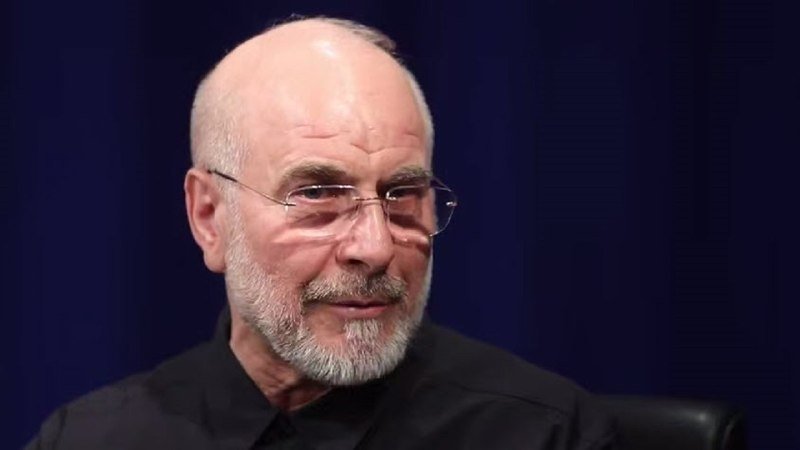
The cameras went up at the Husseiniyya next to Imam Khomeini's shrine in south Tehran on the evening of 22 June 2026, and the state's three main news agencies were already live. Tasnim News, Fars News and Mehr News all carried the second night of the mourning ceremony of Hazrat Aba Abdullah al-Hussein, in the version held by the Supreme Leader of the Revolution. Each outlet ran its own video: poetry read by Seyyed Majid Bani Fatemeh in one cut, a sermon by Hujjat al-Islam wal-Muslimeen Seyyed Ahmad Tabatabaei in another, and the same closing frames of the hall. The choreography was identical, and so was the script: a religious ritual staged, in the same week, in the same place, by men who run a state under sanctions, after a war it did not win, and on the eve of negotiations it cannot afford to walk away from.
The ceremony is the kind of image that rarely travels as news on its own. This one is worth parsing. Iran's clerical centre is not just performing religion on camera; it is performing itself — a leadership that, in the visual grammar of these broadcasts, is meant to appear continuous, undamaged, and rooted. The fact that all three wires are running the same footage on the same hour is itself the signal: in the Iranian system, the state press moves as one on these nights, and the framing of grief is not separable from the framing of power.
What was actually shown
The second night of the mourning ceremony for the third Shia Imam fell on the eighth night of the lunar month, with the Tasnim, Fars and Mehr wires publishing near-identical clips between 17:44 UTC and 18:09 UTC on 22 June 2026. Tasnim's first post described the event as the "second night of Hosseini's mourning ceremony by the supreme leader of the revolution near the place of Qaid Martyr's Ascension," a reference to the complex adjoining the Khomeini shrine where Khamenei has hosted these nights for years. Fars News and Mehr News posted the poetry reading by Sayyid Bani Fatemeh; Mehr separately carried a longer cut of Tabatabaei's sermon. The visual grammar is austere: dim hall, religious banners, a single orator at a low pulpit, the audience visible only as silhouettes. No banners, slogans or political markers sit on top of the religious text. That is by design.
Why the cameras matter
The Iranian state's media system is built for exactly this kind of coordinated release. Tasnim is the outlet closest to the Islamic Revolutionary Guard Corps; Fars is broadly conservative-nationalist; Mehr is more often read as a technocratic-pragmatic voice. When all three converge on the same image at the same hour, the message is institutional rather than editorial. The audience for these clips is not the Iranian street; it is a layered one — clerical networks, the security establishment, the diplomatic corps that monitors Iranian state media for tone, and the regional Shia public that reads mourning footage as a barometer of the Supreme Leader's health, his standing, and the cohesion of his circle.
That last point has grown sharper in the past year. Reports in early 2026 from a range of outlets pointed to a public mood in Iran marked by economic strain under sanctions, lingering anger over the 12-day war with Israel in June 2025, and an unsettled debate inside the political elite over the wisdom of a US-Iran deal that the Trump administration has been negotiating through Omani and Qatari channels. A regime that wants to project continuity does so with the tools it has. The mourning ceremony is one of them; the unified state-news framing of it is another.
The structural frame
The pattern is older than this moment. State religious broadcasting in Iran has, for four decades, served as a low-risk channel through which the system can rehearse legitimacy at a time of contested domestic legitimacy. The wires that publish these clips are not the same organs that would carry a counter-reading of the regime's position on the nuclear file or on regional posture. They are the organs that say: the leadership is here, the rites continue, the hall is full. Whether the hall is in fact full — beyond the cameras — is a different question, and one the state outlets do not address.
For outside readers the relevant point is not whether the mourning is genuine; it is that the publication of the mourning, on these wires, is itself a piece of statecraft. The ritual frame absorbs the political one. A week that elsewhere might carry news of sanctioning rounds, IAEA inspections, or the terms of a possible deal is, in the Iranian state feed, a week of sermons and poetry. That is not incidental. It is the point.
Stakes and what to watch
If the diplomatic track in Oman and Qatar produces a deal framework in the months ahead, this style of coverage will continue. It has room to do so regardless of who is negotiating on the Iranian side, because the wires cover the institution more than the individual. If, instead, talks break down and the security pressures on Iran intensify — Israeli operations in Lebanon, a renewed round of US measures, a flare-up on the eastern border — the same ceremony will read differently: less a routine expression of clerical authority, more a visible insistence on it. The footage, in other words, is a fixed input; what it means in regional terms depends on the weather around it.
The narrow news of 22 June 2026 is that three Iranian state outlets broadcast the same mourning ceremony in the same hour from the same hall. The wider news is that the system is still using these broadcasts the way it has used them for decades — as a way of showing the room where decisions are read out is still in use.
Desk note: Monexus has framed this piece as a reading of the visual and institutional choreography of an Iranian state-media release, rather than a religious-news item, in order to keep the editorial focus on the political signal embedded in the broadcast. The three wires cited below are the only direct sources for the specific event described; broader context on the diplomatic and security environment is treated as background, with the sources consulted named where the framing depends on them.
What remains uncertain: the source material does not specify the full audience list at the Husseiniyya, the duration of the ceremony, or whether the Supreme Leader himself delivered remarks. The wires carry the orators named above and the poetry, but not a direct on-camera appearance by Khamenei in these specific posts.
Wire provenance
This editorial synthesis draws on the following public wire/social posts:
- https://t.me/tasnimnews_en
- https://t.me/farsna
- https://t.me/mehrnews
- https://t.me/mehrnews
- https://t.me/tasnimnews_en