Iran's negotiating team faces a unity test at home as nuclear talks head into a critical week
Head of Iran's negotiating team calls for unity around 'the axis of the province' and treats the Supreme Leader's words as binding. With talks at a delicate stage, the message is discipline at home.
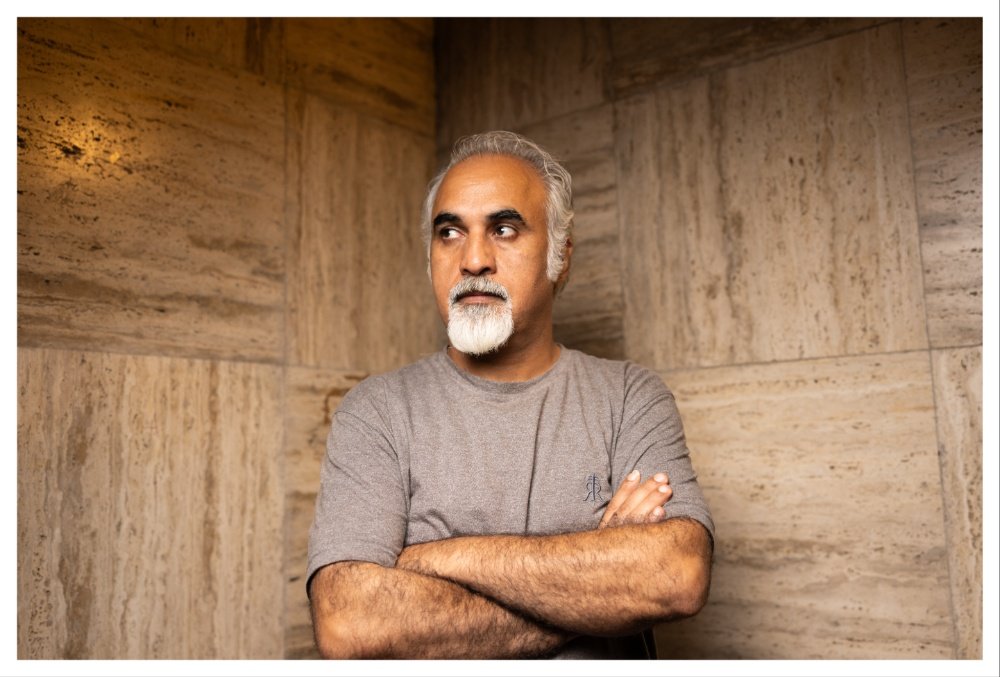
Iran's chief negotiator used a televised address on 22 June 2026 to do two things at once: rally domestic critics behind the negotiating table, and remind them that the words of the Supreme Leader set the limit of the discussion. The brief, posted almost simultaneously in English by Tasnim News and in Persian by Mehr News, frames the country's nuclear diplomacy as an exercise in disciplined messaging rather than open bargaining.
The dual publication matters. Within minutes, two of the Islamic Republic's principal state-aligned outlets carried the same injunction — that criticism of the negotiating team is permissible, but only as "criticism and awareness," and that any public line that diverges from the "chapter of speech" set by the leadership will not be tolerated. The headline message is that the room for manoeuvre at the table is narrower than the room for manoeuvre on the street.
A message for the home audience, not the negotiating table
The head of Iran's negotiating team is not named in the wire items from Tasnim or Mehr, but the institutional role is unambiguous: this is the figure responsible for translating Tehran's red lines into diplomatic language abroad. By elevating the leader's "word and order" to the operative vocabulary of the team, the address fuses two registers — domestic political discipline and the technical choreography of talks that have, in past rounds, hinged on enrichment percentages, sanctions sequencing and the question of whether any agreement can be ratified inside Iran without opening a domestic split.
The "axis of the province" phrasing is more than rhetoric. It signals that the negotiating mandate is anchored in the political centre of the system rather than in the foreign ministry alone. In a year when regional tensions, sanctions pressure and parliamentary scrutiny have all intensified, that anchoring is itself a constraint on any concession that would need to be defended across Iran's institutional spectrum.
Why the unity call now
Talks with Washington, mediated indirectly and accompanied by parallel European and Gulf state channels, are entering what officials on all sides have described as a decisive phase. The Tasnim and Mehr items do not specify the counterpart, the venue or the calendar. They do something more pointed: they pre-position any deal, partial agreement or breakdown as an event whose legitimacy will be judged against the leadership's published line.
That posture has a practical effect on the negotiating team. Domestic critics — reformist outlets, economists who argue that sanctions relief must be tangible, conservatives who argue that any flexibility on enrichment is a betrayal — will be told, in advance, that the perimeter of acceptable dissent ends where the leadership's words begin. The "criticism and awareness" formulation offers a vocabulary of loyal opposition; it does not extend to alternatives.
Counter-narrative: a negotiating team that knows the cost of disunity
The Western wire line on Iranian nuclear diplomacy has, for two decades, alternated between two readings: either Tehran is buying time to advance a weapons capability, or it is genuinely prepared to trade enrichment for sanctions relief. Neither reading fully captures what the Tasnim and Mehr items describe — a leadership that is more concerned with internal discipline than with either extreme of the Western debate.
A counterpoint to the unity call is plausible. If the negotiating team's room for movement is constrained by the need to defend every move against critics on multiple sides, the diplomatic outcome will reflect not Iran's maximalist or minimalist preference but the median position the system can survive. That is a different kind of constraint than the one Western analysts usually model. It is structural, not ideological, and it explains why Iranian concessions in past rounds have often arrived in calibrated, symbolic increments rather than as a single comprehensive package.
Structural frame: sanctions, sovereignty and the cost of speaking with one voice
The larger pattern here is the familiar one of a sanctioned state using diplomatic unity as a form of resilience. When a currency is squeezed by external pressure and the banking system operates under secondary sanctions, the political cost of an internal split rises sharply. Discipline becomes a bargaining chip: it tells the outside world that any deal will hold domestically, which raises the value of any concession the team is authorised to make.
The same discipline, however, has a ceiling. Iran's economy has absorbed years of pressure and the negotiating team will be required, at some point, to deliver something tangible in return for the political capital it is spending at home. The leadership's framing — that criticism is permitted but the line is fixed — is durable as long as the team's interlocutors can offer relief that justifies the price. If they cannot, the unity narrative becomes harder to sustain and the same critics who are being granted the vocabulary of "awareness" today will become the basis of a more pointed opposition tomorrow.
Stakes and what remains uncertain
The clearest stakes are domestic. A successful agreement consolidates the negotiating team's standing and the leadership's framing of the diplomatic process. A failed round, or an agreement that delivers too little, transfers the cost of unity from the negotiating table back onto Iran's political arena, where the parliamentary calendar and the question of who speaks for the negotiating team will re-open.
What the sources do not specify — and what cannot be inferred from the wire items alone — is the substance under negotiation in the current round: enrichment levels, the fate of stored material, the sequencing of sanctions relief, the role of the IAEA, or the position of regional interlocutors. The Tasnim and Mehr items are framing, not reportage on the substance of the talks. The unity call is a precondition the leadership wants met before the next concession is announced, not a description of what that concession will be.
The leadership's words, in the negotiating team's telling, are the chapter. The question for the next phase is whether the chapter that follows will be written in Tehran or in the room where the talks are held.
Desk note: Monexus has framed this as a story about internal discipline and the constraint it places on diplomacy, rather than as a story about Iranian intent in the abstract. State-aligned outlets Tasnim and Mehr were treated as primary sources for the leadership's framing, not as stand-alone factual claims about the substance of any agreement.
Wire provenance
This editorial synthesis draws on the following public wire/social posts:
- https://t.me/mehrnews
- https://t.me/tasnimnews_en
- https://en.wikipedia.org/wiki/Joint_Comprehensive_Plan_of_Action
- https://en.wikipedia.org/wiki/Supreme_Leader_of_Iran
Follow the event.
These dated source records provide context. They do not retrospectively verify this archive article.
Separate what the nuclear watchdog reported from what it could not determine after the June 2025 strikes.