Iran's state media turns grief into a stage-managed ritual — and the world should stop pretending it doesn't notice
Tasnim and Mehr News turned the second night of a Hussein mourning ceremony into coordinated video theatre. The story is not the ceremony — it is the production.
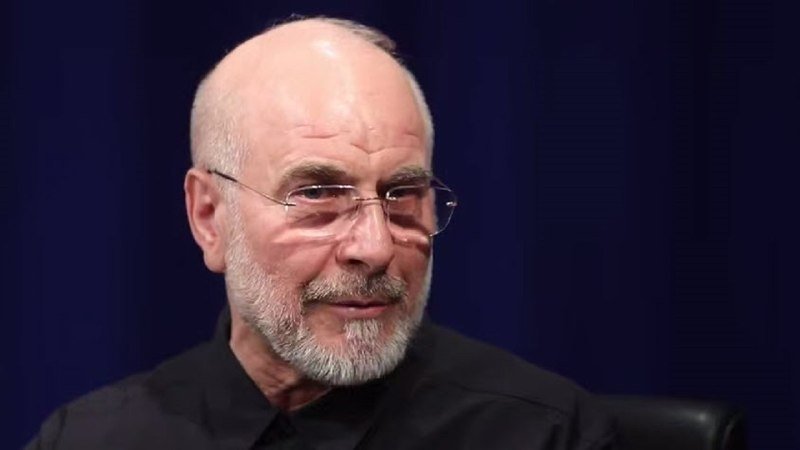
On the evening of 22 June 2026, two of the Islamic Republic's principal state outlets — Tasnim News Agency and Mehr News — pushed an unusually synchronised sequence of short videos onto their Telegram channels. The clips, all stamped with the 04/01/1405 Persian date, showed a reciter named Sidmjid Bani Fatemeh performing lamentation poetry for Hussein near the site associated with the "royal ascension of the martyred leader" — the conventional Iranian formulation for Ayatollah Khomeini's return from exile in 1979. The same reciter. The same evening. The same framing. The same emotional vocabulary ("Mr. Martyr cried a lot with this lament"). The first Telegram post from Tasnim English arrived at 19:13 UTC. Mehr's first item followed at 19:55 UTC. By 20:00 UTC, at least eight near-identical video segments had been broadcast across the two channels.
This publication's interest is not the religious content. It is the choreography. Two ostensibly competing newsrooms — Tasnim, the IRGC-aligned outlet, and Mehr, the legacy wire tied to the judiciary-adjacent establishment — moved in lockstep on a single narrative beat, in a single hour, with a single performer. That level of synchronisation is not newsroom behaviour. It is a broadcasting decision made above the newsroom.
The performer as the story
Bani Fatemeh has, by Iranian state media's own telling, been elevated to a recurring role in post-2025 mourning coverage. The Tasnim posts describe him as if his appearances were themselves newsworthy: a reciter whose lament reportedly moved the late founder of the Republic to tears. Mehr repeats the framing. The two outlets swap out which of them hosts the headline, but the through-line is identical — a single named figure, positioned at a single named site, generating a single named emotion.
The point worth naming plainly: this is a state religious-civil ceremony being repackaged as breaking content. Eight separate video posts in forty minutes is a feed, not a programme. The reciter becomes a credentialed emotional actor whose proximity to the founder's memory confers authority on the present order.
What the rest of the room is being told to ignore
Western reporting on Iran in 2026 has, by and large, treated the state media layer as a curiosity — religious kitsch with a byline, useful for colour but not for analysis. That framing is convenient, and it is wrong. The synchronised Tasnim–Mehr push on 22 June sits inside a wider pattern in which Tehran's information architecture is being used to manufacture consent at moments of domestic strain. When a state can dictate the emotional register of a national mourning night across two of its most-followed wires, it is not covering a story. It is staging one.
There is a counter-reading worth taking seriously. Religious content in the Islamic Republic is genuinely popular; mourning ceremonies for Hussein are centuries-old, and the reciters who perform them have real audiences. The state did not invent grief. It has, however, become unusually adept at routing that grief through channels it controls, and at dressing the result as wire output.
The structural frame, in plain language
Information power flows from a small set of nodes. In Iran, that set now includes Tasnim (IRGC), Mehr (judiciary-establishment), IRNA (government), and Press TV (foreign-language). When two of those nodes move together on a story, the message is no longer "here is a ceremony." It is "here is what you are supposed to feel about the ceremony." The same logic explains why Khomeini's mausoleum — referenced in the Telegram posts as the site of the "royal ascension of the martyred leader" — keeps appearing in the framing: the geography is itself a legitimising device. Every clip staged there binds the current order to the founding moment.
This is, put plainly, narrative infrastructure. It is no different in kind from a Western wire that decides which official line leads a foreign-policy story — it is just more centralised, more transparent about its intentions, and more willing to use sacred space as a backdrop.
What it costs to keep treating it as background
Readers in the West who encounter Iranian state content only as translated text lose the audio-visual dimension entirely. The clips shared by Tasnim and Mehr are not transcripts. They are produced sequences with recurring visual motifs — the reciter framed against the Khomeini memorial, the weeping crowd, the slow pan — designed to be clipped further and recirculated inside Iran. By the time a Western analyst quotes a line from one of these posts, the original piece of content has already done its work on a domestic audience that never saw the Western quote.
The stakes, then, are not whether Tasnim and Mehr are credible. They are official outlets of an established state and they should be cited as such, with that status plainly stated. The stakes are whether outside observers will continue to treat this layer of the Iranian information environment as decorative. It is not. On 22 June 2026, two of the regime's principal wires spent a single hour reminding anyone watching how cleanly they can move a national mood through a single performer, a single site, and a single feed.
Desk note: Monexus reads the Tasnim and Mehr Telegram channels as primary wire output, not as editorial commentary, and reports them at the same evidentiary weight as a state press agency in any other capital. The frame above is the publication's; the footage is theirs.
Wire provenance
This editorial synthesis draws on the following public wire/social posts:
- https://t.me/tasnimnews_en/0
- https://t.me/tasnimnews_en/0
- https://t.me/mehrnews/0
- https://t.me/mehrnews/0
- https://t.me/mehrnews/0
- https://t.me/mehrnews/0