Beirut's sovereignty line is a negotiation demand dressed as a press release
Lebanon's new president says no one negotiates on Beirut's behalf. The line reads as press-conference theatre — but it lands inside a region where negotiation tables, not armies, are doing the actual state-building.
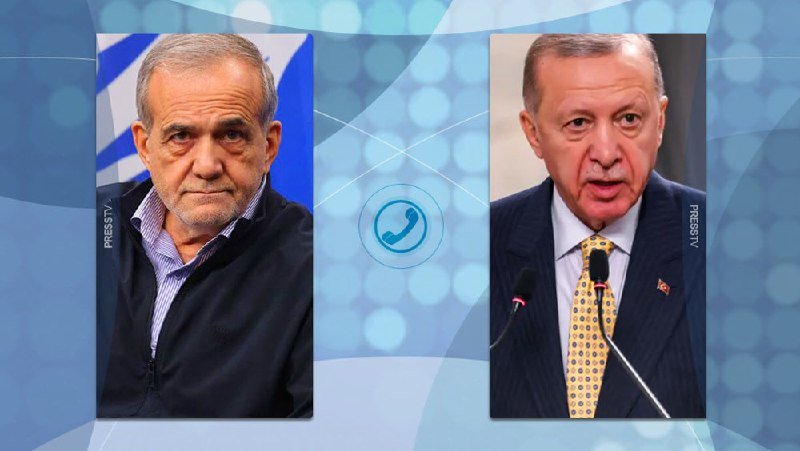
On 22 June 2026, at roughly 10:03 UTC, the Arabic-language channel Al Alam ran an urgent caption over remarks by Lebanese President Joseph Aoun: "Our country is sovereign and no one is negotiating for it." By 10:34 UTC the line had been picked up by Middle East Spectator, and by 10:41 and 10:43 UTC the same sentence — "We are a sovereign country and nobody can negotiate on our behalf" — was circulating across the AMK_Mapping feed and back into the wider regional commentary stack.
That is a lot of relay for a single declarative sentence. The volume of the amplification is itself part of the message.
What Aoun is actually signalling
The statement, read closely, is not a constitutional claim. Lebanon's sovereignty has been a matter of legal record since 1943; no regional actor disputes that on paper. What Aoun is contesting is the assumption baked into the current negotiating geometry: that talks over Lebanon's future — on Hezbollah's disarmament, on border arrangements with Israel, on the residual presence of Iranian-aligned political factions in Lebanese state institutions — proceed through pre-cooked channels in which Beirut is a recipient of outcomes rather than a participant in producing them.
By putting the line on the public record, Aoun is demanding a seat at the table he is widely assumed to already occupy. It is the diplomatic equivalent of a junior counsel reminding the court of his standing.
The audience is not Beirut
Read in context, the audience for the remark is not the Lebanese street. It is the small set of foreign ministries and intelligence services currently shaping the post-ceasefire architecture between Israel, Hezbollah's residual political wing, Iran, and the various Gulf intermediaries. The statement does two things at once: it signals to Washington and Tel Aviv that any deal predicated on bypassing the Lebanese presidency will face domestic political blowback, and it signals to Tehran that Beirut will not automatically subordinate its negotiating posture to the Axis of Resistance's preferences.
The same sentence performs opposite work for opposite readers. That is the giveaway that it was crafted for circulation rather than for conviction.
Why the line lands now
The timing is not accidental. The Israeli–Hezbollah front has been in a fragile de-escalation posture since the late-2024 ceasefire arrangement, and the question of what happens to Hezbollah's military infrastructure south of the Litani — and to the political organs that command it — is being negotiated through a mixture of UN channels, US-brokered understandings, and quiet Iranian-Saudi back-channels. Lebanon, as a state, has been conspicuously absent from the public face of those discussions.
Aoun's election in January 2025 ended a years-long presidential vacuum, and his government has spent the intervening months trying to convert that constitutional fact into actual leverage. Asserting sovereign negotiating agency is the cheapest available instrument. It costs nothing, cannot be disproven by a counter-quote, and forces every other party to either accommodate the claim or explain why they will not.
The structural frame
What is happening here is the wider pattern of small and middle powers trying to convert rhetorical sovereignty into negotiating sovereignty in a region where the substantive decisions are being drafted elsewhere. The Gulf states did something similar during the 2023–24 normalisation talks; Iraq has done it on the question of US force posture; Jordan plays the same game on the Palestinian file. The vocabulary is identical across all of them — "we are a sovereign country," "no one negotiates on our behalf," "our decisions are made in [capital]" — because the underlying constraint is identical: the architecture of regional diplomacy is still shaped by states larger than the ones being asked to live inside it.
Whether the rhetoric produces material leverage is a separate question. Sovereignty statements are a necessary but not sufficient condition for being treated as a negotiating principal. They buy time, they shift the burden of justification, and they create a public record that constrains future governments. They do not, by themselves, move a single weapons depot or redraw a single line on a map.
The counter-read
The cynical reading is that Aoun's press team understands the line will travel on regional Arabic-language channels and into Iran-aligned commentary stacks, where it performs the function of demonstrating that the new Lebanese presidency is not a Western client. That is a real consideration. But it does not make the claim false. A Lebanese president asserting that Lebanon negotiates its own file is, in fact, asserting something that needs to be asserted — because the alternative, in which foreign capitals and non-state armed factions jointly author Lebanon's posture, is also the lived reality of the past decade.
The honest read is that the statement is both sincere and instrumental. It is what sovereign countries say when they want to be treated as sovereign countries.
Stakes
If the line holds, Beirut gains incremental room to manage the disarmament and border discussions on its own clock rather than on the clock of external patrons. If it does not — if the next round of negotiations proceeds as before, with Lebanese signatures attached to text written in other capitals — then the Aoun presidency's claim to agency will be revealed as a rhetorical purchase the office could not afford.
What remains genuinely uncertain is whether any external party will pay a price for ignoring the assertion. The press cycle will move on; the question is whether the negotiating geometry does.
— This piece was framed by Monexus against the regional Arabic-language reporting stream rather than against Western wire copy, because the statement's primary audience is the regional negotiating set rather than an English-reading one.
Wire provenance
This editorial synthesis draws on the following public wire/social posts:
- https://t.me/alalamarabic
- https://t.me/Middle_East_Spectator
- https://t.me/AMK_Mapping