Beirut, Doha, Washington: a Lebanon ceasefire track takes shape in three-way calls
Lebanese President Joseph Aoun spoke separately with US Vice President JD Vance, White House envoy Jared Kushner and Qatari Prime Minister Mohammed bin Abdulrahman Al Thani on 22 June 2026, opening a parallel Doha-Washington track on a southern-Lebanon ceasefire.
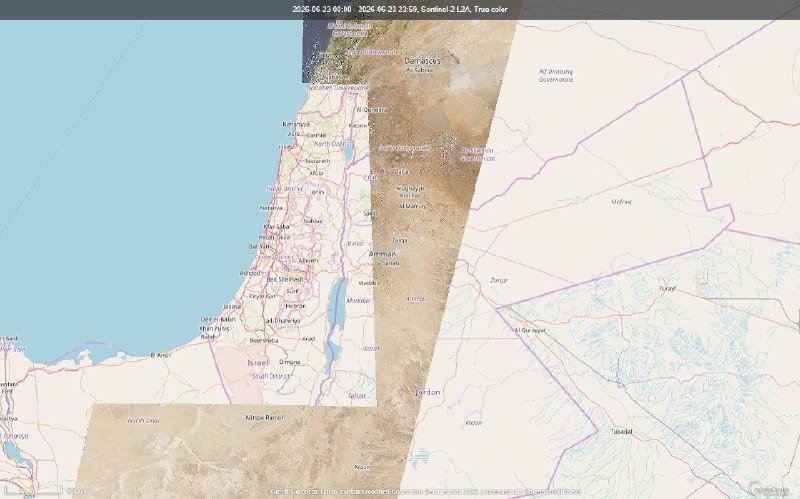
Lebanese President Joseph Aoun took three phone calls before 08:05 UTC on 22 June 2026 — first from US Vice President JD Vance, then from White House envoy Jared Kushner, and finally from Qatari Prime Minister Mohammed bin Abdulrahman Al Thani — and the read-out issued by the Lebanese presidency says all three conversations pointed the same way: a ceasefire in Lebanon. Reporting from the WFWITNESS News Telegram channel at 08:05 UTC names the three counterparts explicitly and frames the exchanges as part of a single diplomatic sequence rather than three discrete calls. Al Alam Arabic followed within minutes, leadlining the Vance and Al Thani exchanges as a coordinated US-Qatari push. Iran's Tasnim News Agency, writing in English at 07:42 UTC, and the Farsi-language Tasnim channel at 07:41 UTC both carried the same Lebanese-presidency statement, underscoring how widely the read-out is being circulated across the region's competing media poles.
The shape of what is being proposed is still unclear, but the cast of callers is not. Aoun is the head of state of a country that has spent much of the past year absorbing Israeli strikes on its south and intermittent cross-border fire; Vance and Kushner are the senior US officials who have carried the previous Gaza-track negotiations; and Al Thani is the mediator-in-chief of Gulf diplomacy, with a hotline into both Washington and Tehran. When those four phones connect in a single morning, something is being negotiated — even if the parties are not yet calling it a deal.
What the Lebanese presidency is actually saying
The read-out, as carried by both WFWITNESS News and Tasnim, is short on detail and heavy on intent. It says the calls addressed a ceasefire in Lebanon, framed in the language of "reining in" the fighting rather than ending the broader war. No signing ceremony is mentioned. No Israeli counterpart is named on the calls. The US side is represented by the vice president and by a presidential envoy whose portfolio has historically been Gaza, not the northern front. The Qatari side is represented by the prime minister, not the foreign minister — a signal that Doha is treating this as a head-of-government file rather than a working-level one.
What that combination suggests, fairly plainly, is a parallel track: a Doha-Washington channel aimed at quieting the Israel-Lebanon border and freeing up diplomatic bandwidth for the still-larger Gaza file. Lebanon is not being treated as the main event; it is being treated as a flank that has to be stabilised before the centre can move.
Why the three-way format matters
There is a reason these calls happened on the same morning, in this order, and were all read out by the Lebanese side. Aoun's office wanted the public to see that the request for a ceasefire did not come from Beirut alone — it came from a US vice president and a Gulf prime minister, both of whom have a stake in the file. That is the diplomatic equivalent of a witness: the Lebanese claim to want peace is now backed by named interlocutors who themselves asked for the call.
It also matters that Iran-aligned outlets carried the same statement. Tasnim is not a neutral wire; it is the press arm of the Islamic Revolutionary Guard Corps. That the Iranian side is amplifying, rather than ignoring, a US-mediated push for a Lebanon ceasefire is itself a data point. Tehran is not in the room on these calls, but it is signalling that it can live with the framing — at least for now.
What the framing leaves out
The read-outs do not name Hezbollah, do not name Israel, and do not name a ceasefire architecture. They also do not address what a ceasefire would be a ceasefire from — Israeli strikes on southern Lebanon, Hezbollah rocket and drone fire into northern Israel, or both. Coverage of the Israel-Lebanon front has, for the better part of a year, run on Israeli security concerns that are legitimate in their own right and on the civilian cost on the Lebanese side, which is also a first-order fact when UN agencies or the Red Crescent publish numbers. A track that omits both parties' war aims is, at this point, a framework rather than a settlement.
There is also a sequencing problem. The Gaza-track negotiations that Vance and Kushner have previously fronted are themselves unresolved. Treating Lebanon as a separable, easier file is a reasonable bet by Doha and Washington; it is also a bet that the Gaza track will not collapse into the Lebanon track the moment a southern-Lebanon deal is announced.
Stakes
If the calls produce a real arrangement, the immediate winners are the civilians on both sides of the Blue Line, the Lebanese state apparatus that has been begging for relief, and a Qatari mediation brand that has staked its regional standing on being the indispensable broker. The US side gets a discrete, signable deliverable on a file the administration has not previously owned. The losers, in the short term, are any party whose leverage depends on the border remaining hot — which, in practice, means parts of the Iranian-aligned axis and parts of the Israeli security establishment that have argued for sustained military pressure on the north.
The sources do not yet specify the timeline, the verification mechanism, or the relationship of this track to the UN framework that has governed southern Lebanon since 2006. They also do not say whether the next call in the sequence will be from Aoun to an Israeli interlocutor, or whether Israel will be brought in only after the US-Qatari draft is ready. Those are the questions the next 72 hours will answer, or fail to.
Desk note: Monexus led on the Lebanese-presidency read-out and the three-way call structure as the unit of news, rather than on the larger Gaza file that has dominated wire coverage. We have carried Tasnim, Al Alam, and the WFWITNESS channel in parallel so the read-out is not sourced from a single pole.
Wire provenance
This editorial synthesis draws on the following public wire/social posts:
- https://t.me/wfwitness
- https://t.me/alalamarabic
- https://t.me/tasnimnews_en
- https://t.me/JahanTasnim