The Lebanon Question Reshapes a US-Iran Deal: What the First Round Actually Produced
A first round of US-Iran talks has put southern Lebanon at the centre of a deal that started elsewhere, with a reported roadmap, a five-point package, and a return of residents to a border still inside an active war zone.
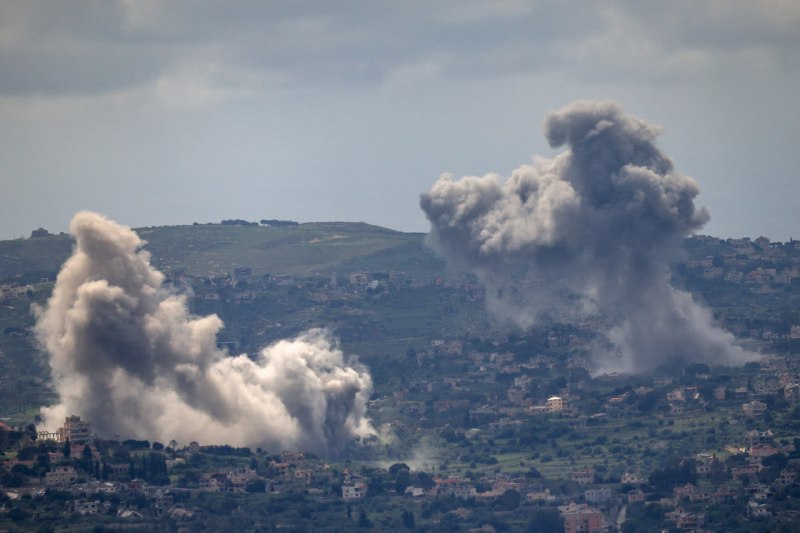
On the morning of 22 June 2026, residents began filtering back into southern Lebanese towns along the border, in scenes filmed and distributed by the Telegram channel Witness Media. The footage — cars on damaged roads, families walking past bombed-out facades, children carrying schoolbags through a landscape that had been a front line for the better part of a year — was circulated as visual evidence of a ceasefire that, 24 hours earlier, had not yet been formally announced. By midday UTC, the same picture sat at the centre of a wider diplomatic picture: a first round of US-Iran talks had concluded with what two separate reporting streams described as five key agreements, with Lebanon — not the nuclear file — emerging as the central bargaining chip.
The roadmap is not yet a treaty. It is a sequence of public statements, leaks and market chatter that, taken together, point to a US-Iran package in which Lebanon's ceasefire is the deliverable Tehran offers in exchange for movement on the file Washington actually cares about. To read it only as a Lebanon story is to miss what is being traded. To read it only as a nuclear story is to miss where leverage is actually sitting this week.
A roadmap without a signature
The first concrete headline arrived before dawn UTC on 22 June: CNBC reported that the United States and Iran had agreed on a roadmap for a final deal and a plan to end military operations in Lebanon. The piece did not specify the document's length, its signatories, or whether it had been initialled. It named the two counterparties and a sequence — roadmap, then final deal — which is the standard shape of these interim arrangements. By 11:37 UTC, the same reporting was being aggregated on X by Unusual Whales, which framed Iran's reaction as one of "major progress" — a phrasing that sourced to the Financial Times. By 11:58 UTC, the Palestine Chronicle had published a fuller read of the package, characterising it as five agreements and explicitly elevating Lebanon to the central issue of the round.
Two things stand out. First, the description is being filtered through three layers — the original wire (CNBC, FT), an aggregator (Unusual Whales), and a regionally framed outlet (Palestine Chronicle) — each of which emphasises a different part of the deal. None of the three is a primary-source document; the underlying text, if it exists in written form, has not been published. Second, the language used by all three ("roadmap", "key agreements", "major progress") is the vocabulary of process, not of resolution. That matters, because process announcements can be walked back without anyone formally having to repudiate a signed accord.
The earlier day's news set the floor. On 21 June at 13:52 UTC, Polymarket reported that Iran's president had publicly declared the country would "not relinquish our right to enrich uranium" — a statement that, on its face, is incompatible with the maximalist US position of the previous decade and consistent with the long-standing Iranian position that enrichment is a sovereign prerogative. Two hours later, at 15:31 UTC, Polymarket reported a separate Trump statement ordering Iran to "immediately stop its proxies in Lebanon from causing trouble." Read in sequence, those two items are the negotiating space: Iran's red line on enrichment, Washington's red line on Lebanese armed actors, and a deal architecture that lives in the gap between them.
Why Lebanon, and why now
The southern Lebanese border has been the most kinetic front between Israel and Iran-aligned armed actors since late 2024. The pattern has been familiar across the region: a triggering incident, a sustained exchange of fire, a Western-mediated de-escalation that holds for weeks or months and then collapses. The reported ceasefire of 22 June fits that template in its shape, but breaks the template in its timing — it is being announced inside a broader US-Iran negotiation, not as a standalone humanitarian pause.
That structural change is the story. When ceasefires are negotiated bilaterally between Beirut and Tel Aviv, with US and Iranian back-channels running in parallel, the operating logic is fire-management: keep the border quiet long enough for the next crisis to displace this one. When a ceasefire is instead treated as a deliverable inside a US-Iran package, the logic is leverage-trading: the cost of resumed hostilities is now priced against the cost of a stalled nuclear track. Each side has more to lose from a flare-up than it did before the deal framework existed.
The asymmetry is real. Iran holds, through Lebanese allies, a credible capability to restart the southern front. Israel holds, through its air campaign, a credible capability to inflict costs that Lebanon cannot absorb for long. The United States holds the diplomatic frame that converts either capability into a negotiating input. What changes with a roadmap is that all three of those capabilities become, formally, items to be turned on and off by political decision rather than by tactical calculation.
The structural frame: corridor politics in plain prose
The deeper pattern is the conversion of geography into bargaining chips. Across the last three years, the dominant currency of Middle East diplomacy has been corridors — land routes, sea lanes, energy pipelines, undersea cables — and the political permission to use them. Lebanon's southern border is not a corridor in the maritime or energy sense, but it functions like one: it is a chokepoint whose closure imposes costs (on Israeli civilians in the north, on Lebanese civilians in the south, on Iran's regional posture) and whose reopening reduces them. Putting it at the centre of a US-Iran round is the diplomatic equivalent of converting a chokepoint into a tradable instrument.
What we are watching, in other words, is the explicit monetisation of de-escalation. Each side has something the other wants: the United States wants constraints on Iran's nuclear programme and a quieter eastern Mediterranean; Iran wants sanctions relief and the political cover of a US-brokered arrangement rather than an isolated one; Israel wants a quiet northern border without committing to a broader war; Lebanon wants reconstruction money and an end to the bombing. The reported roadmap assigns each of those wants a place in a sequenced package, with the ceasefire as the most visible early deliverable.
This is not the same as peace. It is a managed arrangement whose value to each party is precisely that it can be unstaged if the underlying bargain breaks. That is why the vocabulary matters: "roadmap", "agreements", "progress" — words that signal movement without committing to destination.
What the counter-narrative looks like
Two plausible alternative reads deserve weight.
The first is that there is no deal, only the choreography of one. Under this reading, the public statements of 21–22 June are coordination between two governments that both want to look like they are negotiating, ahead of an Israeli decision point on operations in Lebanon and a US domestic clock on Iran policy. The Witness Media footage of returning civilians would then be partly aspirational — residents moving on the assumption that a ceasefire will hold, before the formal mechanism to enforce it has been published. The risk in this reading is that premature return becomes itself a vulnerability: a population back in range of fire that has not actually stopped.
The second is that the deal is real but narrow. Under this reading, Lebanon is genuinely being traded, but only for movement on the nuclear file that the Iranian public will accept, and only for sanctions steps that the US Congress will tolerate. The enrichment red line drawn by Iran's president on 21 June suggests Tehran has set a floor it cannot publicly cross. The Trump demand to halt proxy operations suggests Washington has set one of its own. A deal that respects both floors would be thinner than the headlines suggest — possibly confined to verification arrangements, a sanctions-freeze-for-freeze sequence, and the Lebanese ceasefire as a confidence-building measure with a defined shelf life.
Both readings can be partly true. The reporting on 22 June is consistent with a deal architecture that is real, narrow, and partly choreographed — a roadmap whose durability will depend on whether the verification teeth and the sanctions sequencing are ever published.
Stakes: who gains, who loses, and on what horizon
The immediate beneficiaries, if the ceasefire holds, are the civilians of southern Lebanon and northern Israel, who have absorbed the direct cost of the war. Lebanese residents returning on 22 June, as documented by Witness Media, are the most legible winners of the day. The Israeli communities along the northern border, who have lived under rocket and drone threat for the better part of a year, are the parallel winners on the other side of the line.
The medium-term beneficiaries are the two negotiating capitals. Washington gets a managed Iran file that does not require a military decision before the next US electoral cycle, and a quieter Mediterranean at a moment of strain elsewhere. Tehran gets sanctions relief — if it comes — and a diplomatic format that recognises its regional role rather than treating it solely as a problem to be contained. The longer-term beneficiary, in either reading, is the architecture of bilateral managed de-escalation itself: each successful round makes the next one easier to justify domestically.
The losers are the constituencies on all sides whose leverage depends on continued escalation. In Lebanon, armed actors whose political economy rests on the southern front lose status if the border is genuinely quiet. In Israel, security actors who have argued for a deeper campaign lose their case if a diplomatic package delivers what air power could not. In the United States, Iran hawks lose a frame they have held for two decades. In Iran, those who benefit from sanctions as a domestic political instrument lose their instrument.
The horizon over which these stakes play out is short on the Lebanese side — weeks, not months, if the ceasefire is to mean anything — and long on the nuclear side, where the substantive content of any "final deal" will only emerge in subsequent rounds.
What we do not yet know
The reporting on 22 June does not specify the text of any roadmap, the parties who have signed or initialled it, the verification mechanism, or the sanctions sequencing that would accompany implementation. It does not specify whether the Lebanese armed actors referenced in the 21 June Trump statement have publicly accepted any arrangement, or whether the Israeli government has formally endorsed the diplomatic track. The footage from Witness Media shows return, not withdrawal of forces; those are different things, and a border without a withdrawal is a border that can be reactivated.
The Palestinian Chronicle's framing of five key agreements is the most specific public description of the package on offer. The CNBC and Financial Times characterisations are less granular. Polymarket's aggregator posts supply the surrounding statements — the Iranian red line on enrichment, the Trump demand on proxies — without confirming that either side has moved off those positions. The honest read of 22 June 2026, 13:00 UTC, is that a deal is in motion, that Lebanon is its centre of gravity for now, and that the distance between "roadmap" and "final deal" remains the distance between a return and a resettlement.
Desk note: Monexus has framed this as a deal-architecture story in which Lebanon is the tradable instrument, rather than as either a Lebanon-only ceasefire story or a nuclear-only diplomacy story. The wire coverage on 22 June clustered around both poles; this piece integrates them by following where the leverage is reported to sit — and where the people are actually moving.
Wire provenance
This editorial synthesis draws on the following public wire/social posts:
- https://t.me/wfwitness
- https://x.com/unusual_whales/status/
- https://x.com/unusual_whales/status/
- https://x.com/polymarket/status/
- https://x.com/polymarket/status/
Follow the event.
These dated source records provide context. They do not retrospectively verify this archive article.
Separate what the nuclear watchdog reported from what it could not determine after the June 2025 strikes.