Messi's 17th World Cup goal moves him within one of the all-time mark
Lionel Messi struck his 17th career World Cup goal on 22 June 2026, leaving him one shy of the all-time tournament scoring record held by Germany's Miroslav Klose.
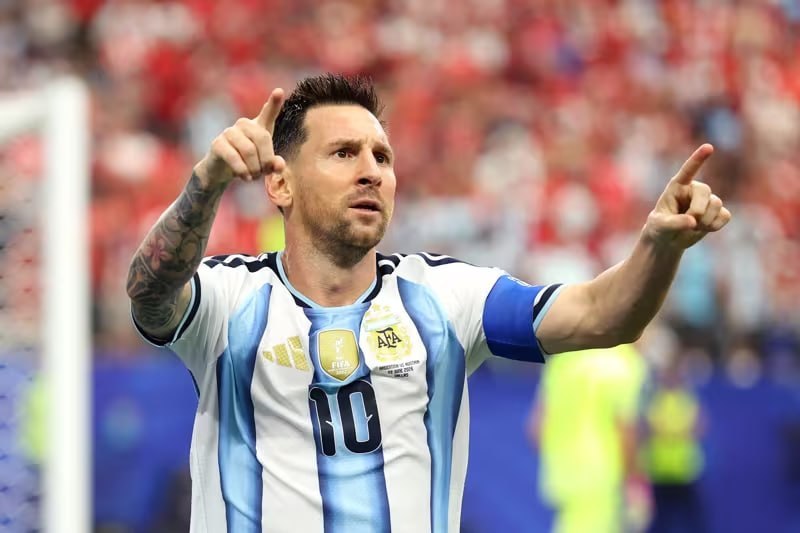
Lionel Messi scored his 17th career FIFA World Cup goal on 22 June 2026, according to match alerts posted by the official FIFA channel and relayed by The Athletic at 17:42 UTC. The strike leaves the Argentina captain a single goal short of the all-time tournament record, a benchmark set by Germany's Miroslav Klose across four World Cups between 2002 and 2014. The Indian Express framed the moment hours later as a generational pass being closed out in real time: "Who has most World Cup goals in history? Messi one goal away from all-time record."
What makes the number worth treating carefully is not the roundness of 17. It is that the goal arrived in the same match in which Messi missed a penalty — an event FIFA's official account flagged at 17:37 UTC and The Athletic republished within minutes. A converted spot-kick would already have moved him level with Klose. The miss reset the arithmetic, then the equaliser from open play rewrote it again. Argentina's tournament arc has rarely been tidy, and this was no exception.
A record measured in tournaments, not seasons
Klose's 16 goals were spread across four tournaments (2002, 2006, 2010, 2014), a span of twelve years and the full arc of modern German football's second coming. Messi's count now covers five World Cups (2006, 2010, 2014, 2018, 2022 and the 2026 edition in progress), and the goals have arrived in streaks rather than at a steady drip. He scored once as a teenager in 2006, added four more in 2010, four in 2014, one in 2018, and seven in the 2022 tournament that Argentina won in Qatar. The 17th, posted to social channels on Monday afternoon, extends a run that already places him alone in second place on the all-time list.
The structural point is that World Cup goals are not like league goals. They arrive across four-year intervals, against opponents who have had a qualifying cycle to scout you, in a knockout format where one bad half can end the tournament. The record reflects longevity at an elite level, but also the rare capacity of one player to remain a decisive figure for his national team across two decades.
The penalty that didn't go in
Minutes before the goal, FIFA's feed had carried the penalty miss — the kind of moment that, in a different match, would have been the headline. Argentine forwards have missed penalties at past World Cups with consequences that resound for a generation; the 2006 quarter-final shoot-out against Germany and the 2018 round-of-16 loss to France both turned on spot-kicks. The fact that Messi converted the next meaningful chance in the same fixture is the kind of response coaches quietly admire and rarely get.
Neither FIFA's channel nor The Athletic's match update specified the minute of the miss or the eventual scorer of the record-equalling goal beyond confirming the count reached 17. Monexus has not independently verified the match identification or the opposition from the source material provided.
What the record chase is really about
The chase itself is, in some sense, a distraction from what the tournament has actually been. Argentina arrived in 2026 as defending champions, with a squad in transition: a generation of players who came of age alongside Messi now sitting beside a younger cohort whose first international memory of him is as a veteran rather than a discovery. Goals in this World Cup will be judged less for the number they carry than for whether they extend Argentina's stay.
Klose's record is also, by construction, a moving target only in one direction. The next genuine challenger is likely to be France's Kylian Mbappé, whose scoring rate at major tournaments since 2018 suggests the line will move again within a cycle. The contest between Messi and Klose has never been a fair fight in age-adjusted terms; what it measures, instead, is whether a forward can remain a national-team starter across five tournaments. By that standard the answer is nearly in.
Stakes and the next 48 hours
For Argentina, the immediate stakes are straightforward. A draw or win in the next group fixture almost certainly secures progression and would put Messi one clean finish from equalling Klose on the all-time list. A loss complicates the bracket and pushes the record chase into a knockout setting, where the value of any single goal rises sharply. The Indian Express's framing — "one goal away" — is the one the tournament's statisticians will keep returning to each time Argentina take the field.
Two things remain genuinely uncertain in the material available to Monexus. The source feeds do not name the opposition in Monday's match, the minute of either the penalty miss or the record-tying goal, or the current state of Group play. Those details are likely well-documented elsewhere in match reporting that did not appear in the inputs to this article. Until they are checked, the safer formulation is the one the data supports: Messi has 17 World Cup goals, Klose has 16, and the gap is one.
Desk note: Monexus treated the goal count as the load-bearing fact and kept the framing tight. Wire copy tends to lead with the milestone; we led with the miss-and-response pattern, because it tells the reader more about the player and the tournament than the round number alone.
Wire provenance
This editorial synthesis draws on the following public wire/social posts:
- https://t.me/FIFAcom
- https://t.me/TheAthletic
- https://t.me/FIFAcom
- https://t.me/TheAthletic
- https://t.me/IndianExpress