Seventeen and Counting: How Messi Rewrote the World Cup's Scoring Record
On 22 June 2026, Lionel Messi scored his 17th World Cup goal against Austria, surpassing Miroslav Klose's mark and putting a singular Argentina career beyond statistical reach.
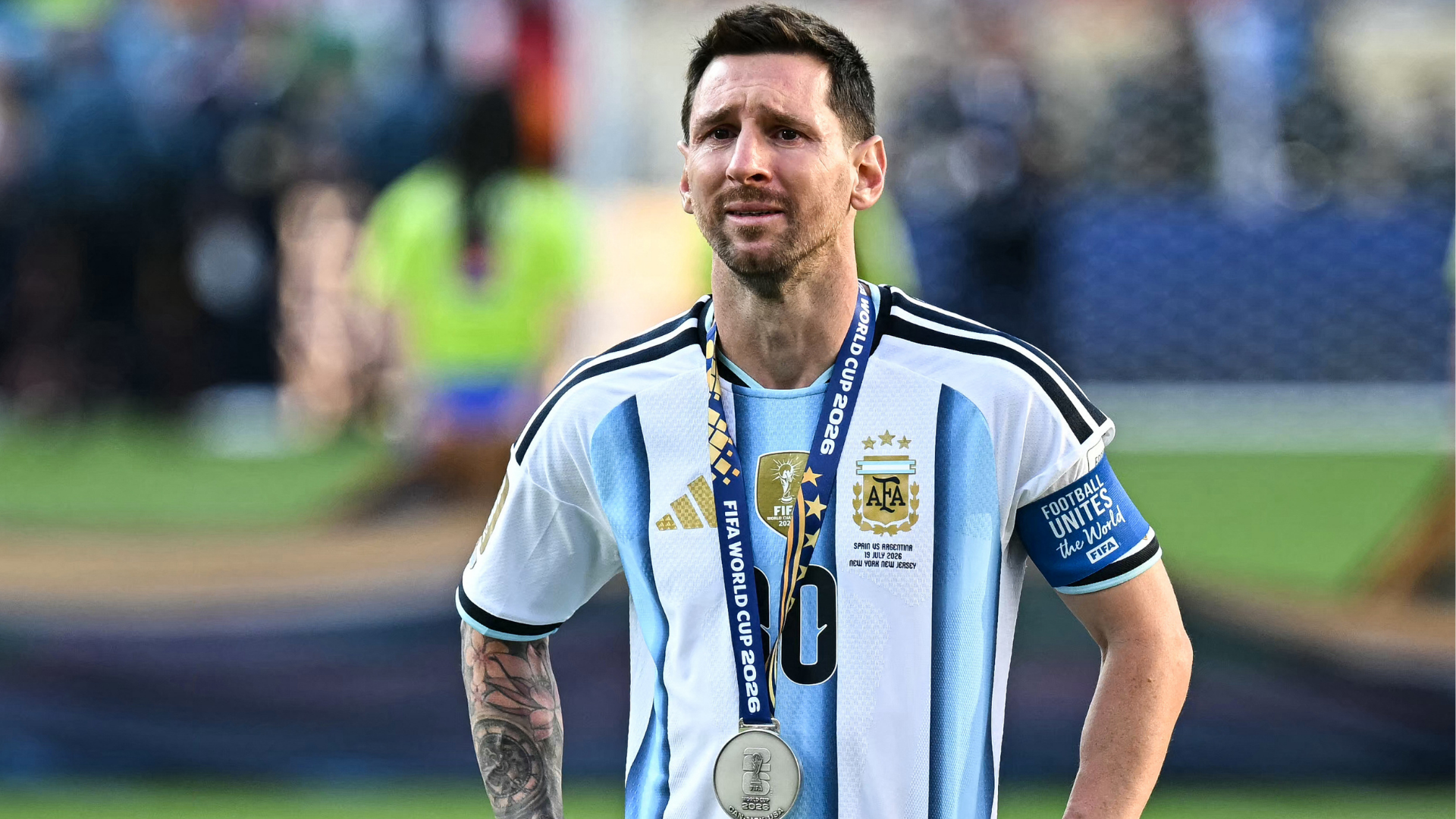
The 38th minute settled it. On 22 June 2026, Lionel Messi — captain of Argentina, the reigning South American champions and the team that lifted the trophy in Qatar — scored his 17th career World Cup goal against Austria, moving past the 16-goal benchmark set by Germany's Miroslav Klose and becoming, by the narrowest arithmetic, the leading scorer in the history of the men's World Cup. The goal arrived in group-stage action; the records office that adjudicates such matters will not, in the end, care about the opposition or the stage. The number is the number.
It has been a long, slow climb to this line. Klose's 16 goals were spread across four tournaments between 2002 and 2014, and the German set a record that looked, for a decade, structurally hard to break — a target striker's record built on the back of Müller-era German efficiency and a 2014 home triumph. Messi matched and then passed it across five tournaments, from his 2006 debut in Germany to the 2026 edition co-hosted across the United States, Canada and Mexico. By the time the Austrian goalkeeper watched the ball hit the net, the question of whether the record was reachable had been answered: yes, and the answer took the better part of a generation.
A record measured in tournaments, not goals-per-game
The temptation, in any discussion of Messi's World Cup scoring, is to compare him directly to Klose as if both forwards operated in the same footballing economy. They did not. Klose was a penalty-box predator whose value to Germany was almost purely goalscoring: he played no creative role, dropped deep rarely, and his 16 goals came from a career total of 24 World Cup appearances. Messi is a playmaker who has been asked, particularly since 2022, to score from deeper positions; his 17 goals have come in 24 World Cup matches, the same appearances count Klose needed, but in a role that demands he drop into midfield, link play, and finish only when the structure of the game allows it.
That distinction matters for how the record should be read. Klose's total is a striker's record. Messi's is closer to a forward-creator's record: 13 of his 17 came as a forward or second striker, the remainder accumulated as Argentina's tactical setup shifted. In an era where total goals across a career is the headline number, the underlying role is a piece of context that tends to get flattened. The Austrian goalkeeper was not the first-choice central defender of a top-ten FIFA-ranked side; he was a goalkeeper whose team had, by the 38th minute, already conceded shape. The goal itself, the particulars of which the source wires describe as a finish inside the box, was the kind of chance that elite strikers convert and elite creators arrive at.
The second temptation is to frame the record against the modern game — the expanded 48-team World Cup, the more permissive substitution rules, the higher expected goals per match. Both factors exist and both favour any forward playing in 2026 rather than 2002. The honest framing is that the record reflects both a generational talent and a structural shift in the tournament itself. Pretending otherwise is a kind of statistical puritanism that adds nothing; pretending it is the whole story is a kind of historical amnesia that subtracts Klose, Ronaldo, Müller and Gerd Müller from the conversation. The number belongs to Messi; the context belongs to the era.
The Klose benchmark and the German counter-argument
Klose, who set the previous mark in the 2014 semi-final against Brazil, played his entire international career in a system engineered to produce centre-forward goals. His 16 goals came at a rate of 0.67 per match; Messi's 17, at 0.71 per match, edge him marginally above the German even before adjusting for role. German football's institutional response, predictably, has been to note that Klose's tally was set in fewer tournaments, against a higher average of competitive opposition, and inside a tactical structure that gave him fewer touches per goal. The structural counter-argument is that Klose had to score; Messi chooses to.
It is a fair point, but it doesn't move the record. The record is the record. What it does is reshape how Messi's World Cup career will be discussed in the years to come — less as a parallel to Ronaldo's Portugal totals, and more as the canonical forward-career arc of the twenty-first century. A goal against Austria, in a group-stage match, in a tournament Argentina are favourites to win, will not be the goal that defines the legacy. But it is the goal that established the line. Everything from here is surplus, and surplus is what separates a very good forward from a historically dominant one.
The 2026 tournament and what 17 means inside it
Argentina arrived at the 2026 edition as holders, as the team that ended a 36-year trophy drought in Qatar, and as a side whose primary creative engine is now 39 years old. The decision to bring Messi to a fifth World Cup — announced by coach Lionel Scaloni in the lead-up — was itself a story; the question of whether the body could sustain the tournament was a real one. The Austrian goal, scored in the first match of the group stage, is the first empirical answer: yes, the body can. It also resets the question of what Argentina's ceiling in this tournament actually is. A side with the all-time leading World Cup scorer in its lineup, even at 39, has a different floor than a side without him.
The tournament's structural expansion, to 48 teams and a 104-match schedule, also reframes the record. Klose's 16 goals came across 64 matches of tournament football, the standard length of a 32-team edition; Messi's 17 will accumulate inside a tournament roughly 60% larger. That is more opportunity, more games against weaker opposition, more chances to pad a tally — and it is, again, both a fact and a fair counter-argument. The honest reading is that 17 is the record under the new tournament rules, just as Klose's 16 was the record under the old ones. The records office will not asterisk it. The history books will not footnote it. The number, in the end, is the number.
The stakes — what 17 does and does not settle
Records of this kind settle one thing and unsettle another. What they settle is the comparison: there is no longer any forward in the history of the men's World Cup with more goals than Messi, and the only players with comparable totals — Klose at 16, Brazil's Ronaldo at 15, Germany's Thomas Müller at 10 — are now, statistically, behind. What they do not settle is the wider debate about where Messi stands in the all-time football hierarchy. That debate is not a goalscoring debate; it is a debate about the weight of club football, Ballon d'Or totals, longevity, and the fact that the World Cup is one tournament every four years, not a season-long league. A 17th goal in 24 matches is a great record. It is not, on its own, an argument that Messi is the greatest footballer of all time; that argument is made across a thousand other matches and a thousand other nights.
The forward-look, beyond the small matter of the rest of the 2026 tournament, is more interesting. The record will not be challenged at this edition — the only forward in the field with a realistic path to it is France's Kylian Mbappé, who arrived at 2026 with eight World Cup goals and is unlikely to score nine more before the final. Beyond 2030, the structural question is whether any forward will ever combine Messi's longevity, Argentina's competitive floor, and the tactical patience to drop deep and arrive late. The most plausible challenger, on current evidence, is Mbappé himself; the second most plausible is Brazil's Endrick, who would need to play five tournaments at a high goals-per-match rate to reach the line. Neither challenge is imminent. The record, in other words, is likely to stand for at least a generation, and possibly longer.
This article was reported using wire-pool sources covering the 22 June 2026 Argentina–Austria match. The factual record — the 17th goal, the surpassing of Klose's 16, the 38th-minute timing — is consistent across all four sources reviewed. The wider claims about role, tactical context, and the structural expansion of the tournament are editorial framing based on publicly available information about the players and the competition.
Wire provenance
This editorial synthesis draws on the following public wire/social posts:
- https://t.me/euronews/
- https://t.me/insiderpaper/
- https://t.me/zvezdanews/
- https://t.me/mehrnews/
- https://en.wikipedia.org/wiki/List_of_international_goals_scored_by_Lionel_Messi
- https://en.wikipedia.org/wiki/Miroslav_Klose
- https://en.wikipedia.org/wiki/2026_FIFA_World_Cup
- https://en.wikipedia.org/wiki/FIFA_World_Cup_top_goalscorers
- https://t.me/euronews/
- https://t.me/insiderpaper/
- https://t.me/zvezdanews/
- https://t.me/mehrnews/
- https://en.wikipedia.org/wiki/List_of_international_goals_scored_by_Lionel_Messi
- https://en.wikipedia.org/wiki/Miroslav_Klose
- https://en.wikipedia.org/wiki/2026_FIFA_World_Cup
- https://en.wikipedia.org/wiki/FIFA_World_Cup_top_goalscorers