Microsoft and Chevron lock in 20 years of gas-fired power for a West Texas AI buildout
A 20-year power purchase agreement between Microsoft and Chevron commits a new natural-gas plant in West Texas to feeding a hyperscale data center campus — locking in decades of emissions at the moment AI demand is rewriting the grid.
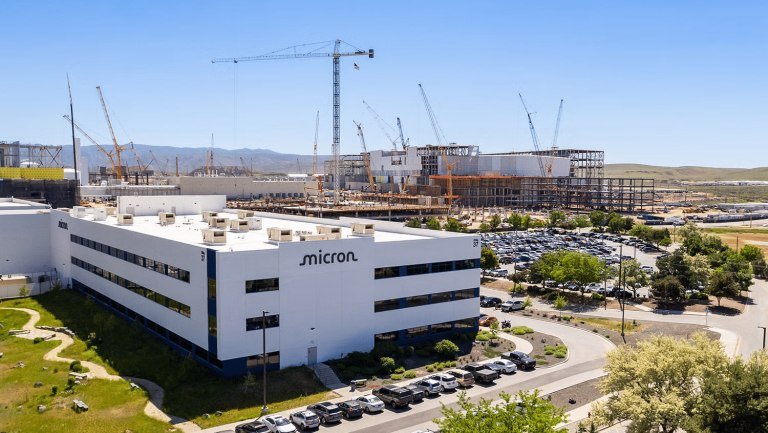
Microsoft and Chevron have signed a 20-year power purchase agreement to supply natural-gas-fired electricity to a proposed Microsoft data center campus in West Texas, the companies confirmed on 22 June 2026. The deal, disclosed in a TechCrunch report at 20:37 UTC the same day, commits one of the largest gas-powered data center projects in the United States to a single fuel source for two decades, even as hyperscalers across the industry race to rewire the grid around artificial-intelligence compute.
The agreement gives Microsoft a long-dated electricity hedge at a moment when AI training and inference workloads are driving industrial power demand to historic highs. It gives Chevron a contracted offtake for new gas-fired generation in the Permian Basin, the heart of US shale. The trade-off, environmental groups were quick to note, is structural: a 20-year PPA locks in the carbon footprint of the underlying plant for the entire life of the campus, regardless of how cheap solar, storage, or next-generation nuclear become in the meantime.
What the deal actually says
According to the TechCrunch report, Microsoft signed a 20-year power purchase agreement with Chevron to provide natural-gas-fired power for a proposed data center in West Texas, with the structure described as one of the largest gas-powered data center projects in the United States. The arrangement is a corporate PPA — a bilateral contract in which a buyer (Microsoft) commits to purchase a defined volume of electricity (or the output of a defined generating asset) from a developer (Chevron) at an agreed price, typically indexed to inflation or a fuel benchmark, over a fixed term. Corporate PPAs are the standard instrument hyperscalers use to anchor new generation, and a 20-year tenor is at the long end of the market.
Confirmation of the deal circulated through financial social media at 17:17 UTC, when the Unusual Whales account posted: "JUST IN: Chevron, $CVX, signed a 20-year deal with Microsoft, $MSFT, to provide natural-gas fired power for a proposed West Texas data center." A second post on the Polymarket account at 13:32 UTC added geographic specificity: "JUST IN: Chevron signs 20-year deal with Microsoft to supply natural gas power to its Texas data center campus." The two wires, both timestamped 22 June 2026, triangulate the basic facts: a single offtaker, a single supplier, a 20-year tenor, and a Texas site.
The reported scale — "one of the largest gas-powered data center projects in the US," per TechCrunch — is consistent with the size of AI training clusters now under construction across West Texas. Microsoft has been expanding its presence in the region for more than a year, in part because the Permian combines cheap gas, available land, a transmission-constrained but rapidly interconnecting grid, and a state permitting environment that is friendlier to fossil generation than California or the Pacific Northwest.
The counter-narrative: why gas, why now
The mainstream environmental framing is straightforward. A 20-year gas PPA ties a hyperscale AI buildout to a fuel source that emits roughly 400 grams of carbon dioxide per kilowatt-hour at the point of combustion, before methane leakage along the supply chain. Climate groups have spent the last 18 months arguing that the AI boom is incompatible with corporate net-zero commitments, and the Microsoft–Chevron deal is the kind of contract that hardens that critique into a headline. The implicit argument: Big Tech is willing to finance new fossil infrastructure for AI even as it sells carbon removal and 24/7 carbon-free energy pledges to its enterprise customers.
The counter-narrative, advanced by Chevron and echoed in industry analyst notes whenever a hyperscaler signs a long-dated PPA, is more boring and more plausible. AI compute is load that has to be served in real time. Solar and wind are cheap at the margin but intermittent; batteries are improving but expensive at the four-to-eight-hour duration an industrial training cluster needs; nuclear is the long-term answer, but new reactors will not grid-connect in volume until the 2030s. Gas turbines can be permitted in months, sited where the load is, and dispatched on demand. In a world where Microsoft has signed multi-gigawatt cloud contracts with OpenAI, Anthropic, and its own Copilot product lines, the engineering constraint is no longer decarbonisation purity — it is keeping the racks powered.
There is also a hedging logic. West Texas gas prices have been volatile since 2022. A 20-year fixed-price PPA transfers that price risk from Microsoft to Chevron, and the offtake certainty lets Chevron underwrite the capital cost of building the plant. For Microsoft, the deal is not just an emissions choice; it is a balance-sheet choice.
What this sits inside
The agreement is one data point on a much larger curve. US electricity demand is rising for the first time in two decades, driven primarily by data center load. The Department of Energy, the North American Electric Reliability Corporation, and the Federal Energy Regulatory Commission have all warned in the past year that the country's generation and transmission build-out is not keeping pace. Hyperscalers have responded by signing a wave of long-dated PPAs — for gas, for renewables with storage, for nuclear, and for everything in between — that effectively privatise the build-out of US power capacity.
That has consequences for the rest of the economy. When Microsoft signs a 20-year gas PPA in West Texas, it absorbs a slice of the regional gas grid that would otherwise have been available for residential, agricultural, or industrial users. As more hyperscalers follow the same playbook in the same region, the marginal price of gas-fired power for everyone else rises. The structural shift is subtle but real: the AI build-out is no longer a chip-supply story or a capex story. It is an electricity-market story, and the biggest buyers are now the biggest price-setters.
A second-order point: by signing a 20-year gas deal, Microsoft has implicitly accepted that its 2030 carbon-negative target is in tension with its AI growth plan. The company has said, in past sustainability reports, that it would buy enough renewables and carbon removal to offset residual emissions. Critics argue that offsets have not historically delivered the atmospheric integrity they claim. Either way, the arithmetic just got harder.
Stakes, and what remains uncertain
The deal's headline figures are clear: two counterparties, a 20-year tenor, a Texas site, and a gas-fired fuel source. Several things the public does not yet know: the nameplate capacity of the planned plant, the exact location within West Texas, whether the project includes carbon capture, what the contract price is, and whether Microsoft retains any option to exit or substitute the offtake if cleaner firm power becomes available at scale. The sources do not specify any of these.
The 20-year horizon is what makes the announcement consequential. Most corporate PPAs run ten to fifteen years. A 20-year commitment, at a moment when the cost curves for storage, advanced nuclear, and geothermal are still falling, is a bet that gas will remain the cheapest firm-power option in West Texas for a generation. If that bet is right, Microsoft and Chevron share the upside. If it is wrong, the campus inherits an asset that is both a stranded-fuel risk and an emissions liability — and one it cannot easily walk away from.
For the AI industry more broadly, the Microsoft–Chevron deal is a signal that the gas-build phase of the AI build-out is not a temporary bridge. It is the bridge.
Desk note: Monexus framed the agreement as a power-market and infrastructure story first, an emissions story second. The wire coverage on 22 June 2026 led on the size of the project and the 20-year tenor; we added the hedging logic and the price-setting implications for the regional grid, on which the source material was silent.
Wire provenance
This editorial synthesis draws on the following public wire/social posts:
- https://x.com/unusual_whales/status/
- https://x.com/polymarket/status/
- https://en.wikipedia.org/wiki/Power_purchase_agreement
- https://en.wikipedia.org/wiki/Permian_Basin