Pezeshkian lands in Islamabad — but the economic subtext is doing the heavy lifting
Iran's president is in Islamabad for a bilateral visit framed as economic follow-through, with energy, sanctions workarounds and CPEC adjacency all in the room — though the announced agenda is more aspirational than specific.
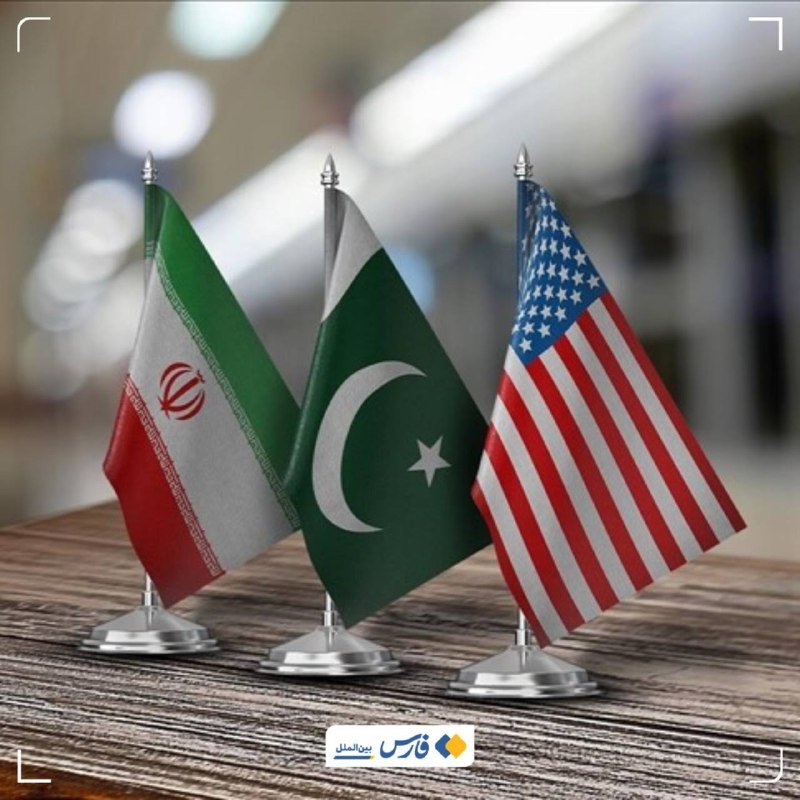
Iranian President Masoud Pezeshkian touched down in Islamabad on 22 June 2026 to a street-level welcome that did the diplomatic signalling for him: Iranian flags lined the capital ahead of a visit Tehran's presidency is framing, in real time, as a working session on the mechanics of expanding bilateral economic relations — not a state ceremony. PressTV's feed showed the flags going up across the city; Al Alam Arabic, the Iranian state channel's Arabic arm, reported at 13:04 and 13:05 UTC that the programme would combine a "follow-up to the decisions of previous visits" with broader talks on "the basis for expanding economic relations."
The visit is being sold as continuity rather than disruption. That is a deliberate editorial choice by Tehran. In a region where Iranian bilateral diplomacy is usually read through the lens of security, sanctions enforcement or rivalry with Gulf states, the economic register is itself the story: it is a way of telling Pakistani interlocutors, and Washington, that the relationship is now anchored in trade, energy and infrastructure rather than in crisis management.
What is actually on the table
Both Iranian readouts released ahead of the president's arrival are deliberately broad. "Expanding economic relations" is the phrase Tehran is using, and it covers an unusually wide portfolio: cross-border energy supply, barter arrangements that have grown in salience as sanctions restrict hard-currency settlement, the long-running Iran-Pakistan gas pipeline project (the IP project, often shortened to IP or referred to in older documents as IPI), port access through Chabahar, and informal mechanisms for moving goods that the formal banking system will not clear.
The "follow-up to the decisions of previous visits" formulation matters more than it looks. It tells the Pakistani side that Tehran is not arriving with a new maximalist agenda but with a checklist of unresolved items from prior rounds — a more modest framing, and one that lowers the political cost of any modest deliverable that does emerge.
The sanctions shadow
No bilateral Iranian economic visit in 2026 can be discussed honestly without naming the constraint. Iran's banking sector remains largely cut off from the dollar-clearing system, and the practical result is that even routine commercial deals have to be routed through non-sanctioned intermediaries, third-country banks, or barter. Pakistani officials have been open in the past about the difficulty of doing business with Tehran at scale while remaining inside the broader compliance perimeter their international partners expect.
That is the structural reason the economic subtext does so much work in this visit. A successfully negotiated framework would not just move goods — it would provide Tehran with a worked example of how to transact with a major South Asian neighbour at a time when its traditional European customer base is shrinking. For Pakistan, the calculation runs the other way: a more formalised arrangement would lock in cheaper energy supply and give Islamabad another lever against a domestic inflation problem that has rarely been out of the headlines since 2023.
The CPEC-shaped elephant in the room
There is a third party who is not at the table but whose shadow is visible: China. The China-Pakistan Economic Corridor runs through the same geography that any expanded Iran-Pakistan economic relationship would need to use, and the two architectures are not in obvious conflict, but they are not obviously coordinated either. Pakistani planners have spent the better part of a decade building Gwadar and the western road and rail links as CPEC's southern anchor; an Iran-Pakistan economic deepening that pulls additional freight through the same corridor would in principle complement Chinese infrastructure, in practice raise familiar questions about whose priorities govern traffic at the ports.
Tehran's readouts do not name Beijing. The decision to keep the language strictly bilateral is itself a signal — the visit is being framed as a Pakistani-Iranian settlement, not as a piece of a wider realignment. Whether that framing survives the joint communique is one of the few open questions worth watching.
Stakes and the honest limit of the readouts
The asymmetry between ceremony and substance is the most honest reading of the available material. The street-level flag display, the presidential-level travel, the carefully chosen economic vocabulary — all of it is designed to signal seriousness. The specific deliverables that have been announced publicly remain, as of the two Iranian readouts released on 22 June, at the level of framework and follow-up rather than signed instruments.
That is normal for a state visit of this kind, and it is also a useful caution against reading the trip as a turning point. The structural conditions — sanctions, the dollar constraint, the political volatility of cross-border energy pricing on both sides — have not shifted in the run-up to Pezeshkian's arrival. What may have shifted is the political appetite on both sides to formalise workarounds that, until recently, lived in the informal economy. If the joint communique due at the end of the visit names specific instruments — a barter clearing mechanism, a port-access protocol, a gas-pipeline milestone — the framing will have earned its weight. If it does not, the flags were the story.
Desk note: Monexus is leading on the economic and structural framing of Pezeshkian's visit rather than on the security register that has dominated wire coverage of Iranian bilateral diplomacy in past cycles. The source base for this piece is the two Iranian state-channel readouts of 22 June; further detail from Pakistani readouts and any joint communique will be incorporated when published.
Wire provenance
This editorial synthesis draws on the following public wire/social posts:
- https://t.me/s/alalamarabic
- https://t.me/s/alalamarabic
- https://t.me/s/presstv