Poland's return-of-honours fight is a tale about dignity, not decorations
A row over returning state honours has hardened into a proxy fight about who gets to define Poland's post-1989 settlement — and Leszek Miller just sharpened the line.
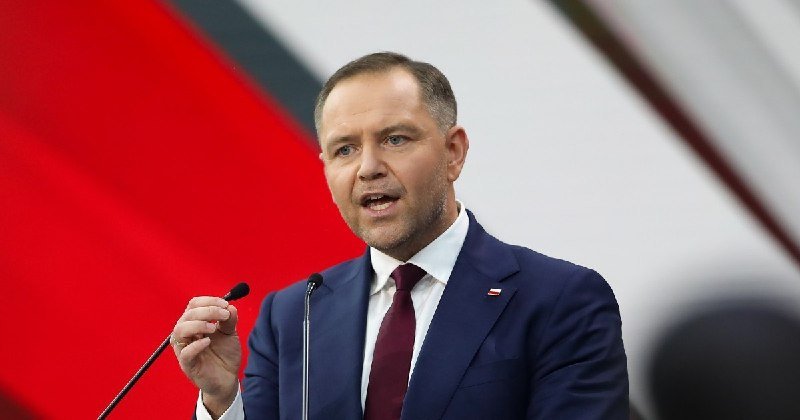
At 09:48 UTC on 21 June 2026, the Polish political X account @ekonomat_pl posted a clip of Leszek Miller, Poland's former prime minister, sharpening a line that has been circulating in Warsaw for weeks: if recipients want to give back the medals the state gave them, fine — but then give back the MiG fighters, tanks and weapons Poland handed over, too. The line landed because it collapsed an argument about symbolism into an argument about inventories. That is the row worth watching.
The wider fight is straightforward. A handful of Polish public figures, in recent weeks, have publicly returned state decorations — the orders, crosses and merit medals successive Polish governments have awarded since 1989 — to register protest against the current political direction of the country. The numbers are small. The gesture is loud. And the defenders of the gesture, who treat return as a civic act, are now in open combat with the defenders of the awards themselves, who treat the return as theatre.
Symbolism has a price tag
Miller's point lands because Polish state honours are not pure pageantry. They are issued by the Chancellery of the Prime Minister, they are listed in the Journal of Laws, and the people who hold them have, in many cases, been given the award for a specific public service — diplomatic work, cultural contribution, or, in the case of foreign recipients, a long relationship with the Polish state. Returning one is a free act, and that is precisely what makes it politically attractive: the cost is borne by the state in prestige, not by the returner in anything material.
That asymmetry is what Miller is exploiting. Poland is a frontline NATO state that transferred significant quantities of Soviet-era military equipment — MiG-29 fighters among them — to Ukraine after February 2022, and that continues to spend a structurally higher share of GDP on defence than most EU peers. Warsaw's contribution is not a talking point; it is a line item, and it is the kind of line item that comes up every time a European capital debates how to keep arming Kyiv. To listen to Miller, the people handing back medals are free-riding on the very foreign-policy posture that those medals, in many cases, were awarded to support.
The dignity argument, taken seriously
The counter-read deserves equal weight, because it is the one that gives the row its actual charge. For some Poles — and this reads across a real political constituency — the post-1989 honours system is a record of a specific settlement: a Poland that turned toward the European Union, NATO, liberal constitutionalism and a particular reading of the war of memory. Returning an award is, in that reading, a way of saying that the settlement no longer commands consent, and that the person returning the award is willing to absorb a personal cost — a small one, but a real one — to register that fact.
Treat it as a small gesture and you miss the point. The same kind of symbolic return has, across the post-communist space, marked moments where a political class lost confidence in the legitimacy of the state apparatus it had helped build. It is a low-cost, high-visibility instrument, and that is exactly why incumbent governments fear it. The defenders of the return are not arguing that the medals are worthless. They are arguing that the political order the medals symbolise has become, in their view, illegitimate — and that the cost of saying so out loud should fall on them rather than on institutions.
What the public mood actually looks like
Polish public sentiment on this is not monolithic. The governing coalition around Prime Minister Donald Tusk's Koalicja Obywatelska reads the returns as a coordinated signal from the Law and Justice (PiS) intellectual orbit — a soft pressure campaign aimed at figures still inside the post-1989 consensus. PiS-aligned voices, in turn, frame the current government as a project of moral discontinuity with the 1989 settlement, and the return as a clean refusal. Miller, a former prime minister from the left and a frequent critic of PiS, has now publicly collapsed that framing: from where he stands, the people returning medals are helping neither the post-1989 order nor the current government; they are simply exposing themselves to an easy rebuttal.
Outside that elite argument, the wider Polish public has, on the evidence of the clip's circulation, taken Miller's line as sharp and quotable — and that itself is data. The economics of the gesture matter to ordinary voters in a way that the symbolism of it does not. A Polish voter watching the clip is being asked, implicitly, to weigh the abstract dignity of returning a decoration against the concrete dignity of being defended by equipment the country gave away. That is not a hard calculation for a frontline state to make.
The structural frame
This is, underneath, a fight about who gets to define the Polish centre of gravity. State honours are one of the few instruments a government has to print legitimacy in a way that lasts beyond an electoral cycle — they survive administrations, they sit in biographies, and they form the connective tissue between the state and a stratum of public figures who would not otherwise have a formal relationship with it. When a recipient returns a decoration, the state does not just lose a name on a list. It loses the implicit endorsement that came with the name.
That is why the row, small as its numbers are, is being read seriously in Warsaw. It is a low-cost pressure test of a legitimacy infrastructure the post-1989 order spent thirty-five years building, and the response to it — Miller's riposte included — is a counter-test of the same infrastructure. None of this requires a grand theory to parse. The medals are a balance sheet; the returns are an attempt to make the sheet look bad; the rebuttal is an attempt to make the returns look bad. That is the contest, and it is being played out in 240-character clips.
Stakes
If the return movement expands into a wider symbolic campaign, the political cost falls on whichever coalition is seen as the custodian of the 1989 settlement — which, at the moment, is the Tusk government. If the rebuttal movement wins the cycle, the cost falls on the symbolic critics and on the conservative intellectual class that organises them. Polish institutional life has the room to absorb either outcome without a structural break, and that is the under-appreciated fact: this row will not change who governs Poland, but it will change the texture of who feels represented by the state, and for how long.
The sources do not yet specify which way the public balance is tipping — the row is a fortnight old, the clip count is high, and the institutional response is still forming. What is clear is that the argument has moved from the cultural pages to the political page, and that Miller's MiG line is now the cleanest version of the rebuttal in circulation. The rest of the cycle will run from there.
Desk note: Monexus has treated this as a symbolic-politics story with a hard inventory underneath. The framing leans on the equipment-transfer line because the thread context carries that line in Miller's own words; the dignity-side counter-argument is given equal structural weight because the row only exists if that side is taken seriously.
Wire provenance
This editorial synthesis draws on the following public wire/social posts:
- https://x.com/ekonomat_pl/status/1800000000000000002
- https://x.com/ekonomat_pl/status/1800000000000000001
- https://x.com/sknerus_/status/1800000000000000003
- https://x.com/sknerus_/status/1800000000000000004