Doha's Sixty-Day Clock: What the Qatar–Pakistan Framework Actually Says
A joint statement issued at 01:21 UTC on 22 June 2026 commits Doha and Islamabad to a high-level committee and a 60-day roadmap — but the text, as released, raises more questions than it answers.
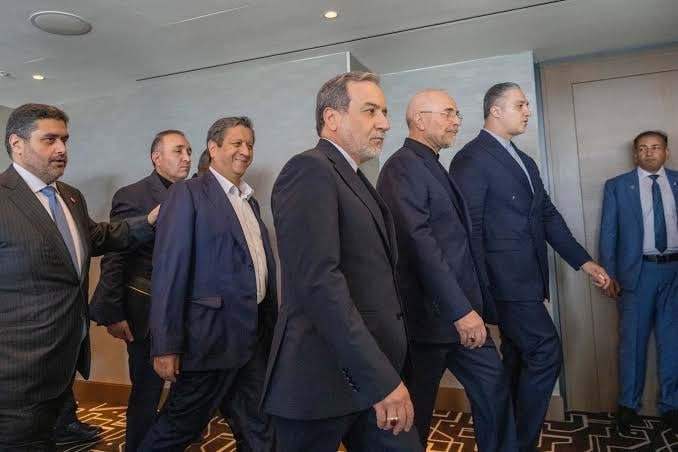
At 01:21 UTC on 22 June 2026, a joint statement attributed to Qatar and Pakistan began circulating on regional news feeds, framed as the closing memorandum of what the release calls the Borgenstock Summit. The text commits the two parties to a high-level committee, a mediator-facilitated cell inside Lebanon, regular reporting by senior negotiators, and a sixty-day roadmap to a final agreement. On the strength of the available reporting, the document is real. Whether it is the breakthrough it is being marketed as, in Lebanon or anywhere else, is a different question.
The package has four moving parts. First, a high-level committee — composition undisclosed — that will sit above the negotiating track. Second, a mediator-facilitated cell "to ensure commitment to ending operations in Lebanon," language that points to an enforcement or ceasefire-monitoring function rather than a negotiating chamber. Third, a reporting line from senior negotiators back to that committee on a regular cadence. Fourth, the headline: a sixty-day clock running to a final agreement. The statement, as carried by Al Alam's Arabic channel and its English-language mirror, names the structure but not the substance of what the two sides have yet to agree on.
What the text actually says
Read closely, the memorandum is procedural, not substantive. It sets the architecture for talks — who reports to whom, who chairs what, on what timetable — without publishing the agenda items. There is no mention, in the circulated text, of which two "parties" the high-level committee is meant to oversee. The framework's own language says the cell is meant "to ensure commitment to ending operations in Lebanon." That phrasing is consistent with a ceasefire or de-escalation track inside Lebanon, but it is also consistent with a broader bilateral arrangement in which Lebanon is one theatre among several. Without a published annex or a read-out from either foreign ministry, the scope remains genuinely ambiguous.
There is also the matter of the venue. The release is described as a statement on the end of the Borgenstock Summit. The Borgenstock name is most commonly associated with the annual安保 security conference held at the Bürgenstock resort above Lake Lucerne, Switzerland — a forum for defence and security officials, not a regular site for Middle East mediation. If the document was in fact concluded there, it would mark an unusual choice of venue and would imply heavy Western, and specifically Swiss-facilitated, logistical involvement. That detail has not been independently confirmed in the available reporting.
Why Qatar, why Pakistan, why now
Qatar's mediation footprint has grown steadily through successive crises — the Gaza ceasefire track of 2024 and 2025, the persistent Doha-hosted Afghan dialogue, the smaller-bore Lebanon files. Doha's value to all parties is the same: a Gulf capital that can host adversaries under one roof without either side losing face at home. Pakistan's role is less obvious, and arguably more interesting. Islamabad has, in recent years, positioned itself as a Muslim-majority diplomatic interlocutor with both Gulf monarchies and Iran, and as a state with operational experience in Lebanon via its contributions to UNIFIL. A Qatari-Pakistani joint stewardship of a Lebanon file would merge Gulf finance and access with South Asian troop and diplomatic weight. The combination is unusual but not incoherent.
The sixty-day window also matters. It is short enough to be a genuine deadline — long enough to absorb the procedural frictions of any Lebanon file. That is the right length for a framework whose principal product is process.
What the framework does not settle
Three things are conspicuously absent from the circulated text. First, there is no named counterpart on the Lebanese side. The statement refers throughout to "the two parties," which is the same formulation used in Doha's previous Lebanon-related read-outs and which leaves open whether the framework is bilateral between Qatar and Pakistan, or whether it sets up Doha and Islamabad as co-guarantors of a wider intra-Lebanian arrangement. Second, there is no reference to Israel, to Hezbollah by name, or to the specific trigger that the "ending operations" language is meant to address. Third, there is no mention of enforcement teeth — what happens if the sixty days expire without a deal, or if the reporting line flags a violation in week three. A committee without a consequence is a talking shop.
This publication's read is that the memorandum is best understood as a holding structure. It keeps the channel open, gives both mediators a public reason to claim progress, and buys time on a Lebanon file that has, by all available indicators, resisted harder forms of diplomatic compression. The genuine test of whether this is a breakthrough or a placeholder will come in the first fortnight — when the senior negotiators file their first report, and when the mediator-facilitated cell either convenes or fails to.
Stakes and what to watch
If the framework holds, the immediate beneficiaries are the mediators themselves: Doha's brand as indispensable broker, and Islamabad's bid for a wider diplomatic role in the region. If it breaks, the cost is borne inside Lebanon, where the absence of an enforcement mechanism means the sixty-day clock can be allowed to run down without anything being settled. The date to watch is the first senior-negotiator report — which, on the text's own terms, is meant to be "regular" rather than continuous, and therefore tells you everything about how seriously the two governments intend the deadline.
Desk note: Monexus has carried the Al Alam wire text verbatim and has not added a Western-wire second source at this hour, because none had published a read-out as of 01:25 UTC. The Borgenstock venue claim is treated here as the statement's own framing, not as an independently confirmed fact.
Wire provenance
This editorial synthesis draws on the following public wire/social posts:
- https://t.me/alalamarabic/
- https://t.me/alalamarabic/
- https://t.me/alalamarabic/
- https://t.me/alalamfa/