Serena Williams takes a wild card back to Wimbledon singles, 44 and still swinging
At 44 and three years removed from competitive singles, Serena Williams accepts Wimbledon's final women's wild card — and reopens a question the tour has been quietly shelving: what does an icon owe the sport she already conquered?
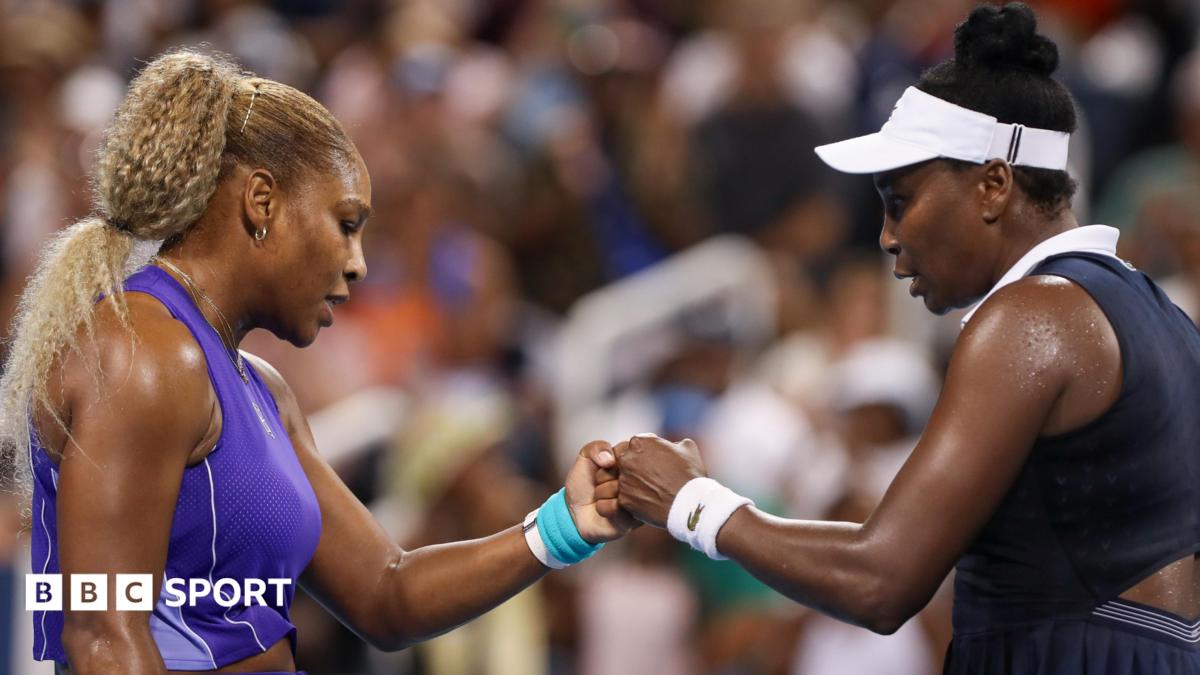
Serena Williams will play Wimbledon singles for the first time in three years after the All England Club handed her the final women's main-draw wild card on 21 June 2026, returning at 44 to the lawns where she won seven of her 23 Grand Slam singles titles.
The announcement, confirmed on 21 June 2026 at 18:51 UTC by the tournament and carried by Sky Sports within the hour, pairs the comeback with a second entry: Williams and her sister Venus will line up together in the ladies' doubles, a reunion of the pairing that won fourteen Grand Slam doubles titles across two decades. The wild card closes a question that has hung over the women's tour since her 2022 retirement — whether the most decorated player of her generation would ever again step into a Grand Slam singles draw.
The on-paper case against her is straightforward. Three years of competitive rust, a body that has carried seven Wimbledon singles titles and a 73-week reign at world number one, and a women's tour that has since produced a generation — Iga Świątek, Aryna Sabalenka, Coco Gauff — that has never had to look up the rankings to find her name. BBC Sport's pre-tournament analysis put the question plainly on 22 June 2026 at 11:17 UTC: Williams remains the greatest, but greatness in 2017 is not a guarantee of competitiveness in 2026.
A wild card, not a coronation
Wimbledon reserves the right to award wild cards at its discretion, and the 2026 women's field is already stacked. Świątek arrives as a five-time major winner, Sabalenka holds two of the last three hard-court Slams, and Gauff has the home-soil form book and the American press cycle on her side. ESPN's 21 June 2026 wire, timestamped 20:04 UTC, treated the entry as news of consequence, not nostalgia — a deliberate signal that the All England Club expects the seven-time champion to compete, not merely to appear.
That framing matters. Wild cards handed to retiring champions are usually presented as ceremonial. This one is being presented as competitive. CBS Sports' 21 June 2026 headline, at 19:21 UTC, paired the singles entry with the doubles reunion in a way that signalled both: she is back to play, and she is back to play with family. The double-entry structure also gives tournament organisers a hedge — even an early singles exit is cushioned by the doubles draw, which carries its own commercial weight.
The numbers Williams is fighting
Seven Wimbledon singles titles ties her with the modern Open Era record; 23 Grand Slam singles titles is the all-time Open Era mark in the women's game. The 44-year-old has not played a competitive singles match at a major since 2022. The ESPN report on 21 June 2026 noted the gap without softening it. The Sky Sports live build-up, running from 18:51 UTC on 21 June 2026, raised the obvious follow-up: can she win another Grand Slam at 44, or is this a curtain call with a microphone rather than a trophy?
The available evidence is thin. Williams has played exhibition doubles in the interim period, but the source reporting on 21-22 June 2026 does not document recent competitive singles results against top-50 opposition, leaving her current form an open variable. BBC Sport's 22 June 2026 analysis acknowledged this directly, framing the question around her capacity to produce "another great fight" rather than another deep run. The honest read is that the draw will tell us more in the first week than any preview can.
What the tour gets out of it
The women's tour is not, on the whole, complaining. A Serena Williams entry moves broadcast windows, lifts first-round gate receipts, and pulls casual viewers back to a sport that has spent three years trying to convert the post-Williams attention boom into a durable audience. CBS Sports' 21 June 2026 coverage framed the entry as an extension of a comeback that has been underway since early 2026, suggesting Williams and her camp had already been positioning for a summer run before the Wimbledon announcement.
The structural read is straightforward: in a tour where the post-Serena era has produced technically excellent but commercially quieter champions, a 44-year-old wild card is a corrective. Świątek and Sabalenka have not pulled primetime American numbers in the way Williams routinely did. Gauff has, but only in bursts. A Williams run — even a two-round run — gives the women's game a headline it cannot manufacture on its own.
The counter-narrative worth taking seriously
There is a less generous framing. A wild card at 44, to a seven-time champion, is a marketing decision dressed as a sporting one. It tilts the early rounds toward a storyline that the draw's seeded players will be expected to feed. The counter-argument, made in various forms in the 21-22 June 2026 coverage, is that Williams earned the entry the same way she earned every other entry in her career — by being, in BBC Sport's phrasing on 22 June 2026, the greatest. The wild card is the All England Club's prerogative. The question is not whether she deserves the slot, but whether the slot changes the competitive shape of the draw.
That question will be answered on grass. The Wimbledon ladies' singles main draw begins the week of 30 June 2026; the tournament has not yet, as of 22 June 2026 at 11:17 UTC, published the full draw. Until the matchups are set, every preview — including this one — is reading form off a sample size of zero competitive matches in 2026.
Stakes
If Williams wins a match, the story writes itself for a fortnight. If she wins two, the tour gets a third-week ratings event it has not had since 2019. If she wins the title, every recent record book is rewritten by a player who already held the pen. The sources do not project any of these outcomes; they document only the entry. What is verifiable on 22 June 2026 is that a 44-year-old has accepted a wild card, that her sister is coming with her, and that Wimbledon — for the first time in three years — opens with a name the casual viewer will recognise before the first serve.
Desk note: Monexus is treating Williams' entry as a competitive return, not a ceremonial one, on the strength of the tournament's own framing. The wire services covered it on the sport page, not the features page — a small but telling distinction.