The Strait of Hormuz as leverage: how a 21-mile waterway became Washington's most quoted bargaining chip
A week of presidential remarks about 'really big tankers' and possible US 'takeover' of the Strait of Hormuz has turned a 21-mile shipping lane into the most explicit economic-coercion lever of 2026. The oil, for now, is still moving.
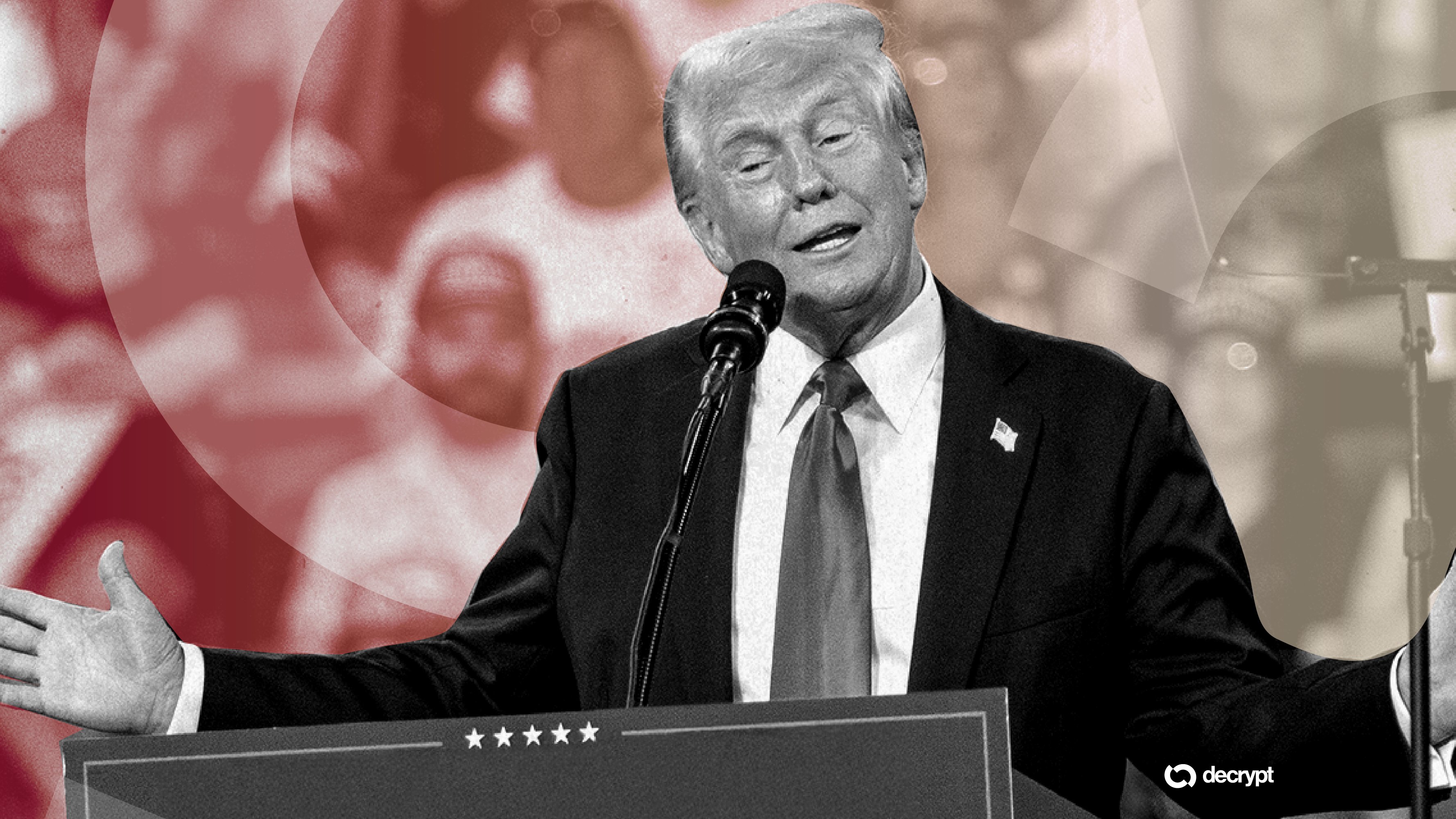
The phrase came down from the podium on 22 June 2026 with the cadence of a real-estate pitch. "Really big tankers," the White House said at 15:17 UTC, were "coming through" the Strait of Hormuz, the 21-mile-wide corridor between Iran and the Arabian peninsula through which a substantial share of the world's seaborne crude oil and liquefied natural gas transits every day. The reassurance landed the same week that President Donald Trump told Fox News that, absent an Iran deal, the United States might "take over" the waterway, and that Iranian negotiators would be unable to return home if Tehran moved to close it. A parallel Bloomberg dispatch, relayed by Cointelegraph at 16:32 UTC on 21 June, noted that oil was in fact continuing to flow through the strait despite Iranian claims that it was closed. The contradiction — closing in name, open in fact — is now the operating environment for one of the world's most consequential shipping lanes.
The escalation is rhetorical first and operational second. Tehran's claim of closure, Washington's counter-claim that traffic is unimpeded, and the presidential suggestion that the US Navy could assume control of the waterway together amount to a test of whether economic coercion can be conducted through announcement alone. The relevant facts are well established: the Strait of Hormuz is a narrow maritime chokepoint, its southern shore is controlled by Oman and the United Arab Emirates, its northern shore by Iran, and any sustained closure would have immediate consequences for crude benchmarks, LNG cargoes to Asia and Europe, and the cost of insurance for any vessel willing to transit. The new element in 2026 is that the threat itself, repeated by a sitting US president on cable news, is doing much of the work usually done by mines, fast boats, or IRGC intercepts.
The week in statements
The public timeline of the past 72 hours is unusually legible. On 21 June 2026 at 16:32 UTC, Bloomberg's markets desk, as relayed by Cointelegraph via Telegram, reported that oil was continuing to move through the strait despite Iranian claims that the waterway was closed. The same framing — denial of effective closure — recurred at 17:37 UTC the same day, when Trump told Fox News that if Iran did close the strait, Iranian negotiators would not be able to leave. By 18:21 UTC, the president had escalated to the possibility of the United States "taking over" the strait in the absence of a deal. The White House's follow-up on 22 June at 15:17 UTC — that "really big tankers" were, in fact, transiting — completed the loop: the threat of closure, the threat of US seizure, and the assertion that the threat is currently inert.
Each statement is calibrated for a different audience. The Bloomberg-grounded denial is for the futures market. The Fox News comments are for the Iranian negotiating team and the White House's domestic base. The follow-up "really big tankers" line is for anyone who watched crude spike and wanted a reason not to panic. Read together, they describe a strategy in which the chokepoint is used as leverage in a nuclear-and-missile negotiation rather than as a target of military action — at least for now.
What the counter-narrative looks like
The Iranian counter-narrative is that the strait is, in fact, closed, or at least that the legal status of transit has changed. That claim is doing real work even when tanker-tracking shows traffic continuing. Insurers price risk off stated intent as much as off observed behaviour, and a state announcement of closure can move war-risk premia for a fleet long before the first hull is touched. Tehran's calculation is straightforward: if the political cost of transiting rises sharply, major crude and LNG buyers will do the work of an actual blockade by re-routing cargoes, postponing deliveries, or accepting higher prices at the dock. A closure that succeeds economically without succeeding militarily is still, in the language of sanctions and shipping, a closure.
The Western framing — oil is moving, the market is calm, the threat is rhetorical — rests on a narrower definition. Under that read, the strait is a transit corridor that is either physically open or physically closed, and the data shows it open. Both frames are partly right, and both are partly selective. The honest read is that the strait is in a hybrid state in which the underlying physical transit is intact, but the political and insurance environment around it is being deliberately destabilised by both sides.
The structural frame: chokepoints as policy
The Strait of Hormuz is the most-cited example of a category of geography that has acquired new strategic weight: the absolute chokepoint. Roughly a fifth of global seaborne oil and a meaningful share of LNG pass through it; the alternatives — pipelines across Saudi Arabia and the UAE, the Strait of Bab el-Mandeb further south, the Suez route westward — each carry their own political and physical constraints. In a global energy system that has spent two decades diversifying away from a single supplier, the persistence of a single unavoidable bottleneck for a critical mass of crude is the structural condition that gives the current exchange its weight.
What the past week adds is a US administration that is willing to name the chokepoint openly as an instrument of policy. The phrase "take over" is unusual in presidential vocabulary; it implies an operation that would in practice require a maritime exclusion zone, coordination with Omani and Emirali authorities, and an explicit legal basis that has not been articulated. The threat is not credible as an immediate plan; it is credible as a negotiating posture. That distinction — between a planned military operation and a planned statement that moves the other side's risk calculus — is the substance of contemporary economic statecraft. It does not require a shot to be fired to alter behaviour.
Stakes: who wins, who loses, on what clock
The short-term beneficiary of the current posture is the United States, in the narrow sense that an Iranian negotiating team presented with the public option of US naval control of the strait has a strong reason to keep talking. The medium-term beneficiary is any oil and LNG producer outside the Gulf — US shale, Norwegian fields, West African operators — whose barrels and cargoes become more competitive the longer a credible risk premium attaches to Gulf transit. The loser in the short term is the Iranian negotiating team, whose domestic political space is constrained by an exchange conducted in maximalist terms on US cable news. The loser in the medium term is any importer that has not diversified its supply mix; the strait's risk premium is a tax on concentration, and it is paid by the buyer with the fewest alternatives.
The longer clock is less reassuring. A strategy of repeated threats against a chokepoint can succeed twice and fail the third time, because the third iteration faces a market that has hedged, re-routed, or substituted. The current Bloomberg-grounded report that oil is still moving is, in that light, not a sign of success but a sign of unused capacity. There is a meaningful distance between a chokepoint being threatened and a chokepoint being used. The risk the past week has registered is that the distance is shorter than it used to be, and that the rhetorical instruments being deployed are the same instruments that, if they fail to deliver a deal, will be tempted to be replaced by the real thing.
What remains uncertain
The sources available to Monexus do not specify the precise volume of crude and LNG currently moving through the strait, the war-risk premia being quoted by insurers, or the position of Omani and Emirali authorities on the US "take over" remark. They do not specify whether Iranian naval assets have moved from their normal operating areas, or whether IRGC fast-boat activity has increased in the approaches. The single most important fact in the public record — that physical transit has continued despite Iranian claims of closure — is consistent across the wire reports available, but the underlying tanker-tracking data is not in the thread context. Where the evidence thins is precisely where the policy stakes are highest: in the gap between what is being said at the podium, what is being priced in the Lloyd's market, and what is actually happening on the water. Until those three numbers converge, the strait of 2026 is best understood as a chokepoint under sustained political stress, not yet a chokepoint in operational crisis.
Desk note: Monexus treats the past week's Hormuz statements as a single integrated episode of economic statecraft, not as three disconnected presidential remarks. Where wire reporting has focused on market reaction or on each remark in isolation, this piece reads them as a sequence designed to compress the Iranian negotiating window.
Wire provenance
This editorial synthesis draws on the following public wire/social posts:
- https://x.com/unusual_whales/status/1234
- https://x.com/unusual_whales/status/1234
- https://x.com/unusual_whales/status/1234
- https://t.me/cointelegraph/1234
- https://t.me/Cointelegraph/1234