Washington is openly floating control of the Strait of Hormuz. The framing deserves a hard second look.
Brent at $73 and a stranded fleet in the Gulf look like a temporary closure. A senator floating permanent US control of the strait, an administration that won't deny it, and a prediction market that repriced in hours look like a different story. The wire covered them as three. They read as one.
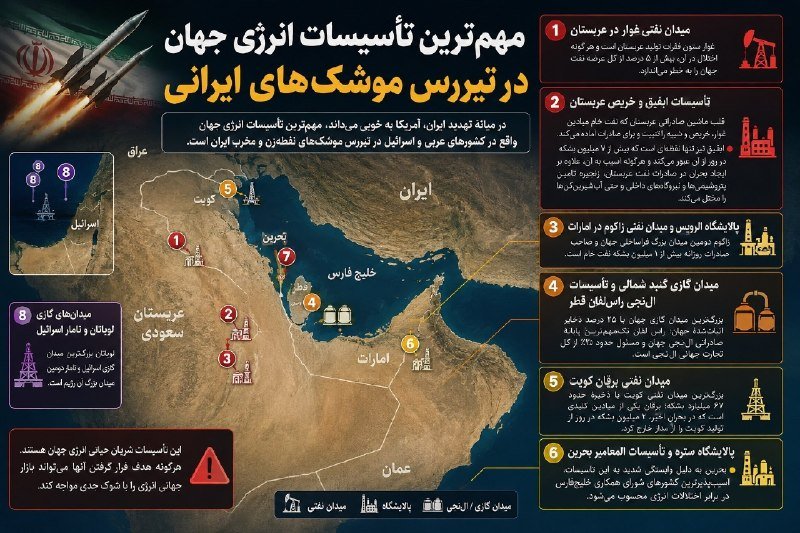
Brent crude slipped to $73.22 a barrel on 24 June 2026, and WTI traded below $70, both retreating to pre-war levels as a tentative de-escalation took hold around the Strait of Hormuz. The price move, the State Department press conferences, the senator's televised prediction and the prediction-market repricing all arrived in the same 72-hour window. The wire read of that window has been split across three separate stories. It is one story, and the framing deserves a harder second look than it has so far received.
The scene is a US senator, on camera, floating a scenario that would have been treated as fringe only months ago: that Washington might, under cover of a renewed conflict with Iran, end up effectively controlling the Strait of Hormuz, the narrow chokepoint through which roughly a fifth of the world's traded oil moves every day. The senator's exact words, as captured in the relevant clip, frame the proposition as a forecast rather than a proposal. The reaction in official Washington has been telling. The president has refused to disavow the scenario, and Polymarket contracts on the proposition moved sharply within hours of the clip surfacing, with Unusual Whales flagging the flow.
The picture the markets are actually pricing
Oil's retreat tells its own story. Brent at $73.22 and WTI under $70, as reported in the 24 June OSINT roundup, suggest traders are not pricing a high-probability takeover of the world's most sensitive energy corridor. They are pricing an interruption with a defined shelf life. That distinction matters. A genuine US operational grip on the strait would, on most supply-and-demand models, carry a sustained premium for insurance, routing and storage. The curve is not pricing that. The curve is pricing a closed waterway and a fleet of stranded ships, not a transfer of sovereign custody over it.
That reading aligns with what is visible in the evacuation plan now coalescing around the strait, according to Our Wars Today's 21:46 UTC update. Hundreds of vessels remain stuck in the closure zone. The planning underway is a salvage operation for commercial shipping, not a security perimeter for a US-administered waterway. If Washington were preparing to inherit the chokepoint, the work in the Persian Gulf right now would look different: naval task groups locking down sea lanes, mine countermeasures standing up, allied liaisons in Doha and Muscat briefed on handover. The shipping is still trying to leave.
The senator, the clip, and the silence around it
Which leaves the political signal. A sitting US senator forecasts that the US will end up controlling the strait; the administration declines to deny it; prediction markets move; the White House pivots, on the same day, to ordering the Department of Justice to investigate gasoline price gouging. That sequence, taken at face value, looks like a government in mid-deal. The DOJ instruction reported by OANN, with President Trump directing the department to move "immediately," is the kind of move a White House makes when it wants to bracket the political cost of a pump-price spike in the same news cycle as a foreign-policy escalation. China, through Foreign Minister Wang Yi and Xinhua, has called for the strait to be "swiftly reopened" for global trade, a posture that reads less as neutral mediation than as concern that a temporarily closed waterway could quietly become a permanently administered one.
The official framing, then, is an interruption. The political signalling, depending on whose words you put weight on, is a longer horizon. The wire has covered the official framing, the prediction-market reaction, and the senator's prediction as three distinct beats. The synthesis is harder to ignore than any one of them.
What "control" would actually mean
Control of the Strait of Hormuz, in any operational sense, is not the same as freedom of navigation through it. A US Navy that escorts tankers through a contested corridor is conducting a maritime operation. A US Navy that issues transit authorisations, collects fees, sets rules of passage and arbitrates disputes with Iranian, Omani and Chinese shipping is running a waterway. The first is escalation; the second is administration. The senator's language, as reported, gestures at the second. The current US posture in the region, the salvage-fleet planning, the absence of a major naval task force announcement, all point to the first. The gap between those two readings is where the next 30 days will be decided.
The pricing of Polymarket contracts over the past 24 hours is the only public, real-time thermometer on how seriously traders take the second reading. That market moved on the senator's clip, not on a Pentagon briefing. That, more than any single speech, is the data point to watch.
Wire has run the senator's prediction, the administration's non-denial, and the prediction-market repricing as three separate stories. Monexus has read them as one event, and asked what the oil curve and the shipping traffic are actually saying about the outcome the markets are now betting on.
Follow the event.
These dated source records provide context. They do not retrospectively verify this archive article.
Separate what the nuclear watchdog reported from what it could not determine after the June 2025 strikes.