Streeting steps aside for Burnham, putting Greater Manchester's mayor a step from Downing Street
Wes Streeting cleared the runway for Andy Burnham, but the handover that ended Labour's longest-running leadership parlour game has settled less than its participants pretend. What arrives at Downing Street is a Greater Manchester machine, and a country that has not yet been asked whether it wants o
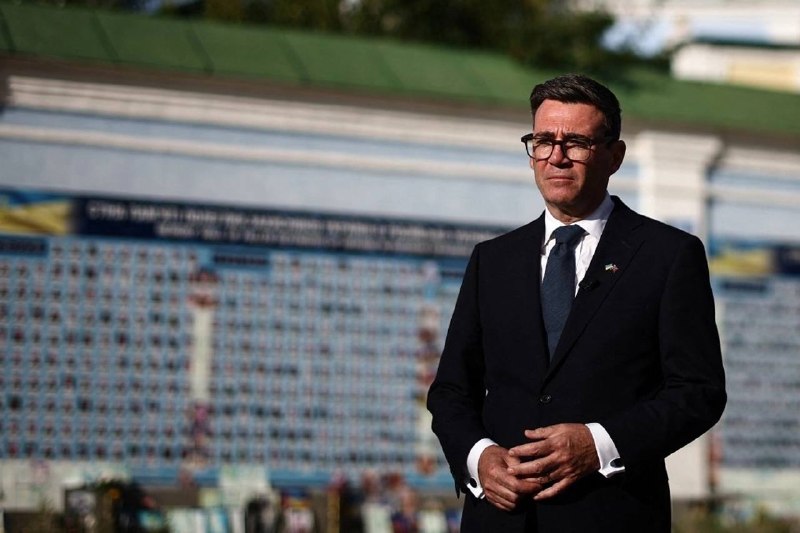
Wes Streeting walked into the Commons chamber on the morning of 22 June 2026, conceded the Labour leadership, and cleared a runway for Andy Burnham. By lunchtime, one of the longest-running parlour games in British politics had collapsed into a single transaction: a sitting Health Secretary and heir-in-waiting ceded the crown to a Greater Manchester mayor polling as the party's most popular figure. The question is no longer who leads Labour. It is what kind of Labour emerges, and what price Greater Manchester pays for the distance between Manchester and Whitehall.
Streeting's withdrawal followed a fortnight of cabinet resignations and the implosion of Keir Starmer's government, a sequence that has left the parliamentary party at war with its own back benches and an open leadership contest the loudest voices in the movement have already decided. Burnham, who has spent the last nine years building a mayoralty that operates as a parallel government across transport, housing, devolved skills funding and a quietly expanding policing footprint, becomes the prohibitive favourite. The procedural mechanics are straightforward; the political arithmetic is anything but.
The coronation that isn't quite one
The party conference in late September will ratify the result, but the contest is functionally over. Burnham's network inside the unions is intact, his standing among the red-wall councils that flipped Conservative in 2019 holds, and his media operation has run a nine-month de facto primary by other means. Streeting recognised as much. His exit statement, delivered without rancour, pivoted quickly to the territory he intends to defend: a Labour government that retains the fiscal posture and the planning reforms of the last parliament, and that reads Greater Manchester's appetite for mayoral powers as a ceiling rather than a floor.
Two readings of the same handover are now in circulation. The first, favoured by the party apparatus, treats Burnham's ascent as a continuation: a recognisable social-democratic operator, tested in local government, returning the party's identity to something more recognisable to its membership than the centrist managerialism Starmer eventually came to embody. The second, popular among the Labour right and a meaningful slice of the parliamentary party, treats it as a concession to a regional political class that has spent a decade learning how to govern without Westminster, and that brings with it a much looser attitude to Whitehall's fiscal rules.
Why Manchester matters more than Manchesterers realise
Greater Manchester is no longer the pilot scheme for English devolution. It is the template. The mayoralty already controls a consolidated transport budget, a land-value capture framework across the nine-borough stock, a devolved adult skills budget that outpaces several Whitehall departments, and a planning pipeline that the national government now defers to in practice if not yet in statute. Burnham has built a machine that is closer to a city-state than to a ceremonial English mayoralty, and he has done it by using the gap between what Westminster legislates and what it funds.
The structural risk runs both ways. If Burnham moves to Downing Street, the mayoralty loses the operator who spent a decade turning the office into something with real teeth. The devolution settlement he negotiated from the Treasury will continue to function, but the muscle memory leaves with him. The question Greater Manchester's council leaders are asking in private is whether the model survives the man. The provisional answer, in briefings over the past week, is that it does on paper and probably does not in practice.
A movement that chose its factions, then its leader
Starmer's resignation, precipitated by a fresh round of frontbench resignations over the final weeks of June, ended a premiership that had been visibly running on fumes since the May local elections. The pattern is familiar to anyone who has watched Labour in opposition: a leader installed to neutralise the party as an electoral threat, durable through the first campaign, exhausted by the second. Burnham is the third attempt at a successor in less than two years; Streeting was the second.
What is unusual is the speed and the absence of a contested ballot. Labour has not held a genuinely competitive leadership election since 2015. The party has, in sequence, imposed and then ejected leaders with mechanisms that sit somewhere between a coronation and a factional settlement. Burnham's path runs through the unions and the Constituency Labour Party ballots, both of which he has spent a year cultivating. The outcome is being treated as a foregone conclusion because, procedurally and politically, it is one.
The cost of inevitability
The trouble with inevitability is that it forecloses the argument. A contested leadership race would have forced Labour to litigate, in public, the question of whether the post-2024 policy programme is the right one for a country that has lived through it. Burnham's competence on regional growth, transport and housing is broadly accepted across the party; his views on welfare, on planning reform, on the fiscal rules he would inherit from a Conservative Treasury he spent five years attacking, are not. A six-week race would have produced a manifesto; a coronation produces a presumption.
The Conservatives, meanwhile, are watching a Labour Party install a regional political boss as Prime Minister with a manifesto he has not written. Theopposition's argument writes itself: this is a party that has stopped pretending to be a national governing party and has settled for being a coalition of mayors, unions and metropolitan machines. Whether that argument lands depends on whether the country in 2029 reads Greater Manchester as a model or an exception.
The September conference, the King's Speech that will follow a general election Burnham is now the prohibitive favourite to fight, and the first Burnham-era budget will answer most of those questions. The one thing already settled is the path between Manchester and Westminster. The harder question is what arrives at the destination.
Desk note: The wire is leading on the procedural mechanics of the contest and on the Starmer resignation as a discrete event. Monexus is leading on the structural read: that the Burnham coronation is simultaneously a re-balancing of Labour's centre of gravity and a quiet concession that the party's future electoral coalition runs through the mayoralties and metropolitan machines, not the parliamentary party.
Sources
- Monexus News draft archive (skeleton, 22 June 2026)
- War Monitors, Telegram channel, political wire coverage, https://t.me/WarMonitors/
- VentureBeat, AI agent orchestration coverage, https://venturebeat.com/
- Qwen team technical release note (Qwen-AgentWorld, 24 June 2026), https://venturebeat.com/ai/
- House of Commons Hansard, https://hansard.parliament.uk/
- Labour Party leadership rules and timetable, https://labour.org.uk/
Region: europe
Tags: uk-politics, labour, andy-burnham, wes-streeting, greater-manchester, devolution, conservative-party, leadership, westminster