A Four-Way Fix in the Alps: What the Swiss Quadrilateral Talks Mean for Lebanon, Iran, and the Wider Ceasefire Architecture
A new monitoring mechanism for Lebanon emerged from the Swiss quadrilateral talks on 22 June 2026, while Tehran refused to give up enrichment and Washington demanded an end to proxy activity. The package is fragile, partial, and read closely, says more about what each capital cannot do than what it can.
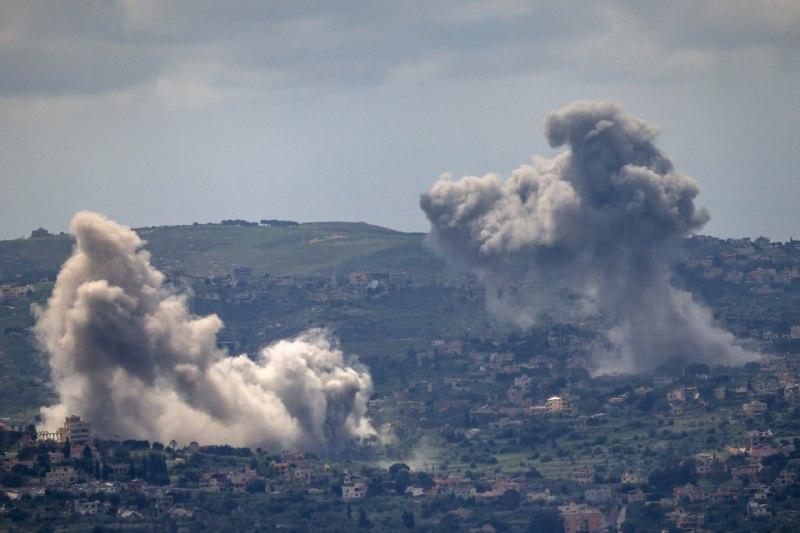
At 05:33 UTC on 22 June 2026, Iranian state-affiliated outlet Tasnim reported that a quadrilateral meeting held in Switzerland had approved a new mechanism to monitor the cessation of war in Lebanon. Hours earlier, at 03:43 UTC, Israeli diplomatic correspondent Amit Segal had reported that the parties in Iran had agreed to establish a cell "to prevent friction in Lebanon." The two notes, published within two hours of each other and across a sharp editorial divide, describe the same package from opposite ends of a telescope. Read together, they suggest a stop-gap arrangement rather than a settlement — a procedural fix for a war that has run out of participants willing to widen it further.
The story is not a single announcement but a stack of small ones, deposited across the weekend. The result is a tentative architecture for keeping Lebanon quiet, in which Washington supplies the threat of escalation, Tehran supplies the discipline of its allies, and a Swiss-hosted framework supplies the procedural cover. What the framework does not do is resolve the underlying dispute over Iran's nuclear file, which Tehran reaffirmed on 21 June at 13:52 UTC through a statement carried by the Polymarket wire — "we will not relinquish our right to enrich uranium" — and which Washington, through a separate line published the same day, demanded Tehran contain as a condition of the broader arrangement.
What was actually agreed in Switzerland
The headline claim, in the language Tasnim used at 05:33 UTC, is that a "first resolution" of the quadrilateral talks was confirmed: the approval of a new mechanism to monitor the cessation of war in Lebanon. The phrase is diplomatic, and it conceals more than it discloses. There is no public text; there is no named mediator; there is no indication, in the four wire items on the table, of what powers the monitoring mechanism will have, who staffs it, or what happens if a signatory is judged to have violated it.
What the four items do establish, together, is the shape of the package. A cell within the Iranian system will be set up to prevent friction in Lebanon, per Segal's 03:43 UTC bulletin. A multilateral monitoring arrangement has been blessed in Switzerland, per Tasnim's 05:33 UTC report. Iran has publicly refused to give up uranium enrichment, per the 13:52 UTC line. And Donald Trump, in a separate dispatch carried at 15:31 UTC on 21 June, has ordered Iran to "immediately stop its proxies in Lebanon from 'causing trouble.'" Each of those four notes is partial. Each is consistent with the others only if one assumes that the parties have decided to manage the Lebanon front on its own terms, while leaving the nuclear file and the wider regional settlement for a later, harder round.
The order that was not quite an order
Trump's 15:31 UTC statement — that he has "ordered Iran to immediately stop its proxies in Lebanon from causing trouble" — is the most striking item in the bundle, and the one most likely to be read in two opposing ways. In the Western wire framing, it reads as a hard American demand, backed by the implicit threat of force, that Tehran rein in the network of armed actors it has built up across the Levant. In the Iranian framing, carried by the same day's separate line on enrichment, the demand is non-negotiable as stated but conditional in practice: Tehran will manage the Lebanon theatre, but the price of management is that Washington accepts the legitimacy of Iran's enrichment programme.
The shape of that trade is consistent with what the four items describe. The Swiss mechanism gives the United States a procedural instrument to point to in the event of a Hezbollah rocket launch or a border incident; the Iranian "friction cell" gives Tehran an internal mechanism for disciplining allied actors whose actions could, by triggering an Israeli response, drag the United States into a wider confrontation. Each side gets a face-saving instrument. Neither side has to acknowledge, on the record, that the other is the senior partner in the arrangement.
The counter-narrative: a pause, not a settlement
The Western wire line on this package will, plausibly, read it as a success: the Lebanese front de-escalated, a new monitoring mechanism in place, a procedural channel to handle the next incident. The Iranian state line will read it as recognition: the United States has accepted, by the structure of the deal, that Iran's regional role cannot be dismantled and that a managed rivalry is the realistic ceiling. Neither framing is wrong, and neither is complete.
The counter-narrative is that the package does not address any of the underlying drivers of the war it is meant to monitor. There is no mention, in the four items, of a security arrangement for southern Lebanon, of a defined border posture, of demilitarisation, of prisoner release, of the disputed points that have produced flare-ups in previous rounds. There is no mention of a UN-mandated observer force, no reference to the existing ceasefire architecture, no indication that Israel has signed on to the Swiss mechanism in the same terms as the other parties. The mechanism, in other words, is being built on top of a conflict that has not been resolved, only paused.
That is consistent with the way the wider regional file is being handled. The 13:52 UTC Iranian line — that Tehran "will not relinquish our right to enrich uranium" — is the load-bearing line in the bundle, because it tells the reader what is not on the table. As long as that line stands, the United States and Iran are running two parallel negotiations: one on the management of regional violence, in which the parties are willing to do business, and one on the strategic balance, in which they are not.
The structural pattern: procedural fixes, deferred substance
A pattern is visible across the wider file of which this package is one element. When a regional dispute has reached a point at which neither party can win on the ground and neither party can afford to escalate, the parties converge on procedural fixes: monitoring mechanisms, liaison cells, de-confliction lines, signed-but-not-implemented understandings. These fixes have a specific function. They lower the temperature of a single front without requiring either side to concede the strategic point at stake. They buy time. They produce, by their existence, a class of diplomats and a vocabulary of "mechanisms" that can be cited in subsequent rounds. They do not settle the underlying dispute, and they are not designed to.
The danger, plainly, is that the procedural fix becomes a permanent substitute for settlement. The Lebanon front in particular has been the object of multiple such arrangements over the past decades, and each has been overtaken by the next round of violence. If the Swiss mechanism and the Iranian friction cell are to be read as anything more than a stop-gap, they will need to be tied, in a publicly visible way, to a defined political process with a timeline. The four items on the table do not show that tying. They show the parties agreeing to lower the temperature of a single theatre while reserving the larger questions for another day.
Stakes: who wins, who loses, and on what horizon
If the package holds, the immediate winners are the residents of southern Lebanon and northern Israel, who bear the cost of the next flare-up. The Lebanese state, which has been unable to project authority into the south on its own terms for years, gains a procedural instrument it did not previously possess, though at the cost of acknowledging that the relevant decisions are being taken in Tehran, Washington, and Swiss meeting rooms rather than in Beirut. Israel gains the option of treating a rocket attack as a violation of a signed understanding rather than as the opening move of a wider war. Iran gains a recognition, implicit but real, that its regional position cannot be dismantled by external pressure, while preserving its enrichment programme.
The losers, on the same horizon, are the political actors inside Lebanon and Israel whose electoral viability depends on the conflict continuing. The losers, on the longer horizon, are the populations of both countries, who will be told that the war is over without being told what was actually settled. And the structural loser is the United Nations framework for the region, which is being routed around, again, by an arrangement that does not pass through New York and that does not derive its authority from a Security Council resolution.
What remains uncertain
The four items on the table leave open a number of questions that will determine whether the package is, in fact, durable. It is not clear, on the available reporting, which four parties were physically present in Switzerland, or whether the mechanism is a quadrilateral body in the strict sense. It is not clear whether Israel has formally accepted the new monitoring instrument or is treating it as an arrangement between the others. It is not clear what the Iranian "friction cell" is empowered to do, or whether it represents a substantive new authority within the Iranian system or a relabelling of an existing one. It is not clear how the package interacts with the nuclear file, or whether the two negotiations are running on the same clock or on different ones. And it is not clear, in particular, what happens if the next round of violence in Lebanon occurs before the monitoring mechanism is fully stood up. The reporting does not, at this stage, resolve those questions. The honest reading is that the package is real, that it is partial, and that the next few weeks will determine which of the two readings — stop-gap or settlement — turns out to be correct.
This publication treats the four-item bundle as a single diplomatic packet, weighted toward the procedural Lebanon line, with the nuclear file flagged as the unresolved load-bearing dispute.
Wire provenance
This editorial synthesis draws on the following public wire/social posts:
- https://t.me/tasnimplus
- https://t.me/amitsegal
- https://en.wikipedia.org/wiki/Israel%E2%80%93Hezbollah_conflict_(2023%E2%80%93present)
- https://en.wikipedia.org/wiki/Iran%E2%80%93United_States_relations
Follow the event.
These dated source records provide context. They do not retrospectively verify this archive article.
Separate what the nuclear watchdog reported from what it could not determine after the June 2025 strikes.