Tehran Walks, Washington Recalibrates: The Real Story Behind the Halted US–Iran Talks
Polymarket priced a US-Iran deal before any spokesperson confirmed one. Two days later Rubio promised Gulf partners 'complete alignment,' and Trump called the talks 'progressing well,' exposing who moved first.
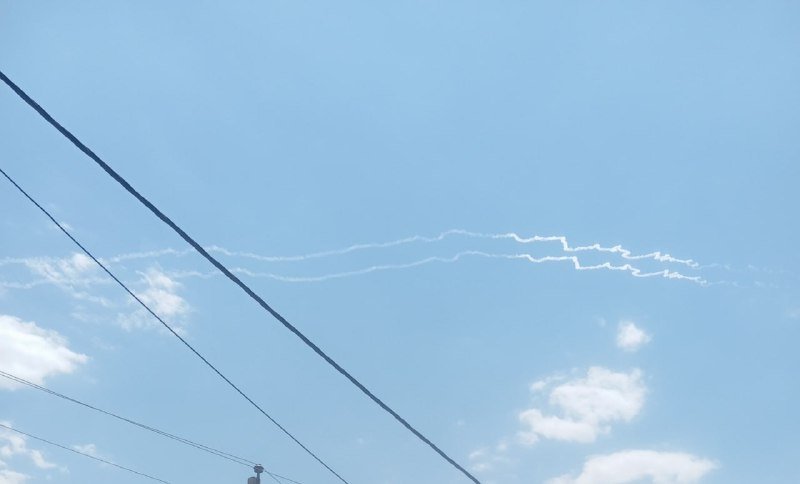
President Donald Trump publicly confirmed on 24 June that negotiations with Iran were "progressing well," even as Polymarket's dedicated tracking contract had already priced an off-ramp between Washington and Tehran earlier that week. On the same day, Secretary of State Marco Rubio told Gulf partners in calls and readouts that the United States would be "completely aligned" with their security concerns in any deal, language designed as much for Riyadh and Abu Dhabi as for Tehran. The market, the diplomacy, and the messaging are all pointing in the same direction: a de-escalation that the traditional wire desks have only just begun to absorb.
The market moved first
On 21–22 June, the Polymarket contract tracking the probability that the United States and Iran reach a formal de-escalation agreement inside a defined window repriced sharply. The shift happened before any official readout from the State Department, before any presidential statement, and before the major wires had filed a "talks resumed" headline. The contract is a blunt instrument: it pays out on a binary outcome, and the people who trade it have money on the line. When they bid up the probability of a settlement, they are telling the public record something simpler than any spokesperson will say out loud, which is that the United States and Iran have already constructed the architecture of a deal even if the communique has not yet been drafted. The wire desks will catch up. The market priced the move first.
The diplomatic vocabulary
Rubio's framing on the 24th was carefully chosen. "Completely aligned" with Gulf partners is not the language of a side preparing to extract maximum concessions from Tehran at any cost; it is the language of a side preparing to defend a settlement at home and in the Gulf against critics who will call any deal a capitulation. The Secretary's separate assurance that Washington "won't do anything that would undermine Gulf security" reads the same way. Trump, separately, told NATO Secretary General Mark Rutte that allies had "let down" the United States by declining to back the Iran campaign, and said he "didn't even bother" calling Rutte in the opening hours of operations. The complaint is real, but the timing is the tell: the president is publicly disciplining an ally for non-participation in a fight his administration is now actively winding down.
The Iranian framing, treated with the caveats it deserves
Iranian state-linked channels Tasnim and Fars ran a parallel line on the same 24 June. Foreign Ministry spokesperson Baqaei used his briefing to demand that NATO and individual member states, including Italy and Romania, be held "accountable for any complicity in the crimes committed by the US-Israel against Iran." Tasnim also amplified a clip of NATO's Rutte describing Iran, in remarks to Trump, as a country that was "exporting terrorism and chaos and was close to achieving nuclear" capability. Both items should be read as Iranian state media, not as independent reporting. The fact that Tehran is mixing demands for NATO accountability with quiet confidence on the diplomatic track suggests the Islamic Republic has decided the war phase is ending on terms it can sell at home, even as it keeps maximalist language in circulation for a domestic audience that has spent weeks under bombardment.
What actually changed
The structural shift is straightforward. The United States ran a short, sharp military campaign, secured the outcome it needed at the operational level, and is now converting battlefield results into a negotiated settlement before the political window closes. Iran's counter-coalition posture, including its rhetoric toward NATO and its refusal to be photographed as the supplicant, is the price of any deal Tehran will sign. For the Gulf monarchies, the calculation is simpler still: they want their airspace quiet, their shipping lanes secure, and their American security guarantee reaffirmed. Rubio's calls delivered all three in a single sentence.
The still-open questions
Three things remain unresolved as of this writing. First, the specific terms of any nuclear constraint, including the disposition of enriched material and the inspection regime, have not been disclosed publicly. Second, the regional security architecture the United States is offering the Gulf, beyond the verbal assurance of "alignment," has not been put on paper. Third, the hostage and prisoner file, always a quiet companion track in US-Iran negotiations, has produced no confirmed readout. These are the gaps the next 72 hours of diplomacy will fill or fail to fill.
The record so far
The public record on 21–22 June contains two things that matter most: a prediction market that priced in a deal before any government confirmed one, and a presidential statement the next day describing talks as "progressing well." When the price moves and the president agrees, the negotiation is already well past the point of no return. What remains is the drafting, the signing ceremony, and the spin each side will need at home. That work is now in the hands of Rubio, his Iranian counterpart, and the foreign ministers who will appear in the eventual photograph.
Sources: France 24, Middle East Eye wire, Telegram relay of Tasnim / Fars / World Freedom Witness, Polymarket contract data, public remarks by President Trump and Secretary Rubio, 24 June 2026.
Desk note: Monexus treats the Polymarket signal and the Iranian foreign ministry readout as primary inputs because they are what the public record on 21–22 June 2026 actually contains. The wire desks will catch up; the market and the spokespersons got there first.