Trump warns Iran of unspecified action as nuclear talks wobble into a familiar endgame
After the Iranian delegation walked out of talks in the face of US threats, the rhetoric from Washington has shifted from bargaining to menace — and the gap between the two is now the story.
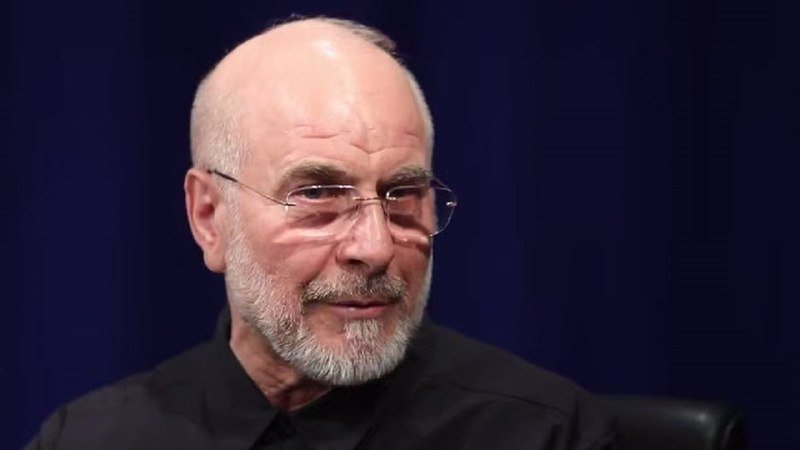
On the evening of 22 June 2026, the rhetorical floor under US-Iran nuclear diplomacy gave way. Reporting from the talks, Iran's former diplomat Mohammad Marandi said on X that the Iranian delegation walked out of the room after threats from the United States and, despite repeated entreaties, refused to return. He framed the exit as a model: "This is how sovereign nations must deal with the US." Within the hour, Donald Trump told reporters that if Iran does not stick to a deal, "I will do what I have to do," according to a Reuters wire posted at 20:50 UTC. By the close of the day the language coming out of Washington had moved from bargaining to menace — and the gap between the two is the story.
What is on the table is no longer just uranium enrichment and inspection access. It is the question of whether a second US administration will use force to foreclose a programme it has defined, in unusually blunt terms, as an existential threat. Trump framed a hypothetical Iranian nuclear weapon as something that "supersedes depression" — a country under nuclear pressure, in his telling, suffers regardless of whether war comes. The Strait of Hormuz he described as "totally open" under US control, paired with a stated goal of a "country that will never have a nuclear weapon." The threat is comprehensive, and it is not framed as a last resort.
The walkout, and the choreography around it
Marandi's account is the most concrete picture yet of how the latest round has frayed. The Iranian side left, the US side asked them back, and they did not return. That sequence matters because US-Iran talks have historically survived walkouts — there are usually shuttle mediations, third-party face-saving formulas, and a return within 48 hours. The Iranian side describing the exit as a deliberate demonstration of sovereignty suggests something different: a decision to make the breakdown of the talks itself a message.
The American response has been calibrated escalation. Trump's own remarks, carried by the ClashReport Telegram channel on 22 June, run together economic pressure, military capability, and racialised taunt. "They have 91 million people; they can't feed them." "Iran had a powerful air force four months ago." "As long as they respect us — I don't want to use the word 'fear' because it's inappropriate — as long as they respect us, we're not going to have any trouble. We have total control of the strait." Read as a single brief, the message is that the cost of non-compliance is total, and the cost of compliance is submission.
The Strait of Hormuz is doing heavy lifting in that argument. Roughly a fifth of global seaborne oil passes through it; any sustained disruption moves Brent crude within hours. Trump's claim that the waterway is "totally open" is also a claim that the US Navy can keep it that way against Iranian retaliation — a claim Iran has spent forty years preparing to test.
What a deal would actually have to look like
Three elements define any plausible settlement. First, the fate of Iran's roughly 60% enriched uranium stockpile, which since 2025 has been the technical pivot of the entire debate. Second, the inspection regime — particularly access to sites the Atomic Energy Organization of Iran has previously kept off-limits. Third, the sanctions architecture: oil export licences, central bank access, and the status of the Revolutionary Guards in US terrorism designations.
The Iranian counter-position, as Marandi framed it, is that these are not separable technical questions but elements of a single sovereignty test. A deal that preserves the country's right to enrich under monitoring, restores frozen assets, and offers credible sanctions relief is a deal. A deal that requires Tehran to dismantle capability, accept intrusive inspections that apply to no other NPT signatory, and surrender regional partners is — in this framing — a surrender dressed in diplomatic language. The walkout reads as a refusal to negotiate on US terms.
The structural frame: a sanctions economy that talks its way to war
The pattern is not new. Maximum-pressure campaigns depend on the threat of force to work, which means they need an off-ramp to avoid that force being used. When the off-ramp is framed — by the imposing party — as full capitulation, the threatened party has a rational incentive to bet that the threat is not credible. The other rational move, when the threat is in fact being prepared, is to leave the table before the pretext is constructed.
The Strait of Hormuz is the leverage that makes the bluff work. It is also the lever most likely to break everything if pulled: even a limited US naval engagement in the Strait closes it for insurance purposes, which is itself a strategic earthquake. Iran's air force, as Trump noted, is a fraction of what it was before the June 2025 strikes — but its anti-ship missile batteries, mine-laying capability, and shore-based cruise missiles are the legacy of a forty-year investment that the air force was never the centrepiece of. The economic pain a war inflicts is not asymmetric; it is just differently distributed.
What is also structurally true is that Iran has limited ability to escalate without crossing a US red line, and the US has limited ability to back down without validating the Iranian reading that the threat was never serious. That is the negotiating trap the walkout has tried to make visible.
Stakes, and what remains uncertain
If the trajectory holds, the world is looking at a four-to-eight-week window in which the US decision to strike — or not — is the only variable that matters. The 91 million Iranians Trump cited do, in fact, depend on a functioning food-import economy that runs partly on revenue from the same oil exports US sanctions target. A war would not change that arithmetic; it would intensify it. The Iranian negotiating position, in this reading, is that time is on its side so long as the Strait does not close, and that the political cost of a second US war in the Middle East is not zero in Washington either.
What the public sources do not yet establish is whether there is a back-channel in operation — Oman, Qatar, and Switzerland have historically played this role — or whether the walkout is the final move. The Reuters wire on Trump's "I will do what I have to do" remark does not specify the deal terms under discussion, the venue of the talks, or the names of any other officials present. The ClashReport transcripts are second-hand paraphrases of public remarks rather than negotiated text. Iran's actual negotiating mandate is not in the public record.
What is in the public record, as of 22 June 2026, is that the Iranian delegation has chosen the symbolic cost of leaving the room over the substantive cost of staying in it. Whether that posture ends in resumed talks, a deal, or a war is now, in Trump's own framing, a question of what "I have to do" turns out to mean in practice.
Monexus framed this as a structural question about the off-ramp in a maximum-pressure campaign, where the major wires are running the talks as a Trump-rhetoric story. We treated Marandi's account as a primary source for the Iranian side of the walkout, flagged the ClashReport transcripts as paraphrased public remarks rather than negotiated text, and read Trump's "I will do what I have to do" in its full sequence rather than as a standalone quote.
Wire provenance
This editorial synthesis draws on the following public wire/social posts:
- https://x.com/s_m_marandi/status/2069159787065909248
- http://reut.rs/3QX1Wgb
- https://t.me/ClashReport/
- https://t.me/ClashReport/
- https://t.me/ClashReport/
- https://t.me/ClashReport/
- https://t.me/ClashReport/
- https://t.me/ClashReport/
- https://t.me/ClashReport/
Follow the event.
These dated source records provide context. They do not retrospectively verify this archive article.
Separate what the nuclear watchdog reported from what it could not determine after the June 2025 strikes.