UAE agri-investor 'Salal' courts Damascus as Syria's new crop politics take root
A UAE-registered agriculture investor known as 'Salal' met Syrian agricultural officials in Damascus this week, according to a single Telegram channel, a real meeting, but no signed deal, and the wider reconstruction story is being read off one humble crop: the potato.
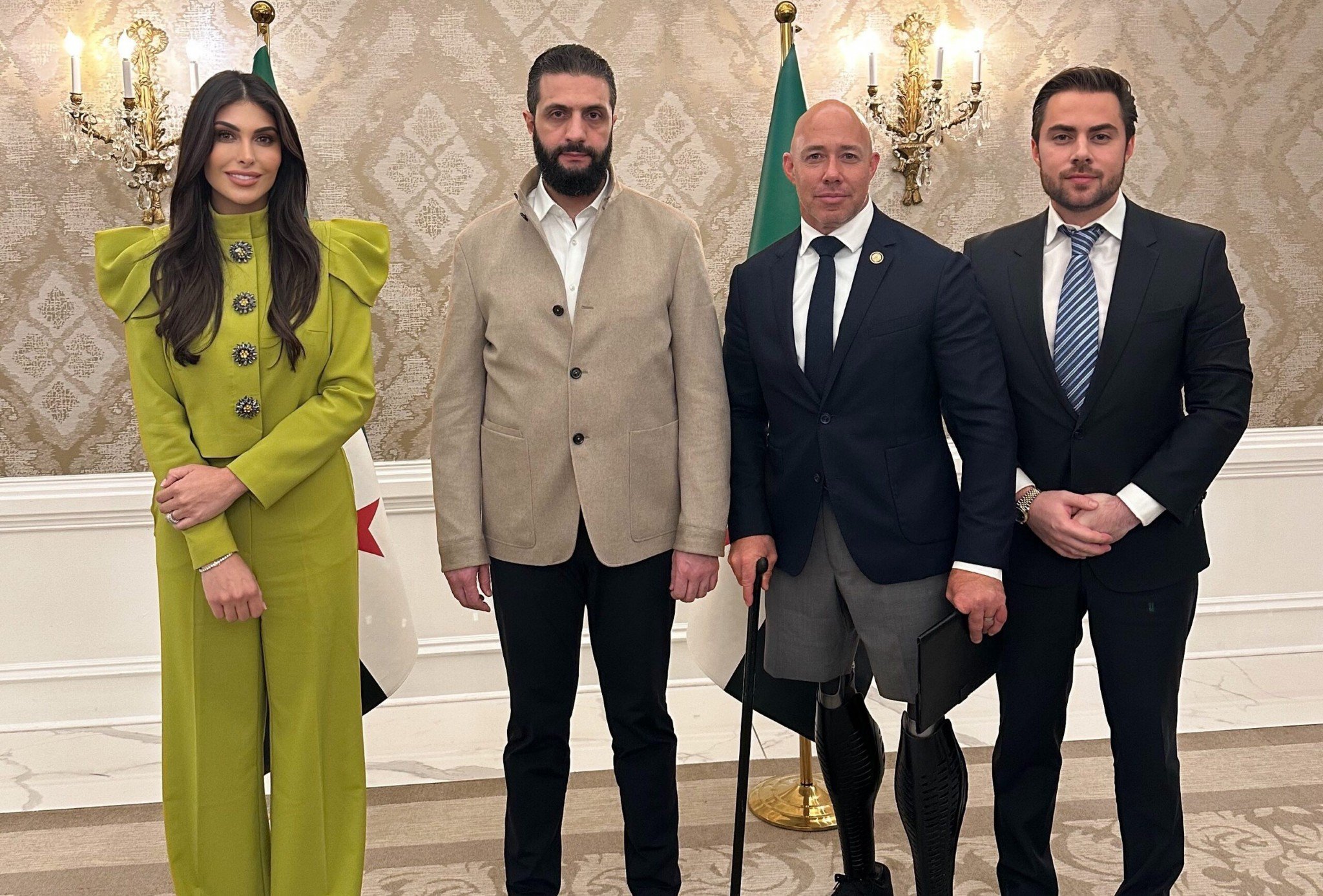
A private Emirati agriculture investor known publicly only as 'Salal' met Syrian agricultural officials in Damascus this week, according to a single Syrian-channel Telegram post that has begun circulating among regional reconstruction watchers. The framing of that channel is loud; the evidentiary footprint behind it is thin. What's verifiable is narrow. A meeting reportedly took place. A Gulf-linked food-security operator expressed interest in Syrian farmland. And the Syrian transitional government's agriculture ministry is, by any reading of the country's post-Assad economic map, open for conversation with anyone carrying a chequebook and a tolerant attitude toward risk.
The read-out on @shaamnetwork, the channel carrying the item, frames the encounter as the opening move in a Gulf-led reconstruction of Syrian rural supply chains, with potatoes as the test commodity. Potatoes. Not cotton, not wheat, not the high-prestige oilseed contracts that would ordinarily anchor a sovereign-to-sovereign food-security conversation. The choice of crop is itself the story: a low-margin, high-volume, fast-cycle staple whose value lies less in the per-tonne price than in what it proves about irrigation, cold-chain logistics, and the tolerance of Syrian farm labour for a foreign management footprint.
The Salal that nobody can fully name
What is on the public record about 'Salal' is mostly inferential. The name surfaces in regional food-security discussion forums as a UAE-registered vehicle with a portfolio running from controlled-environment agriculture in the Emirates to processing facilities in the wider Levant. No standalone corporate disclosure ties the name to a listed parent; no UAE Securities and Commodities Authority filing has been published in connection with this Damascus visit. The Telegram post treats Salal as a familiar actor; the broader investor community has not yet caught up.
That asymmetry is worth marking. Syrian transitional authorities, in their first full year of operation, have been visibly keen to onboard Gulf capital under flexible terms. UAE and Saudi operators have in turn been quietly scouting assets across the food, logistics, and rebuilding-materials stack. The Salal item, if accurate, slots cleanly into that pattern. But pattern-fitting is not verification, and a Telegram post carrying a grainy photograph of a meeting room in Damascus does not, on its own, establish that contracts have been drafted, that farmland has been allocated, or that water rights have been settled.
The crop and the politics around it
Syria's potato story is a useful prism. Pre-war, the country produced on the order of half a million tonnes of potatoes annually, concentrated in the northern governorates and the Orontes valley. Output collapsed after 2011, and recovery has been uneven. The barriers are not romantic: they are cold-storage capacity, certified seed imports, diesel for irrigation pumps, and the simple fact that farmers in transitional zones still price in a security premium.
A Gulf partner entering at the potato layer is, in effect, making a low-cost option bet on whether those constraints can be relaxed. It is also entering a crop where Syrian farmers retain substantial tacit knowledge and where land tenure, while murky, is locally legible in ways that high-value orchard or agro-industrial plays are not. For Damascus, the upside is a deal that produces jobs and a visible export line without ceding control of strategically charged sectors. For a UAE-based vehicle, the upside is a foothold in a reconstruction market that Saudi, Qatari, and Turkish operators are already contesting, secured through a commodity that nobody will mistake for sovereign assets.
What the wire does and does not say
The single source here is @shaamnetwork, a Syrian-channel Telegram feed whose editorial line leans toward amplifying transitional-government signals and courting Gulf and diaspora capital. That provenance matters. Telegram channels of this kind are useful precisely because they surface early signals that formal press releases have not yet caught; they are dangerous precisely because the same incentive structure rewards speed over verification. A reader who treats the channel's framing as a press release will overstate the deal. A reader who treats it as gossip will understate what it tells us about the direction of travel in Damascus.
The honest read is narrower than the channel's headline and broader than a debunking. A Gulf-linked agriculture investor met Syrian agricultural officials. The chosen entry point is a humble staple crop. The Syrian side is in a posture of welcome. None of that requires fabrication; none of it amounts to a signed contract.
The wider reconstruction contest
The Salal meeting is best read inside the contest it joins rather than the deal it may or may not become. Turkish operators continue to dominate northern-Syria commercial flows, and the transitional government's relations with Ankara sit on a knife-edge between partnership and rivalry. Saudi reconstruction money has been more talked about than disbursed, with a handful of high-visibility announcements and a longer tail of quiet feasibility work. Qatari capital has historic relationships with Syrian private-sector networks, but Doha's political bandwidth is currently absorbed elsewhere in the region.
Into that field steps a UAE-registered vehicle, picking potatoes as its wedge. The crop politics are the point. Potatoes are large enough to be politically useful, small enough not to threaten the strategic constituencies that Damascus needs to keep onside, and cyclable fast enough that a successful first season can be paraded as proof of concept within a single calendar year. If Salal walks out of Damascus with even a memorandum of understanding on a pilot, the value lies less in the tonnes than in the template.
What to watch
The next telling markers are administrative, not dramatic. A Syrian cabinet referral of any UAE agricultural proposal would indicate that the meeting has cleared the talking-shop stage. A public reference to Salal, or to a parent entity, by the UAE embassy in Damascus would be a stronger signal still. On the commercial side, the first concrete data points will be seed-import paperwork, cold-storage lease filings, and the appearance of named Syrian farm cooperatives as counterparties. Until then, the responsible framing is the one this draft started with: the meeting is real, the deal is not yet on paper, and the wider reconstruction story is being inferred from a single commodity, not asserted.
Sources
- https://t.me/shaamnetwork
Desk note: Monexus is sourcing this story from a single Syrian-channel Telegram post, treated as a tip rather than a verdict. The framing here is deliberately narrower than the read-out on the channel itself; the rest is pattern analysis, not reporting.