Tariff Talks, Combat Drills, and a 90% Bet: Reading the US-China Week Through Five Quiet Signals
A combat-readiness drill in Taiwan, fresh Chinese restrictions on US defence contractors, and a prediction market giving December a 90% chance of a deal — the same week also produced a quieter, weirder story about the corruption of academic verification.
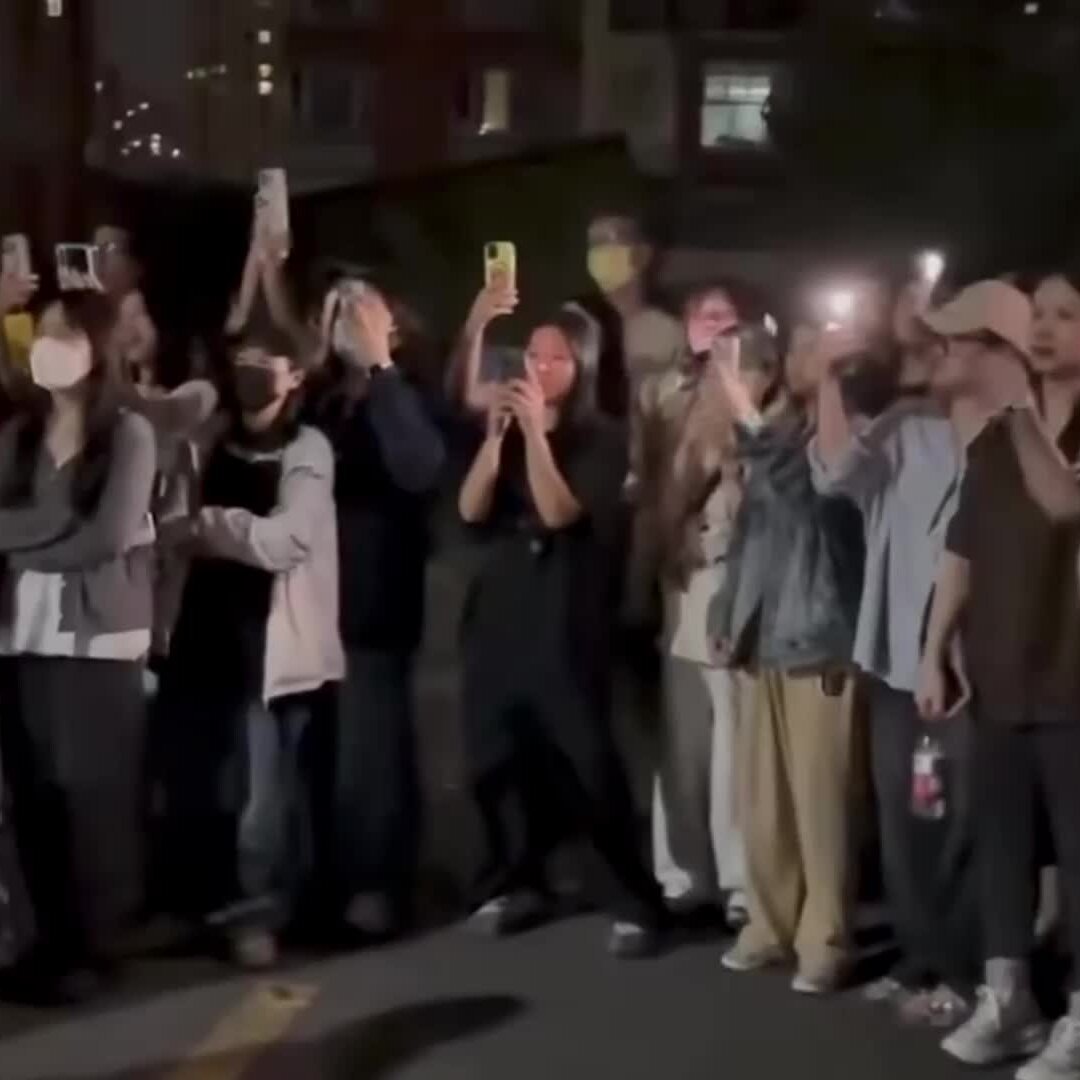
A five-day combat readiness drill opened in Taiwan on 22 June 2026, the kind of routine test-and-cycle event that the People's Republic and the United States have learned to read like diplomats read communiqués. According to Press TV's morning brief on the day, the exercise is designed to stress rapid response and joint operations "amid rising tensions with China," language that has become boilerplate in regional security copy and that nonetheless tells you what the wire thinks the public will tolerate hearing. The drill matters less for any single manoeuvre than for the calendar it lands on.
The same 22 June news cycle produced a second signal pointing the opposite direction. Reuters reported on the structural obstacles to China's push to power artificial-intelligence data centres with renewable electricity — a story that, in the implicit logic of the Western business page, casts Chinese industrial policy as over-promising and under-delivering. A third signal landed in the same hour: Polymarket opened a contract pricing a US–China tariff agreement by 31 December 2026 at roughly 90%, a number that quietly assumes the confrontation has a settlement date in sight. And then, almost as a counter-tone, the South China Morning Post published an investigation into Chinese researchers attending academic conferences that, on closer inspection, do not exist. Taken together, the five signals describe a relationship that is simultaneously hardening and softening, and a global audience that has stopped being able to tell the difference.
The drill, the dollar line, and what the calendar implies
Taiwan's annual Han Kuang exercises have, for two decades, been the most legible signal Taipei can send without crossing a rhetorical line that Beijing treats as casus belli. A five-day "urgent combat readiness" variant, however, is a deliberate upgrade — shorter, more compressed, built around the assumption that the warning time between crisis and conflict is shrinking. Press TV, an Iranian state outlet that picks up Chinese and Russian framing of US-aligned activity in the Taiwan Strait, framed the drill as a defensive response to "rising tensions with China." The phrasing is interesting precisely because it is not the framing Taipei uses; Taiwan's defence ministry describes Han Kuang as a routine readiness cycle. The mismatch tells you something about which audience the line is being written for: not the readers of the Taipei Times, but readers in Beijing, Moscow, and Tehran for whom any drill in the Strait is treated as evidence of US provocation rather than as standard peacetime activity.
The structural context is the one everyone already knows: the United States maintains a policy of strategic ambiguity toward the island, sells it defensive arms, and conducts regular transits through the Strait. Beijing regards those transits and arms packages as preparatory acts. The drill, on this reading, is not an escalation in itself; it is a calibration, the kind of mid-cycle adjustment that says "we are watching the same calendar you are."
The market says deal; the ministries say no
Polymarket, the crypto-native prediction venue that has become a quasi-official thermometer for US-China sentiment, listed a roughly 90% implied probability that Washington and Beijing reach a tariff agreement by year-end. That is a strikingly high number for a relationship in which a senior Chinese ministry placed new restrictions on dozens of US firms — including ten defence contractors — in retaliation for unspecified recent US actions. The two facts are not contradictory in the way they appear to be. Markets price the modal outcome; ministries price the worst case. A 90% deal probability leaves a 10% tail in which the commercial relationship has, by December, hardened into something the current architecture cannot easily reverse. The defence-contractor blacklisting is best read as Beijing keeping that 10% tail credible.
Reuters, for its part, ran the day's most useful piece of structural reporting: a long look at the obstacles to China's push to power AI infrastructure with green electricity. The story is being framed, in Western business press, as evidence of over-reach — Beijing announcing grid-scale ambitions that provincial grids and transmission planners cannot yet deliver. That framing has a kernel of truth. It is also, as the steelman requires, incomplete. China added more solar and wind capacity in 2024 and 2025 than the rest of the world combined; the bottleneck Reuters identifies is the second-stage problem, the one that follows the announcement and the ribbon-cutting, and it is the kind of problem every industrialising power has hit on the way up. The Western reading treats the bottleneck as a sign the programme is failing; the Chinese reading, which CGTN and the People's Daily have run in parallel, treats the bottleneck as the next problem to engineer around. Both can be true.
The quietest story of the week
The most diagnostically useful piece of reporting on 22 June did not concern missiles, tariffs, or grid loads at all. The South China Morning Post's investigation into Chinese researchers attending academic conferences that, on verification, do not exist, is the kind of story that looks like a culture-page curiosity and reads, on closer inspection, as a stress test of the entire verification economy. The pattern the paper documents is by now familiar: predatory conference operators scrape names from journals, mint convincing-looking programmes, sell registration fees, and rely on the prestige externality of the field to keep attendees from asking too many questions. The China-specific twist is scale — a research system producing more papers per year than the rest of the world combined, with promotion and grant metrics that reward publication count over publication venue, creates a structural market for the product.
The structural lesson is not really about China. It is about what happens to verification when the institution that is supposed to perform it — peer review, conference organisation, the editor-in-chief — is overwhelmed by the volume it is asked to certify. Western academia is not immune; the same SCMP reporting ecosystem that documents Chinese conference fraud has, in parallel, covered the rise of paper mills and citation rings in Elsevier-indexed journals. The point is not that one system is uniquely broken. The point is that the cost of verification has risen faster than the revenue model that pays for it, and the gap is being filled — unevenly, opportunistically — by operators of various nationalities.
Stakes, and what remains contested
The week, in sum, is a small case study in how a major-power relationship can be tense and transactional in the same breath, and how each side's wire copy tells the audience exactly what it is prepared to hear. A 90% prediction-market price for a deal is not the same thing as a deal. A five-day combat drill is not the same thing as a crisis. A blacklisting of ten defence contractors is not the same thing as a sanctions regime. The reader's job, increasingly, is to keep these distinctions alive — and to notice, as the SCMP story quietly insists, that the infrastructure of trust on which every other distinction depends is itself under stress.
What the sources do not let us resolve is the most consequential question: whether the 90% probability of a deal and the ten-percentage-point tail of non-deal risk describe the same relationship, or whether they are two different relationships, one of which the market sees and the other of which the ministries are preparing for. That is the live uncertainty this publication will keep watching.
— Monexus ran this as a wire-cluster read rather than a single-event story: the 22 June cycle contained a Taiwanese drill, fresh Chinese restrictions on US defence firms, a Reuters structural look at China's green-AI grid, a Polymarket-implied 90% deal probability, and an SCMP investigation into fake academic conferences. The unifying frame is that the relationship's signalling and verification layers are both under simultaneous stress.
Wire provenance
This editorial synthesis draws on the following public wire/social posts:
- https://t.me/presstv/
- http://reut.rs/4acfM4R
- https://x.com/polymarket/status/