Sixty-day window: US suspends Iran oil sanctions as Chinese and Iranian tankers lift crude from the Gulf
A reported 60-day pause on US secondary sanctions clears the way for Iranian crude to reach buyers at scale, with Chinese and Iranian-flagged tankers already moving cargoes out of the Gulf.
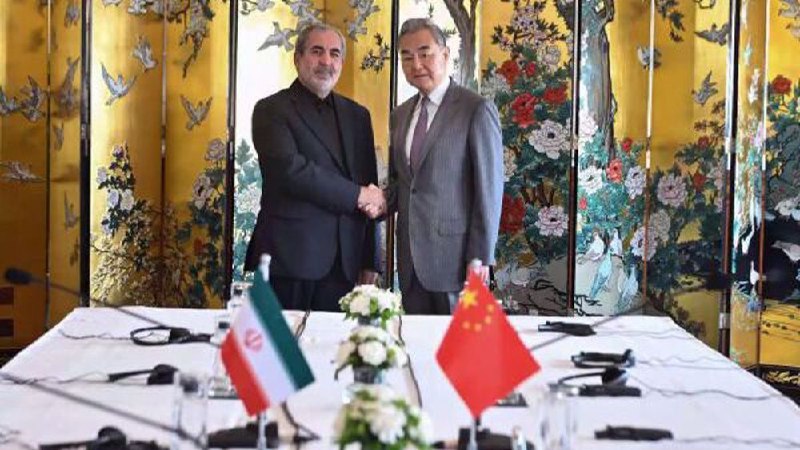
A flotilla of Iranian and Chinese-flagged tankers is moving crude out of Iranian terminals in volumes that open-source monitors described on 22 June 2026 as "massive," hours after the United States was reported to have suspended enforcement of secondary sanctions on Iranian oil for a 60-day window. The combination — sanctions relief in Washington and a logistics response from Beijing and Tehran — has effectively turned a sanctions regime that took nearly a decade to construct into a timed experiment in how fast sanctioned crude can find its way to market.
The pause is not a concession. It is a clock. For sixty days, Iranian oil can move through the global financial system and aboard commercial tonnage without the secondary penalties that, since 2018, have priced most Iranian crude into a discount market dominated by Chinese teapot refineries. The question now is whether two months is enough to clear inventory, restock the Islamic Republic's reserves of foreign currency, and re-anchor the bilateral Sino-Iranian energy relationship on terms that outlive the window.
The tanker build-up, by the numbers
Three independent open-source monitoring channels reported a surge in Iranian and Chinese tanker activity in the Gulf on 22 June 2026. Telegram channel Megatron, posting at 16:51 UTC, described the volume as "massive" and concentrated on Iranian and Chinese vessels. The X account @sprinterpress, posting at 16:18 UTC, used near-identical language about a "large number of Iranian and Chinese tankers." The OSINT aggregator "WarMonitor" had earlier the same day, at 16:00 UTC, framed the movement as the physical consequence of the 60-day US sanctions pause.
That triangulation matters. Two of the three channels are open-source intelligence accounts that track AIS (Automatic Identification System) transponder data, vessel ownership registries, and port-call records; the third is a war-and-conflict aggregator that explicitly linked the tanker movement to a discrete US policy action. None of the three claimed the volumes in barrels, and the publicly available information does not specify either the number of vessels or the tonnage currently loading. What the three accounts converge on is direction, not magnitude.
What the 60-day pause actually changes
US secondary sanctions on Iranian oil work by threatening non-US persons — banks, shippers, insurers, refiners — with loss of access to the US financial system if they handle Iranian crude. The architecture was built up across the Trump administration's 2018 "maximum pressure" campaign and tightened under successive administrations. In the years since, the practical effect was a bifurcation: Iranian oil continued to flow, but it flowed to a small set of buyers willing to absorb the compliance risk, at a discount of roughly five to fifteen dollars a barrel to Brent, and via a "ghost fleet" of vessels that obscure origin through ship-to-ship transfers, renamed hulls, and switched-off transponders.
A 60-day pause, even if confirmed, does not unwind that architecture. It creates a window in which a larger pool of buyers — including, in principle, refiners in jurisdictions that have so far stayed clear of Iranian crude — can purchase cargoes without facing secondary-sanctions exposure. The discount should narrow. The shadow fleet should thin. And Iran's central bank, which has had to repatriate hard currency through barter, front-companies, and small Chinese and Iraqi banks, gets a 60-day window to settle via the dollar system on terms approaching normal.
China's structural position
Beijing is the indispensable buyer. China absorbed roughly 80 to 90 percent of Iran's seaborne crude exports under the tightened US regime, according to trade-flow estimates widely cited in industry reporting. That made Chinese teapot refineries in Shandong province the price-setter of last resort for sanctioned Iranian crude, and gave Beijing leverage that translated into discounted feedstock, deferred-payment terms, and political insurance against US secondary enforcement.
The 60-day pause shifts that dynamic in two directions at once. On one hand, it gives Beijing diplomatic leverage: it can frame its continued Iranian purchases, which were already happening, as cooperation with a US-orchestrated window. On the other, it reduces the discount Iranian crude must offer, which marginally raises the input cost for Shandong refiners and provides an opening for alternative suppliers — Saudi Arabia, Russia, West African grades — to win back volume.
Chinese state and quasi-state media have not, in the publicly available reporting to hand, formally characterised the pause. The structural Chinese interest is straightforward: stable, discounted feedstock; a counter-weight to dollar-cleared oil; and a precedent for sanctions relief as a transactional tool rather than a permanent posture. Those interests do not require Beijing to declare the pause a victory, and Chinese diplomatic practice suggests it will not.
Stakes, and what remains contested
For Tehran, the arithmetic is brutal but legible. Iran exported, by most published estimates, between 1.3 and 1.6 million barrels a day in 2025, the bulk of it to China, generating hard-currency inflows that have kept the rial from a full collapse. A 60-day window that allows that flow to clear at narrower discounts and via more transparent shipping could plausibly add several billion dollars in revenue — enough to fund subsidy arrears, prop the currency, and clear some of the backlog of unpaid contracts with Chinese and Russian counterparties. Whether the same window, or its expiry, will produce a political settlement in the nuclear file is a separate question that the publicly available sources do not address.
For Washington, the calculus appears to be tactical. A timed, reversible pause is the kind of leverage a sanctions regime is designed to produce: relief in exchange for movement on a defined deliverable, with the threat of snap-back on a known calendar. The risk is that the two months dissipate without a deliverable, and that the architectural credibility of secondary sanctions is harder to restore than it was to suspend.
What the sources do not establish — and what this publication cannot verify from the materials to hand — is the precise legal instrument the US is using to suspend enforcement, whether the pause covers all Iranian crude or only specific grades and counterparties, and whether the window is a coordinated move with a JCPOA-adjacent negotiation or a discrete transactional arrangement. The language of "put on hold for 60 days" used in the WarMonitor posting does not, on its own, identify the underlying authority — a Treasury OFAC general licence, an executive order, or an ad hoc enforcement posture — or the trigger that ends it. Those details matter, and they are not in the open record yet.
The next ten days will tell. Iranian and Chinese tankers now loading in the Gulf will need roughly that long to reach Shandong, discharge, and clear payment. The first leg of the experiment — whether sanctioned crude can move in volume on a temporary permission — is already in motion. The second — whether the permission can be converted into something durable — depends on negotiations that have not been described in the open record at all.
How Monexus framed this: where wire reporting has emphasised the diplomatic signal, this piece reads the 60-day window as a logistics and revenue event — the part of the story that is verifiable from the open-source shipping record. The diplomatic and nuclear-file dimensions are flagged as not yet sourced.
Wire provenance
This editorial synthesis draws on the following public wire/social posts:
- https://t.me/megatron_ron
- https://t.me/osintlive
- https://twitter.com/TheWarMonitor/status/206908153362168