The Switzerland talks are not a peace deal — they are an oil deal wrapped in diplomatic language
Mediators in Geneva describe 'encouraging progress' between Washington and Tehran. The reported substance — frozen assets, oil and petrochemical waivers, a blockade lifted — tells a narrower story than the rhetoric.
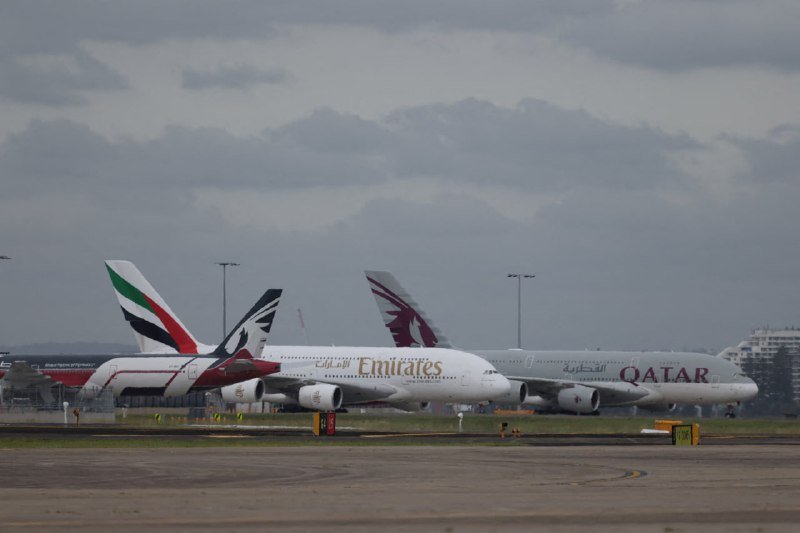
The first high-level US–Iranian meeting of this cycle closed in Switzerland before dawn on 22 June 2026, and the read-out from the two mediators was unusually warm. Qatari and Pakistani officials, joined by Iran's foreign minister Abbas Araghchi, used the phrase "encouraging progress" and announced that a roadmap had been approved. The stated goal, per the mediators' statement, is to bring a final document before the parties. The reality being negotiated is narrower than the language suggests — and considerably older.
The reporting that has surfaced in the hours since the talks closed points less to a strategic settlement and more to a transactional package: oil and petrochemical export waivers, a lifting of a maritime blockade, and the release of some frozen Iranian assets. A Lebanon ceasefire is also reportedly on the table. The mediators' framing — "tireless Pakistani and Qatari mediation" — is doing diplomatic work that the underlying terms do not yet support.
What the mediators are actually claiming
The most concrete item in the joint statement, as carried by multiple channels, is a roadmap intended to lead to a final agreement. Pakistani and Qatari delegations said the document was approved at the session. Iran's foreign minister Araghchi confirmed the framing in his own remarks. None of the read-outs circulating on 22 June describe a signed document; the language is "approved" and "designed to lead to." That distinction matters. A roadmap is a sequence of steps, each of which can stall. The mediators' optimism is a function of having agreed the sequence, not of having executed it.
The second concrete item is a list of deliverables: oil and petrochemical exports are to be permitted, the blockade on Iran is to be lifted, some frozen assets are to be released. These are sanctions-easing measures that Washington could in principle implement unilaterally through executive waivers, without a broader treaty architecture. That they are being presented as the substance of a mediated summit is itself diagnostic of the negotiation's character.
Why Pakistan and Qatar, and not the usual channels
The choice of mediators is the story. Pakistan, a nuclear-armed state with close ties to both Washington and Tehran, has spent two decades positioning itself as the indispensable back-channel to the Iranian foreign ministry. Qatar hosts the largest US airbase in the region and maintains a working relationship with Iran's clerical establishment through Al Jazeera and the Qatari sovereign's direct line to Tehran. Together, the two cover the political and logistical surfaces that a Gulf-state-only framework would miss — particularly Iran's preference for dealing with states that are not part of the active sanctions coalition.
The deeper read is that the usual European channel (E3 plus EU) and the usual Gulf channel (Saudi Arabia, UAE) have been partially bypassed. That is not incidental. A negotiation conducted through Doha and Islamabad is one that the GCC capitals and the Europeans can neither claim credit for nor block. It is also one in which the United States retains the substantive veto on sanctions waivers, while outsourcing the convening to states that Iran regards as interlocutors rather than adversaries.
The structural frame, in plain terms
This is what a sanctions regime looks like when it begins to fray under its own weight. The dollar-based architecture that gives US sanctions their reach depends on a coalition of counterparties — European banks, Asian refiners, shipping insurers — that have been doing business with Iran through carve-outs, waivers, and quiet non-compliance for years. The longer the architecture is asked to enforce a maximum-pressure policy without delivering a diplomatic outcome, the more expensive compliance becomes for those counterparties relative to the political and commercial cost of working around it. Switzerland, in that sense, is less the site of a breakthrough than the site where the cost-of-enforcement calculation has finally been put on the table.
There is also a Lebanon dimension. The reported linkage between a sanctions package and a Lebanon ceasefire is significant: it would mean the United States has judged that the marginal value of the current sanctions regime, on the present trajectory, is being offset by the marginal cost of an active Israeli-Hezbollah front that the sanctions architecture cannot itself close. Treating the two as a package is not humanitarian reasoning; it is a budget-allocation decision about American attention.
What remains contested
The read-outs are not yet a deal. "Encouraging progress" is the language a mediator uses when the principals have agreed to keep talking. The terms reported — waivers, a blockade lifted, partial asset release — are precise enough to be falsifiable, but the reporting on them is so far coming from Telegram channels aligned with the Iranian foreign-policy ecosystem and from one X account summarising the mediators' statement. Independent confirmation from either a US Treasury readout or a wire service carrying official US comments is not yet visible in the 22 June cycle. The official Iranian accounts and the Qatari and Pakistani read-outs are the principal source; that is a thin evidentiary base for the scale of the claims being made.
The substantive disagreement that any deal will turn on is not whether some oil exports are unblocked. It is whether the underlying sanctions architecture — including the snapback provisions tied to the 2015 framework — survives the carve-outs, or whether the carve-outs become the architecture. On the present reporting, the carve-outs are large, the underlying structure is unchanged, and the roadmap contains no description of how the two are reconciled. That is the question the next round in Switzerland, or wherever it lands, will be asked to answer.
This publication frames the Switzerland talks as a transactional package rather than a strategic settlement, in line with the available read-outs; full text of any signed document is not yet in the public record.
Wire provenance
This editorial synthesis draws on the following public wire/social posts:
- https://t.me/rnintel
- https://t.me/englishabuali
- https://t.me/ClashReport
- https://t.me/abualiexpress
- https://t.me/sprinterpress
- https://t.me/zvezdanews