Two messages, one negotiation: the strange duet coming out of Washington and Tehran
A US vice president reportedly told Iranian envoys to ignore his own president's threats. Two days later, oil is still moving and the threats keep coming. Something is off about the US script.
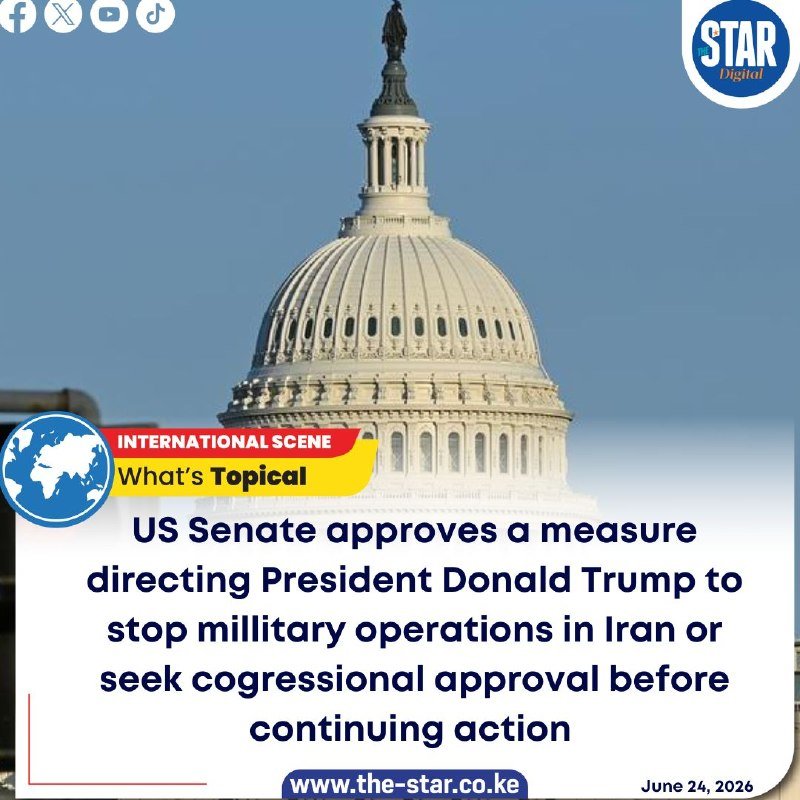
Negotiations rarely work when the two sides cannot agree on what the principals have actually said. By 22 June 2026, that is the bind the United States and Iran appear to have built for themselves. According to a 22 June dispatch from the Middle East Spectator Telegram channel, Vice President J.D. Vance told the Iranian delegation during talks the previous day to disregard President Donald Trump's threats, dismissing them as "trash talk." Within roughly twenty-four hours, Middle East Eye reported that Vance was simultaneously hailing "good progress" and floating the possibility of unfreezing Iranian assets — language that sits uneasily with the threats his own principal has been issuing on cable news.
There is a pattern here, and it is worth naming. Public US messaging on Iran has split into two registers that do not talk to each other. One, carried by the president, treats the negotiation as a coercive exercise: close the Strait of Hormuz, Trump told Fox News on 21 June, and the Iranian negotiators "will not be able to return to their country." The other, carried by the vice president and reflected in the live coverage of the talks, treats the same process as a serious diplomatic engagement in which concessions — including the release of frozen Iranian funds — are on the table. The Iranian side has noticed the gap. Tehran has spent the past week testing it: claiming the Strait of Hormuz is closed, only for Bloomberg to confirm, on 21 June, that oil continues to flow through the waterway. The bluff and the counter-bluff have become the substance of the negotiation itself.
The two-track script
Diplomatic theatre is nothing new. What is unusual is the visibility of the gap. Vice-presidential reassurance of a foreign delegation is normally a quiet act — a back-channel gesture, not a story. The fact that it has surfaced through a regional Telegram channel and into English-language coverage suggests one of three things. Either the reassurance was deliberately leaked to set a floor under the negotiation, or it slipped out because the administration has lost control of its messaging, or — the more interesting reading — the two-track script is itself the strategy. Trump issues threats calibrated for a domestic audience that wants to see an American president willing to escalate; Vance issues reassurances calibrated for an Iranian audience that needs to believe a deal is still possible. Each message reaches its target. The cost is that the Iranian delegation has to decide which American it is actually dealing with.
What Iran heard
Tehran's response has been the kind of asymmetric signalling that a sanctions-pressured economy learns to do well. Claim the Strait is closed, but do not close it. Float closure to drive up the price of the barrel you are still exporting. Wait for a Bloomberg wire to confirm the waterway is open, and in the same news cycle extract a Vice-presidential concession on frozen assets. The sequencing is not random. The 21 June Bloomberg oil-flow report, the 21 June Fox interview, and the 22 June Middle East Eye coverage of unfreezing language together form a single negotiating day, and Iran appears to have won it on points: it gained a public American acknowledgement that asset release is in scope without conceding anything verifiable in return. The Strait remains, in practice, open.
What could go wrong
The danger of the two-track script is not that it fails. It is that it succeeds in a way the administration cannot sell at home. If a deal emerges — and the Vance framing suggests one is being seriously attempted — it will have to be presented to a Republican base that has spent months hearing the president describe the Iranian regime in maximalist terms. Unfreezing assets, in that telling, looks like a giveaway to a government that funds regional proxies. If no deal emerges, the Iranian delegation flies home having heard two contradictory American positions and draws the obvious conclusion about American reliability. The Strait-of-Hormuz threat, meanwhile, remains on the table — a kinetic option that does not need to be exercised to be effective, but that cannot be brandished indefinitely without either being used or being read as hollow. By 22 June, the gap between the two American voices is wide enough that Iran's calculus is no longer about whether Washington is serious, but about which Washington to take seriously.
The stakes
Oil markets have so far read the situation as noise. Brent has not repriced dramatically on the Iranian claim of closure, in part because the Bloomberg-confirmed flow through the Strait gave traders something to anchor to. That relative calm is itself a tell: the market believes the negotiation will continue, in some form, and that the most disruptive outcomes are not yet base case. The risk to that reading is not a single miscalculation but a slow erosion of credibility. Each time the United States speaks with two voices and gets away with it, the lesson for every other adversary — and every other ally — is that American commitments are contingent on which official is speaking and which audience is listening. The dollar's status as the world's reserve currency is built, in part, on the assumption that American words mean the same thing across the administration. That assumption survives this negotiation, or it does not.
This publication's framing note: the wire services on 21 and 22 June have leaned on the Vance–"good progress" line, with the Trump threats reported as context. We have chosen to lead with the contradiction itself, because the contradiction is the story the Iranian side is acting on, and a diplomatic story that ignores the leverage Tehran is extracting is not yet a complete diplomatic story.
Wire provenance
This editorial synthesis draws on the following public wire/social posts:
- https://t.me/s/Middle_East_Spectator
- https://x.com/unusual_whales/status/iran-strait-vexit
- https://t.me/s/cointelegraph