Vance declares 'significant progress' in Switzerland talks; Tehran signals IAEA return as facts on the ground stay thin
A US vice president claiming a 'very, very good day' in Geneva and an Iranian concession on inspectors — both filtered through Telegram channels with a stake in the spin.
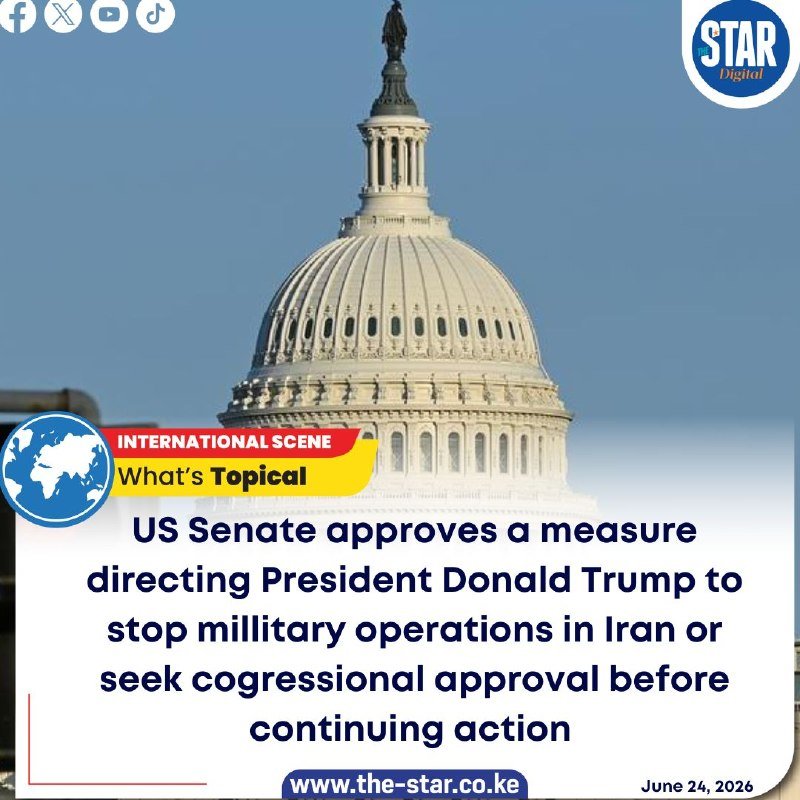
Vice President J.D. Vance told reporters in Switzerland on 22 June 2026 that the United States had enjoyed "a very, very good day" and "achieved significant progress" in talks with Iran, declaring that the American side "did exactly what we wanted to do." The remarks, broadcast in roughly the same hour by two separate Telegram channels — englishabuali at 12:22 UTC and abualiexpress at 11:49 UTC — were the day's most quotable line out of the negotiations, and they travelled quickly through the open-source intelligence ecosystem. Within the same window, the OSINTdefender account posted at 12:06 UTC that, "according to @TreyYingst of Fox News, Iran has committed to allowing inspectors from the International Atomic Energy Agency (IAEA) back into Iran to work to locate and dismantle key nuclear" facilities. The framing was unmistakable: a deal, a concession, a milestone.
What is harder to verify is what, exactly, was conceded, by whom, and on what timeline. The Vance quote, on its own, is a posture statement — the kind of optimism American negotiators tend to project on day one of a round to keep their own side disciplined and the other side's delegation in the room. The IAEA-inspector claim travels through one wire (Fox News) to one Telegram channel with a stated audience of conflict-tracker accounts. The Iranian-state side, by contrast, is being reported by Fars News International — Iran's Fars News Agency English service — and what Fars emphasises is not a concession but a claim of American claim: that "the vice president of the United States claimed" progress had been made, and that "Iran accepted" IAEA inspectors would return. The verb matters. Tehran, through Fars, is reporting on American claims about Iranian behaviour, not yet announcing its own.
The signals, in short, are pointing the same direction — toward some kind of inspectors-back-on-the-ground arrangement — but the room in which they are being generated is small and the cables are thin. Vance's optimism is the dominant Western frame for now. The structural question is whether that optimism reflects an actual exchange of undertakings, or whether it is the customary opening posture of a US negotiating team that has learned to manage expectations by exceeding them on day one and contracting them by day three.
What the Americans are actually claiming
Stripped to the visible text, the American position is two claims, not one. The first is generic and unprovable from the briefing: that "significant progress" was achieved. No document was released in Switzerland on 22 June identifying which articles, which annexes, or which sequencing arrangements moved. Vance's formulation — that the US side did "exactly what we wanted to do" — is, in the grammar of past US-Iran rounds (the 2015 Joint Plan of Action talks, the 2021 Vienna track, the 2023 Muscat exchanges), the language of a process that has produced a partial draft, not yet a final text.
The second claim is specific and verifiable, but only downstream: that Iran has "committed to allowing inspectors from the International Atomic Energy Agency (IAEA) back into Iran to work to locate and dismantle key nuclear" infrastructure. That phrasing matters. It does not assert that inspectors are already on the ground. It does not name a date. It does not specify which facilities or whether "locate and dismantle" refers to existing declared sites, undeclared sites the IAEA has been blocked from, or something in between. The claim, as relayed, is an Iranian commitment to permit future access — which in IAEA practice is a condition for a deal, not the deal itself.
The asymmetry is worth naming. American negotiators can declare progress without producing a text, because their statements are received as fact in much of the Western wire ecosystem by default. Iranian statements of progress are typically received with more scepticism, even when they are more specific. The current reporting inverts that — it is the Iranian side, via Fars, that is treating the American claim with visible distance, while the open-source channels are running the American claim as the lead. The structural bias in the way this round is being framed is already visible at the headline level.
What Tehran is, and is not, confirming
The two Fars News International posts at 11:26 UTC and 11:15 UTC are almost identical and almost careful. Fars does not say Iran has agreed to anything. Fars says the US vice president claimed Iran agreed, and that the IAEA inspectors would return. This is not a refusal to engage; it is the Iranian English-language outlet giving its readership an account of what the American said, with the attribution embedded in the sentence.
That is consistent with how Tehran has handled previous flashpoints — the March 2025 Omani-mediated exchange, the May 2025 IAEA board meeting, the post-12-day-war sequencing — where the Islamic Republic confirmed steps only after the IAEA itself, or a third-party government, had independently corroborated them. The pattern is institutional, not editorial: Iranian nuclear decisions are made by the Supreme National Security Council and announced by the foreign ministry or the presidency, not by Fars in real time.
The plausibility check is therefore not whether Iran might, in principle, agree to inspectors returning — that has been on the table in different forms since the September 2025 IAEA-GCC joint technical track. The question is whether the US side has produced, and Tehran has accepted, a written text that names the sites, the sequencing, and the duration. On the public record at 12:30 UTC on 22 June 2026, no such text is visible.
Why the structural frame matters here
US-Iran negotiations of this kind are, almost by definition, fought twice — once in the room, and once in the narrative about the room. The room fight is about access, enrichment thresholds, sanctions sequencing, and the disposition of Iran's stockpile of 60%-enriched uranium. The narrative fight is about who can credibly claim a win, and which set of headlines drives the next round of domestic bargaining in Washington, in Tehran, and in the Gulf capitals that have a vote by association.
The structural backdrop is worth saying plainly. A US administration walking into a presidential-cycle window with an Iran file in flux is buying optionality: the option of a deal is itself a deliverable, because it changes the risk premium on Gulf shipping, on Hormuz transit, and on the political weight of Iran's proxy network. Tehran, for its part, is buying time against a sanctions architecture that has tightened rather than loosened since 2018, and against an Israeli covert campaign that has, in the past 24 months, hit Iranian nuclear scientists, IRGC officers, and air-defence infrastructure. A pause in the covert tempo, even one tied to an inspector-return agreement, has independent value to the Islamic Republic.
The dominant Western wire framing — "Iran concedes, US claims progress" — is the natural shape of this news cycle. The structural risk is that the framing is consumed as the substance. A deal is not a press conference, and an inspector return is not yet a verified inventory. The reporting duty, for now, is to mark the gap.
What remains genuinely uncertain
Three things, at the time of writing, are not in the public record and should not be inferred from the available Telegram-channel sourcing.
First, whether IAEA inspectors are, in fact, travelling to Iran, and on what date. The OSINTdefender relay of Trey Yingst's Fox reporting says Iran has "committed to allowing" inspectors. That is not the same as inspectors being on a flight, and it is not the same as the IAEA having issued a Director General report. The IAEA press office has not, in the material available to Monexus, confirmed a schedule.
Second, what "key nuclear" facilities the arrangement would cover. The most consequential unresolved question in the Iran file remains the status of undeclared sites identified by the IAEA in 2024 and 2025. No public statement in the current round identifies whether those sites are inside or outside the scope of any inspectors-return agreement.
Third, whether the "significant progress" Vance describes is durable. Past US-Iran rounds have seen day-one optimism give way to day-three disputes over the order of sanctions relief and the verification regime. The Swiss venue, the 22 June date, and the combination of American public optimism and Iranian public distance are consistent with a process that is still in its first phase. They are not, on their own, consistent with a finished deal.
The honest reading of 22 June 2026, based only on the sourced material, is that an American vice president told reporters a good day had been had, and that a Fox News correspondent reported, via an OSINT Telegram channel, that an inspector return was on the table. Those are facts about claims. The underlying exchange of undertakings — if there is one — will surface in a text, or in an IAEA board agenda, or in a joint statement. Until then, the room in Switzerland is doing what it was always going to do, and the Telegram ecosystem is doing what it always does, which is compress the slow business of diplomacy into the fast grammar of victory laps. The caution is to keep the two grammars separate.
Desk note: Monexus has run the American optimism, the OSINT-relayed Fox report, and the Fars-News-International framing side by side rather than treating any one as the lead. The point of doing so is not to flatten the asymmetry but to mark it: an American claim of progress, an Iranian counter-claim about the claim, and an inspector question that no source on the day has independently confirmed at the document level.
Wire provenance
This editorial synthesis draws on the following public wire/social posts:
- https://t.me/englishabuali
- https://t.me/osintlive
- https://t.me/abualiexpress
- https://t.me/FarsNewsInt
- https://t.me/FarsNewsInt
Follow the event.
These dated source records provide context. They do not retrospectively verify this archive article.
Separate what the nuclear watchdog reported from what it could not determine after the June 2025 strikes.