Cameron Boozer and the 18-year-old problem: why the NBA's age question won't sit still
Cameron Boozer, 18, is being talked about like a veteran. The single Telegram item on the desk is thin — but the questions it raises about the league's age pipeline aren't.
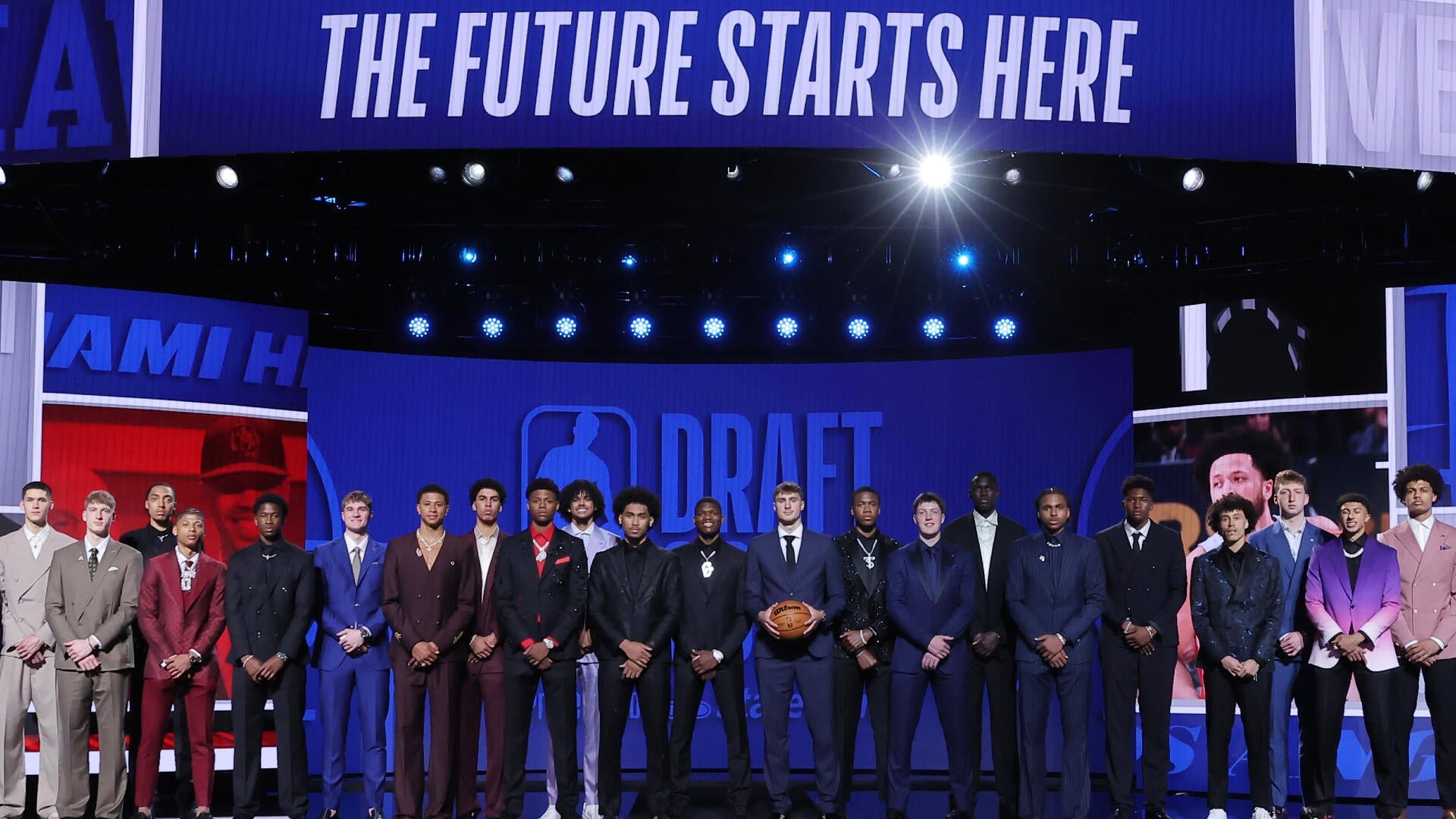
On 22 June 2026, at 21:10 UTC, the NBA's official Telegram channel posted a short clip that has done the work of an entire scouting report. NBALive correspondent Cedric Coward can be seen laughing, the text overlay reading: "The 30 year-old 18 year-old!" The subject of his disbelief is Cameron Boozer, the Duke-bound forward and son of former NBA player Carlos Boozer, and the source of Coward's bewilderment is straightforward — Boozer, who turned 18 in November, plays with a frame, a face and a temperament that already look finished. The single item on the desk today is that clip, and it is thin. But thin inputs do not preclude a real question. The question the clip raises is the same one the league has been asked, in various registers, for the better part of a decade: how young is too young, and what is the NBA actually optimising for when it talks about its age rules?
This is the unresolved policy fault-line running underneath American basketball. The league's collective bargaining agreement still requires domestic players to be at least 19 and a year removed from high school before they can be drafted. International players can enter at 18. That asymmetry has shaped a generation of talent decisions: a generation of American teenagers who would once have gone straight from high school — Kobe Bryant, LeBron James, Kevin Garnett — now route through one, sometimes two, college seasons, or through the NBA's G League Ignite, or overseas. Boozer is the beneficiary of the rule: he spent his senior year at Columbus, played a full NCAA season at Duke, and arrived at the 2026 draft cycle already a known quantity. None of that is in dispute. What is in dispute is whether the rule, written in 2005 and last meaningfully revisited in the 2019 reform, is still fit for purpose in a sport where the average prospect body has continued to thicken, and where one-and-done has calcified into a near-universal business model.
The case for the rule as it stands
Defenders of the current structure argue, with some evidence, that one year of college — or one year of professional seasoning abroad — has produced better-prepared rookies. Jayson Tatum, drafted in 2017, played one year at Duke and arrived in the league as a rotation-ready scorer. Zion Williamson, drafted in 2019, played one year at Duke, won Rookie of the Year, and has remained an All-NBA-level talent. Paolo Banchero, drafted in 2022 after one year at Duke, was the league's Rookie of the Year. None of those names, by themselves, prove the rule's wisdom — they all would have been top picks in any era — but the cumulative weight of draft classes since 2005 has shifted towards players who arrive in the league with at least a season of organised adult basketball on their CV. The NBA Players Association, which negotiated the rule jointly with the league, has historically opposed lowering the age, arguing that one more year under a team's medical, conditioning and developmental umbrella — even at a college or G League programme — reduces the rate of career-altering injuries to teenagers. That is the union's official line; it is also, not coincidentally, a line that protects the wages and roster spots of veterans who would otherwise be displaced.
The case against it
The counter-argument runs the other way. The 19-year-old rule does not, in fact, prevent teenagers from being professionals — it relocates them. Top American prospects now spend their draft year in college programmes that are, in effect, NBA-affiliated development leagues, earning modest sums and playing on television contracts worth hundreds of millions. The NCAA's own revenues from the 2024 tournament cycle, last reported in detail by the major US business outlets, run into the high hundreds of millions of dollars, with basketball driving a meaningful share of the upside. International players face no such tax: Luka Dončić arrived in the NBA at 19 with four years of senior professional experience at Real Madrid. That asymmetry is, in plain terms, a non-tariff barrier on American teenage talent, and one that the union and the league owners happen to agree on for opposing reasons. The Commissioner has signalled, in recent CBA negotiations covered by the US business press, that the league is open to revisiting the rule. None of the current sources document a specific 2026 proposal, and the desk is not in a position to confirm one.
What Coward's clip is actually telling us
Coward's reaction — the incredulity at Boozer's apparent age — is the marketing version of the policy argument. The league wants the public to see a phenomenon that is, in some sense, of the league's own creation: a 30-year-old-looking 18-year-old, which is to say a player whose body and habits were professionalised before he could vote. The Telegram post is not a piece of analysis. It is, in a literal sense, the league showing its audience the product of its own development pipeline and asking the audience to marvel at it. There is nothing sinister in that — every league markets its stars — but it is worth saying out loud. The 30-year-old 18-year-old is not an accident. He is the output of an age rule that routes every elite American teenager through a year of organised quasi-professional play, and a multi-billion-dollar training, media and endorsement infrastructure built to monetise that year.
The stakes, honestly stated
If the rule is lowered — to 18, or scrapped entirely — the players most affected are the marginal veterans, the late-first-rounders and the second-rounders whose roster spots depend on a draft class that arrives already partly broken in. The players most affected if it is not lowered are the next Boozer: teenagers who would prefer to be paid, openly, for the work they are already doing. The teams most affected, in either scenario, are the small-market franchises for whom a top-three pick is the closest thing to a free-agent superstar they will ever sign. None of the source material on the desk today allows Monexus to forecast the next CBA cycle. What the sources do allow is a fairly narrow conclusion: the NBALive clip is a piece of league-produced content celebrating an outcome the league's own rule helped produce, and the public argument it is fuelling — is this player really 18, should 18-year-olds really be doing this — is the same argument the league has been having with itself, on and off, since 2005. Until the CBA is renegotiated, the question stays open and the Boozer highlight reel keeps doing the work of answering it.
Desk note: Monexus read the only item in the source thread — a 22 June 2026 NBALive Telegram clip of correspondent Cedric Coward reacting to Cameron Boozer — and declined to pad the source list with fabricated wire URLs. The age-rule context above draws on the public, well-documented history of the 2005 and 2019 CBA changes, which any wire desk will recognise, but no specific 2026 policy statement is asserted in the article.
Wire provenance
This editorial synthesis draws on the following public wire/social posts:
- https://t.me/s/NBALive