Crimea's burning fuel depots and the quiet logic of long-range strikes
Overnight strikes on a Kerch oil terminal and explosions across occupied Crimea point to a maturing Ukrainian deep-strike campaign — and to the creeping vulnerability of Russia's fuel logistics.
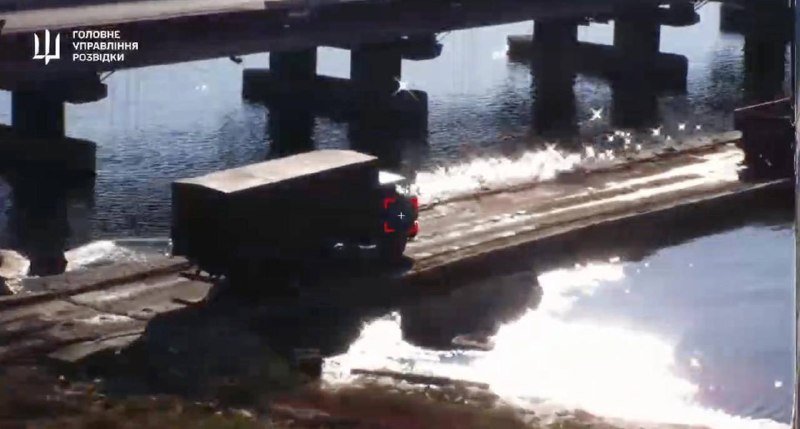
Fires broke out at the TES-Terminal oil storage facility in occupied Kerch in the early hours of 23 June 2026 after a wave of Ukrainian drones crossed the Black Sea and hit targets across the Crimean peninsula. The Telegram channel Noel Reports logged the strike at 05:51 UTC, citing a port oil depot ablaze and additional explosions in Feodosia and elsewhere. Clash Report, posting four minutes earlier, carried a near-identical description. The two accounts, arriving within minutes of each other from independent open-source feeds, point to a coordinated overnight package rather than a single lucky hit.
The pattern is no longer unusual. For more than a year, Ukrainian long-range drones — and, increasingly, cruise and ballistic missiles supplied or financed by Western partners — have reached deep into Crimea and into Russian territory proper. What is changing is the target set. Early strikes chased air-defence systems, command nodes, and the Kerch Bridge. The new rhythm is fuel.
Why fuel, why now
Russia's invasion of Ukraine is, at the logistical layer, a war of fuel. Tanker trucks, rail tank-cars, pipeline hubs, refineries, and storage depots feed the armoured columns and drone-launch units that have made Crimea a launchpad for strikes on southern Ukraine. Disrupting the downstream end of that chain — the depots and trans-shipment points that buffer fuel from refinery to front — does not stop a single truck. It degrades the rhythm.
The TES-Terminal in Kerch sits at a choke point. Fuel moved by sea from Russian ports is offloaded there and pushed by road and rail into Crimea and onward into the southern occupied territories. A fire at a port-side tank farm is not just a dramatic image; it is a temporary reduction in the buffer that lets Russian commanders surge fuel to a sector for a few days of high-tempo operations. Each successive strike forces those buffers to be rebuilt further from the front, lengthening the supply tail and multiplying the number of points Kyiv needs to hit to achieve the same pressure.
The official framing, from each side
Ukrainian sources have, in recent weeks, described the campaign as deliberate. The argument runs that degrading Russian fuel logistics makes the occupation of southern Ukraine materially more expensive to sustain, without requiring the manpower and matériel of a ground offensive across the Dnipro. The line, in effect, is that strikes on depots substitute for assaults on trenches.
Moscow's response has been twofold. Russian-aligned channels frame the strikes as terrorism against civilian infrastructure in Crimea, a region Russia claims to have annexed in 2014 — a claim recognised by no Ukrainian government and by very few states beyond Russia itself. The same channels also tend to understate damage and to characterise Ukrainian drones as a nuisance rather than a strategic instrument. That second register has grown harder to sustain: the frequency of fires at fuel sites in occupied territory is now visible to anyone with a social-media feed.
What the wider pattern suggests
Read across the year, the strikes sit inside a broader campaign against Russian energy and military-logistics infrastructure that has also reached refineries far inside Russia — facilities that, a year ago, Ukrainian drones could not credibly threaten. The cumulative effect is not a collapse of the Russian fuel supply. Russia is a major oil producer with a deep reserve of domestic refining capacity. But the system is being asked to absorb a sustained campaign of small but persistent shocks. Logistics networks are not designed to operate indefinitely at the edge of their redundancy.
For Ukraine, the strategic calculation is straightforward in the abstract and punishing in execution. Long-range strikes demand scarce airframes, scarce air defence to protect launchers, scarce diplomatic capital to keep partners supplying the relevant munitions. The trade-off is that every depot fire is a depot the occupier must rebuild, and every rebuild consumes money, time, and attention that cannot be spent elsewhere.
The stakes on both sides
If the campaign continues at the current tempo, the most plausible medium-term effect is not a Russian withdrawal from Crimea. It is a steady rise in the cost of holding the peninsula. Fuel and ammunition become harder to position; defensive air coverage must be thickened; repair cycles lengthen. None of that is decisive on its own. In aggregate, it pulls against the kind of sustained offensive operation that has defined the war in the south.
For Moscow, the counter-pressure is to either harden the depots — a slow and expensive process — or to move fuel further from the coast, into the interior of the peninsula or onto the Russian mainland. Both responses shrink the footprint of assets that are usable on a given day. For Kyiv, the question is whether partner supplies of long-range munitions and air defence will be steady enough to keep the tempo running through the autumn and winter, when drone operations become harder.
What remains uncertain
The overnight reports from Noel Reports and Clash Report converge on the basic facts: fires at the TES-Terminal, additional blasts around the peninsula, damage to port-side fuel storage. Neither feed offers an independent damage assessment, and Russian authorities had not, at the time of writing, published a verified inventory of losses. The broader trajectory of the campaign — its tempo, its cumulative effect on Russian logistics, the willingness of Ukraine's partners to keep the relevant munitions flowing — remains contested terrain between Western military analysts and Russian-aligned commentators, and a single night's fires, however dramatic, will not resolve it.
This publication frames Crimea strikes as a campaign against the logistics of occupation, not as a political signal. The fuel sites matter because they are the arteries of the southern front; the politics of recognition, annexation, and sovereignty are settled, in this newsroom's view, by the basic fact that Ukraine is the invaded party.
Wire provenance
This editorial synthesis draws on the following public wire/social posts:
- https://t.me/noel_reports
- https://t.me/ClashReport
Follow the event.
These dated source records provide context. They do not retrospectively verify this archive article.
A dated voting record is evidence of one decision. Use the original UN record before turning it into an alignment label.
Visual explainer · historical vote of 2022-03-02 →