England's group-stage squeeze and the fixtures reshaping World Cup 2026's first week
Three days of group-stage action have compressed the World Cup's opening week into a tight set of fixtures — and turned the sportsbook industry into the tournament's loudest narrator.
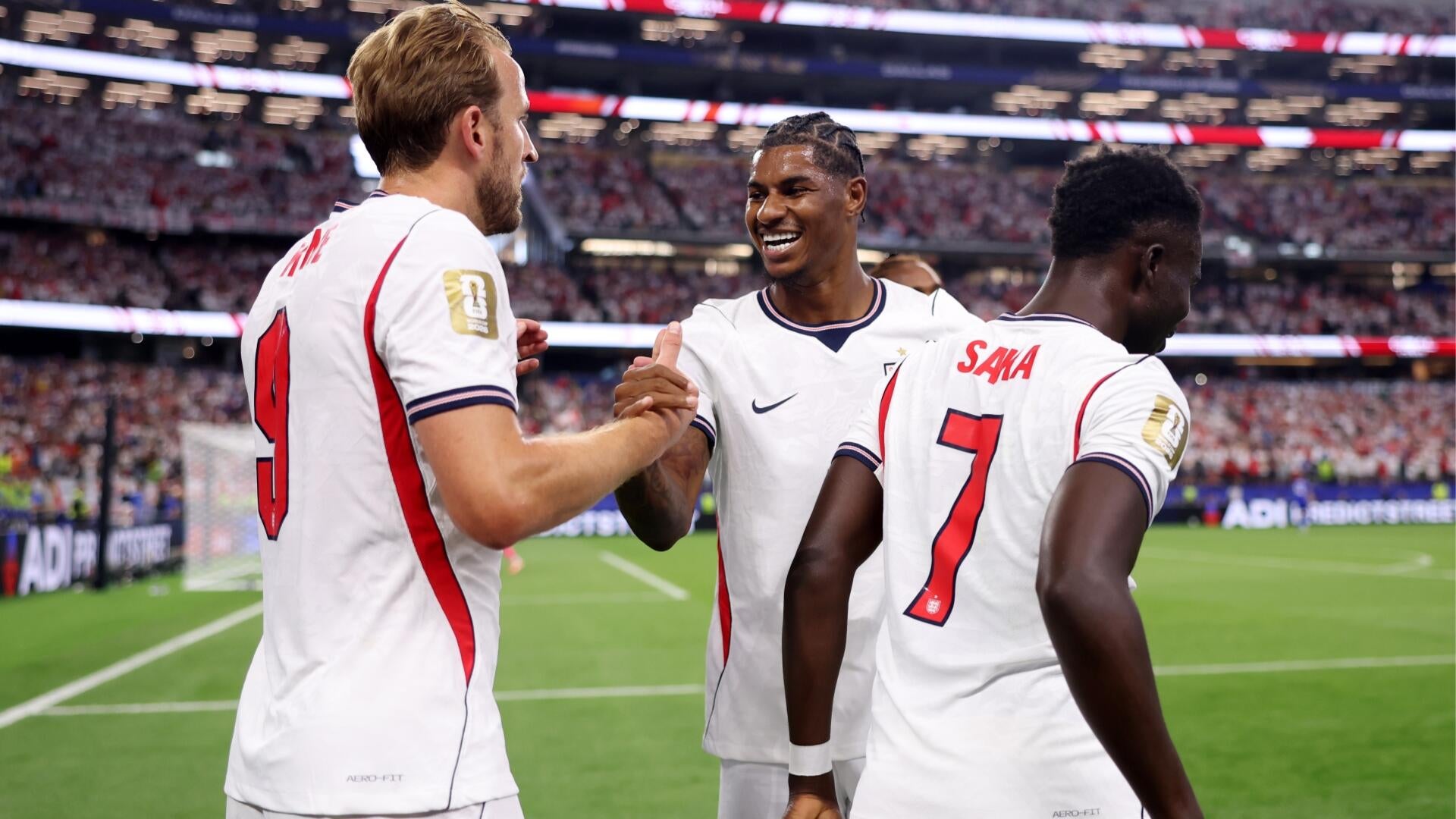
Three matches in 24 hours have defined the opening rhythm of the 2026 FIFA World Cup. England meet Ghana on Tuesday 23 June 2026 in a fixture that will, in practical terms, settle the destination of their group; Croatia, beaten by England in their opener, face Panama the same day in a match they can scarcely afford to lose; and on the wider slate, Colombia take on DR Congo in a fixture that has carried the tournament's most discussed subplot — the return of the competition's most recognisable travelling supporter. The compression is not accidental. FIFA's expanded 48-team format has, by design, pushed more matches into fewer days, and the sportsbook industry has moved in step, promoting odds, promos and picks with the urgency of a market that has learned to monetise every fixture window.
The point of the opening week is not the football alone. It is the assembly of a financial and broadcast pipeline that turns a tournament into a global attention economy — and the early fixtures are where that pipeline is calibrated.
England's group, and the cost of a stumble
England's meeting with Ghana, scheduled for 23 June 2026, is the kind of fixture that looks routine on paper and decisive in practice. A win would give England control of their group with a game to spare and allow rotation into the final matchday; anything less keeps the bracket volatile and forces the squad to manage both expectation and fatigue. CBS Sports's pre-match coverage framed the match as one in which England can "take full control of their group with three more points on Tuesday," a phrasing that captures the arithmetic without overstating it. The same outlet's tournament index positions England among the favourites but not as the presumptive winner, a distinction that matters in a 48-team field where the knockout rounds arrive faster and the margin for a slow start is smaller than in past tournaments.
Ghana arrive as the kind of opponent that has historically punished English complacency at this stage of major tournaments. The broadcast treatment — pre-match features, historical retrospectives, the standard shoulder-camera piece — already treats this as a stress test rather than a formality.
Croatia's reset, and the bracket behind the favourites
Croatia, runners-up at the 2018 World Cup and semi-finalists in 2022, opened the 2026 tournament with a loss to England. Their match against Panama, also on 23 June, is therefore a recovery fixture in the literal sense. CBS Sports's preview describes Croatia as looking "to bounce back from their opening loss to England," a phrasing that doubles as a competitive brief and a reputational one: a second loss would push the 2018 finalists toward the lower half of the knockout bracket and reframe the rest of their tournament as a survival exercise.
Panama, the kind of opponent that the 48-team format is designed to keep competitive, are the variable. The expanded field produces more matches between established football nations and lower-ranked sides whose physical and tactical profile does not always match their ranking. The sportsbook lines reflect that asymmetry without resolving it.
The Colombia–DR Congo fixture, and the supporter economy
The third fixture of the day — Colombia against DR Congo — has drawn coverage disproportionate to its place on the schedule because of a single off-field story. CBS Sports's preview noted that the "iconic fan" associated with the fixture was set to make his first appearance at the 2026 World Cup, a reference to the supporter whose tournament travels have become a recurring broadcast character. The story is small in competitive terms and large in attention terms, which is exactly the kind of asymmetry the modern tournament economy is built to monetise.
The match itself sits inside a wider pattern. DR Congo's qualification route through African qualifying made them one of the continent's standard-bearers at the tournament; Colombia, after a turbulent qualifying campaign, are under pressure to deliver in the group stage. The broadcast treatment, as with the other two fixtures, leans heavily on narrative framing.
The sportsbook overlay
The most distinctive feature of the opening week is not on the pitch. It is the volume of promotional copy produced by the US sportsbook industry around each fixture. CBS Sports's previews of the England–Ghana and Croatia–Panama matches sit alongside dedicated promotional pages for both BetMGM and DraftKings, each offering tiered bonus-bet structures tied to the day's fixtures. The BetMGM offer, promoted under the bonus code CBSSPORTS, extends to $1,500 in bonus bets conditioned on a first wager losing; the DraftKings offer, accessible via a separate promo code, provides $200 in bonus bets on a smaller initial stake. Both promotions are time-limited to the World Cup window.
The pattern matters because the sportsbook overlay is now a structural feature of the tournament's English-language coverage rather than a side-channel. Previews, predictions and odds are produced in the same editorial pipeline as the match reports, and the line between analysis and promotion is, at best, transparent. The 2026 World Cup is the first edition in which legalised sports betting operates across nearly every large US state for the duration of the tournament, and the coverage has adjusted accordingly. For readers, the implication is straightforward: a pre-match page that runs an odds table, a betting recommendation and a promo code in the same scroll is not a neutral document. It is a commercial surface, however well-reported the analysis around it.
Stakes and the week ahead
The arithmetic of the opening week is simple. England can settle their group on Tuesday. Croatia can keep theirs alive. Colombia and DR Congo can stake a claim inside a wider bracket. None of those outcomes is decided in advance, but the structure of the tournament — the compressed schedule, the sportsbook overlay, the broadcast treatment of each fixture as a narrative event — has produced an opening week that feels less like a sequence of matches and more like a single, long-form commercial object.
Two things remain worth watching. First, whether England's rotation into the final group match, if qualification is secured early, produces the kind of sluggish performance that has historically followed English tournament confidence. Second, whether the sportsbook overlay becomes a permanent editorial feature of World Cup coverage, or contracts once the novelty of legalised US betting during a tournament has passed. The next 72 hours will not settle either question, but they will produce the data points on which the answers will be built.
Desk note: Monexus treated the opening-week fixtures as a single editorial object — matches, broadcast treatment and sportsbook overlay — rather than as three separate previews. The wire coverage treats them as discrete events; the financial and broadcast structure argues for a single frame.