A Golden Boot race for the ages — and a World Cup short on easy answers
The 2026 World Cup has produced a goalscoring field so deep that the traditional markers — form, reputation, group-stage routs — no longer separate the contenders. Picking a winner now is more art than arithmetic.
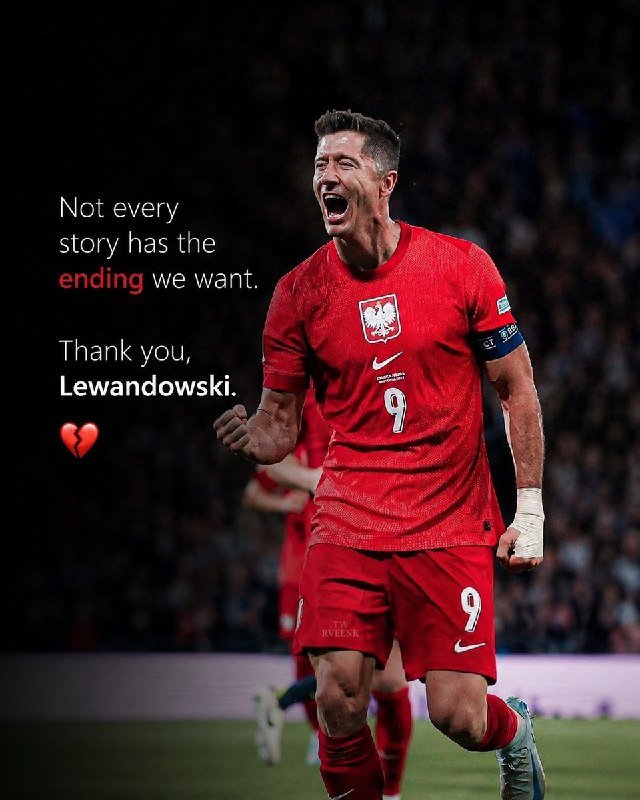
By the time the group stage wound down in mid-June 2026, the Golden Boot conversation had stopped being a conversation about individual brilliance and started being one about supply. The world's best centre-forwards are scoring at a rate that has stretched the usual heuristics beyond usefulness, and with three matches still to play before the knockout bracket settles, no single striker has separated himself from the field. As BBC Sport put it on 23 June 2026, the tournament is fast turning into a Golden Boot race for the ages — but the question of who actually comes out on top has no obvious answer.
That uncertainty is itself the story. Past World Cups have offered clarity at this stage: a hat-trick hero, a red-hot striker with four goals already, a name the broadcasters can build the final week around. In 2026, no one has that luxury. The leaders are bunched, the chasing pack is long, and the matches that decide the award are still weeks away.
A field without a frontrunner
The arithmetic of the Golden Boot rarely stays this open past the second group game. A player who scores in his opening two matches tends to be the one the cameras track for the rest of the tournament; the ones who start slowly almost never catch up, because the bracket compresses and the defences get tougher. This tournament has not followed that script. Through the group stage, the top of the scoring chart has remained crowded, with several established names on two or three goals and a deeper tier of wide forwards and No. 9s within touching distance.
The result is a Goldenh Boot race where reputation counts for less than it usually does. A striker who enters the round of 16 with three goals is not safe; a substitute who scored twice against a tiring back line in the final group game is not out of it. The format change — more teams, more matches, a longer tournament — has mechanically widened the pool, but the underlying cause is footballing: defences are conceding chances at a higher rate than in recent World Cups, and the conversion at the top end has been ruthless.
What the markers actually say
There are three traditional markers in a Golden Boot race, and each is sending a different signal this time. Form, measured in goals per 90 minutes at club level, pointed to a small group of favourites going in — and that group has, broadly, delivered. Minutes-adjusted output at the tournament is consistent with the season they had behind them. Difficulty of opposition, the second marker, is harder to read: some of the early leaders feasted on weaker groups, while others have scored against sides ranked in the top twenty.
The third marker — knockout-stage goals — has not yet been written. Historically, the Golden Boot is won in the latter rounds. A striker who scores in the quarter-final and semi-final can overturn a one-goal deficit in a single evening, and the weighting of those matches in the public memory is enormous. None of the current contenders has faced that test yet. The bracket will decide whether the early leaders hold their nerve or whether a quieter name emerges from the chaos of the knockout rounds.
The structural frame
What is happening in front of goal in 2026 is not a mystery. The professional game has spent two decades teaching forwards how to find space in a low block, how to attack the half-space, how to finish with both feet; the same period has produced goalkeeping and defensive coaching that is, on balance, more sophisticated than ever. The reason goals are flowing is that the gap between attacking innovation and defensive recovery has, in this cycle, tilted slightly back towards the attackers. Press-resistance in midfield is better, full-backs invert more often, and the high line has become the default — all of which leave channels open for a striker who reads the game early.
That structural reality is also why the Golden Boot field is so wide. The same tactical conditions that produce goals for the elite produce goals for the second tier. A well-coached No. 9 playing against a tiring press is not far behind a generational talent playing against the same press. The conditions flatten the hierarchy.
Stakes and what to watch
The practical stakes for the contenders are concrete. The Golden Boot is the most-cited individual award in the sport; it moves transfer valuations, sponsorship tiers, and Ballon d'Or conversations. For the three or four names still in serious contention, the next three matches are career-defining regardless of what their club sides do next season.
What to watch, then, is straightforward. The knockout bracket will compress the field quickly: a striker who fails to score in the round of 16 against a deep defence will almost certainly fall out of the race, while a striker who scores twice against an elite back line will become the story of the tournament almost overnight. The Golden Boot will be won or lost on a single evening, and the field is open enough that the award is genuinely live going into the business end of the competition.
How Monexus framed this versus the wire: BBC Sport's piece is a features-style survey of the contenders; this article treats the same picture as a structural story about the state of the modern game, asking what the wide-open race says about attacking-versus-defending coaching cycles more than about any individual player.