Hormuz in Tehran's hands: the new choreography of the world's busiest oil chokepoint
An Iranian parliamentary delegation in Muscat says the Strait of Hormuz will be run on Tehran's terms. Europe's biggest economy is already signalling it will comply.
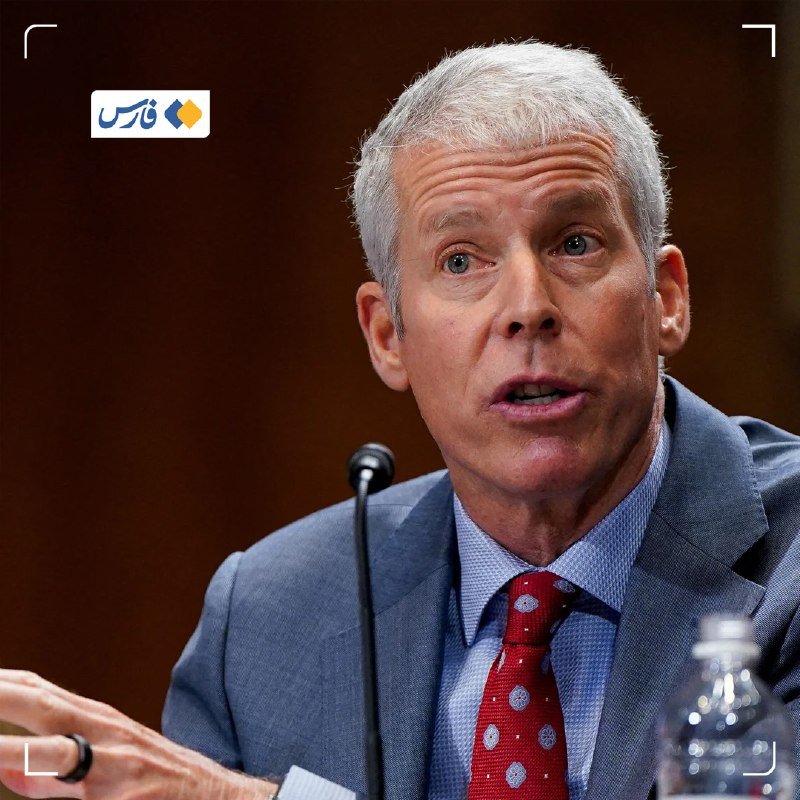
An Iranian parliamentary delegation touched down in Muscat on the morning of 23 June 2026 and the message it carried was unusually blunt. According to Iranian state television, the visit by Parliament Speaker Mohammad Bagher Qalibaf is intended to lock in a fresh arrangement for managing the Strait of Hormuz — one in which Tehran, not the Western navies that have policed the corridor for decades, sets the tempo. Press TV's coverage of the meeting frames it as the opening move in a regional re-engineering of the world's most consequential energy chokepoint, through which roughly a fifth of global petroleum passes each day.
The dispatch is short on operational detail and long on political theatre, but the choreography is familiar: Tehran signals, an Omani host performs the role of neutral convener, and Western capitals are left to calculate whether the announcement is bargaining theatre or a genuine reordering. Either way, the Iranian framing of the corridor as something to be administered jointly — rather than merely transited — has now moved from talking point to state-level claim.
A western capital blinks first
The more arresting line in Tuesday's wire is not from Muscat at all. It comes from Berlin. German Defence Minister Boris Pistorius told journalists, per Al-Alam Arabic's coverage of Iranian state television, that Germany "is ready to open the Strait of Hormuz only with the explicit approval of Iran and Oman." That formulation, if reported accurately, concedes the diplomatic centre of gravity in the Gulf to two states on its southern shore and implicitly to Tehran. Berlin has been one of Europe's more Atlanticist voices on Iran; its maritime reach is modest, and the Bundeswehr's presence in the region has been largely symbolic. But a defence minister publicly conditioning freedom of navigation on Iranian and Omani consent is a diplomatic posture that would have been unthinkable a decade ago.
Whether Pistorius was speaking aspirationally, reporting a coalition position, or paraphrasing a broader EU stance is not clarified in the available reporting. The Iranian outlet carrying the remark has an interest in amplifying any Western accommodation. The statement should be read as a signal of European appetite to manage the Iran file through commercial accommodation rather than confrontation — not yet as a settled policy. Monexus finds the framing nonetheless notable: a G7 defence minister publicly naming the conditions under which his country would treat Hormuz as open.
The shape of the proposed system
The Iranian framing of a "new management system" is, at this stage, more posture than protocol. Press TV and Al-Alam describe talks covering transit arrangements, security coordination, and unspecified new mechanisms — language that could mean anything from a formalised inspection regime at the strait's narrow points to a revenue-sharing arrangement at Bandar Abbas and Khor Fakkan. What is conspicuously absent from the public readouts is any reference to the United States, the United Kingdom's Royal Navy presence in Bahrain, or the Combined Maritime Forces coalition that has patrolled the corridor since 2001.
That omission is itself the story. By selecting Oman as interlocutor — a Gulf state that has long played the role of discreet back-channel with the Islamic Republic — Iran is signalling that it intends to renegotiate the corridor's governance outside the architecture built after the 1980s tanker war. Oman under Sultan Haitham has maintained diplomatic relations with Tehran throughout the period in which Saudi Arabia, the UAE, and Bahrain have cycled between hostility and détente. For Tehran, Muscat is the lowest-friction venue to make a maximalist claim sound procedural.
What this sits inside
For forty years, the operating assumption in Western energy ministries and shipping ministries has been that the Strait of Hormuz is a global commons — policed, in practice, by the US Fifth Fleet and British forces, with Gulf monarchies providing basing and acquiescence. That assumption is no longer unchallenged. Tehran has spent two decades building the naval and missile capability to make any blockade self-defeating for the blockading power. The new Iranian claim is the political surface of a military reality that has been accumulating for years.
What is genuinely new this week is the willingness of a major European government to say, on the record, that the rules of access to the corridor will be set by its littoral states. That is not a minor adjustment. It is a quiet renegotiation of the principle that has underpinned Western naval deployments from the Suez Canal to the Taiwan Strait: that freedom of navigation is a universal right enforced by the leading maritime powers, not a privilege conceded by regional hegemons.
Stakes — and what remains unclear
If Iran's framing holds, the immediate winners are Tehran — which gains diplomatic leverage and the prospect of transit fees — and Muscat, which becomes indispensable as the corridor's diplomatic switchboard. Gulf monarchies that have hosted Western naval bases face a choice: adapt to a new regional architecture, or invest further in capabilities they previously outsourced. Europe's industrial economies, dependent on Gulf crude and Gulf-resold LNG, face the prospect of paying for access in a currency other than alliance. The United States, whose naval primacy has been the structural guarantee behind decades of Asian and European growth, confronts a slow erosion of an assumption that has rarely had to be defended in public.
What remains genuinely uncertain is how much of Tuesday's signalling is theatre and how much is substance. The Iranian outlets carrying the story have an editorial interest in presenting a fait accompli. The German defence minister's remark requires verification against German-language primary sources before it can be treated as anything more than Tehran's preferred paraphrase of a more ambiguous statement. And the proposed "management system" itself has, at the time of writing, no public text, no timetable, and no counter-signatory beyond Iran and Oman.
Monexus finds the diplomatic temperature worth tracking closely — not because Hormuz is closing, but because the rules under which it stays open are being rewritten in a language other countries are now being invited to learn.
Desk note: Western wires have largely under-reported the Muscat meeting. This piece foregrounds the Iranian state framing as primary, with explicit caveat, and treats the German defence minister's reported remark as a signal pending independent confirmation.
Wire provenance
This editorial synthesis draws on the following public wire/social posts:
- https://t.me/presstv/1234
- https://t.me/alalamarabic/1234
- https://t.me/alalamarabic/1235