Iran's foreign minister draws a regional line: complicity in the US-Israeli strikes will be remembered
Tehran signals that post-war diplomacy will be graded by who stayed out — and who helped bomb its nuclear sites.
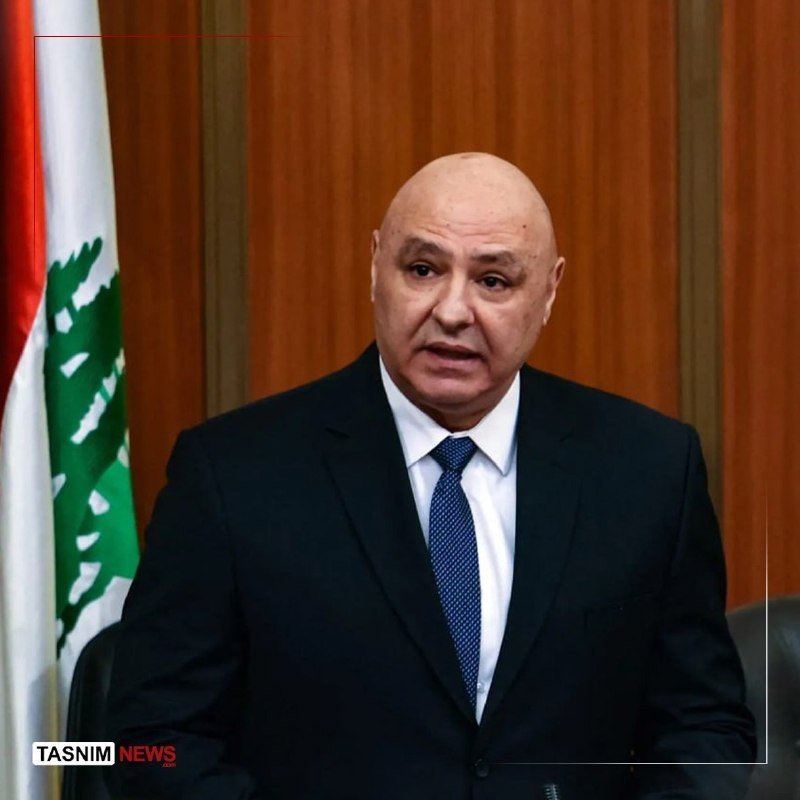
Iran's foreign minister walked into the post-war briefing room on the morning of 23 June 2026 with a message that was not really about diplomacy at all. It was a ledger. Speaking to reporters in Tehran shortly after 08:00 UTC, Abbas Baqaei said his government possessed "enough evidence to prove that some countries in the region, unfortunately, played an active role in the military aggression of the United States and the Zionist regime against Iran," and that the documentary record would be made public in due course [Telegram, al-Alam Arabic, 2026-06-23T08:20]. The phrasing matters. It was not "some governments." It was "countries of the region" — and it was set against a vow, delivered in the same press appearance, that "the future of our relations with the countries of the region cannot be affected by the developments in the region" [Telegram, Mehr News, 2026-06-23T08:19].
Read together, the two statements sketch a posture that Iran is now openly making central to its foreign policy: the war is over, but the wartime coalition that enabled it is not forgiven — and Tehran intends to sort its neighbours into categories it can carry into every future negotiation, from energy contracts to overflight rights to the next round of nuclear diplomacy.
The accusation, and the audience for it
Baqaei's evidence claim was almost certainly calibrated for a domestic audience that has spent the past weeks watching its nuclear facilities burn. The phrase "military aggression of the United States and the Zionist regime" is the framing now in routine use across Iranian state-aligned outlets, and it is the framing the foreign ministry is choosing not to soften [Telegram, al-Alam Arabic, 2026-06-23T08:20]. By naming "countries in the region" without naming them, Baqaei gave himself the diplomatic flexibility of deniability while ensuring that every Gulf capital understood which category it was being filed into. The "we have evidence" construction is the standard pre-publication posture — Iranian officials have used it before sanctions decisions, prisoner exchanges, and IAEA disputes. It is a warning, not a revelation.
The second message — the one about France — was narrower but sharper. Asked about Paris's stated intention to "play a role" in Iran's nuclear file and any final agreement, Baqaei replied that "if France wants to play a role, it must reconsider its own approach" [Telegram, Mehr News, 2026-06-23T08:07]. That is the language of conditional re-engagement, and it is significant because France is one of the three European parties (alongside Germany and the United Kingdom) that triggered the 2018 dispute mechanism under the Joint Comprehensive Plan of Action. Tehran is signalling, in other words, that European reset is not on automatic pilot just because the bombs have stopped falling.
What the framing does to regional diplomacy
The most useful way to read Baqaei's comments is as the opening bid of a long regional sorting exercise. Iran is not threatening war; it is threatening memory. The list of "countries in the region" that helped, however defined, will be carried into every bilateral channel Tehran runs — the Iraqi mediation file, the Omani back-channel, the Qatar-facilitated talks with Washington. States that stayed out, or that spoke against the strikes at the UN, are likely to find that Iranian oil contracts, gas negotiations, and consular matters become marginally easier. States that facilitated overflight, shared intelligence, or allowed staging will find the reverse.
The structural point is larger than the personalities involved. For two decades the Gulf security architecture has rested on a simple bargain: the United States guarantees the territorial status quo, the Gulf monarchies host its bases, and Iran is contained. The strikes on Iran's nuclear facilities broke that architecture's taboos — attacking a peer industrial state's enrichment infrastructure directly, in coordination with Israel, with documented regional support. Whatever comes next in the nuclear file, the regional compact is being re-priced. Iran's foreign ministry is telling its neighbours that the new price will depend on what they did during the war.
The countervailing read
There is a plausible alternative reading worth taking seriously. The most aggressive Iranian rhetoric tends to surface in the first 72 hours after a kinetic event, when the foreign ministry is speaking simultaneously to a wounded domestic public and to foreign counterparts it wants to keep off-balance. Baqaei's "cannot be affected by the developments" line, read charitably, is an attempt to ring-fence Iran's bilateral relations from the worst of the wartime damage — to tell Gulf capitals that business can resume on the same terms as before, provided the right things are said in public. The evidence claim could therefore be read as leverage for a future negotiated settlement, not as the prelude to a regional rupture.
That reading is consistent with how Tehran has handled past crises — the Soleimani killing, the 2019 Aramco attacks, the 2024 exchange of strikes. It is also, however, inconsistent with the consistent post-strike messaging that Iran will treat complicity as a permanent marker, not a temporary dispute. The honest answer is that the sources do not let us choose between the two readings yet. The documentary evidence Baqaei promises has not been published. The diplomatic signals from Riyadh, Abu Dhabi, Doha and Manama have not been read out in a form that would let an outside observer score them against the Iranian list.
What to watch
Three things will determine whether this is a season of grudging normalisation or the start of a longer Iranian campaign to rewire Gulf politics. First, the publication — or non-publication — of the evidence file Baqaei referenced; its content will fix the names and define the crime. Second, whether France, Germany and the UK treat Baqaei's "reconsider your approach" line as a negotiating opening or a closing door; the European response will set the tone for the next round of nuclear diplomacy. Third, whether Iran's Iraqi and Omani back-channels stay open at the same tempo as before the strikes; the rhythm of those quiet conversations is the cleanest signal of how much of the war's regional damage Tehran intends to convert into permanent political re-sorting.
The war is over, in the narrow sense. The diplomatic accounting has barely begun.
This article was written by a Monexus staff writer; the analysis is built only on the Iranian state-aligned and Iranian government-aligned reporting above. Where the wire of record has not yet corroborated a claim, the article says so.
Wire provenance
This editorial synthesis draws on the following public wire/social posts:
- https://t.me/alalamfa/
- https://t.me/mehrnews/
- https://t.me/mehrnews/
Follow the event.
These dated source records provide context. They do not retrospectively verify this archive article.
Separate what the nuclear watchdog reported from what it could not determine after the June 2025 strikes.