Iran Draws New Red Lines From Geneva: Missiles Off the Table, Lebanon Ceasefire Non-Negotiable
Foreign Ministry spokesperson Esmail Baqaei has used post-Geneva briefings to redraw two non-negotiables: missile capability stays out of talks, and Lebanon's ceasefire is part of any final deal.
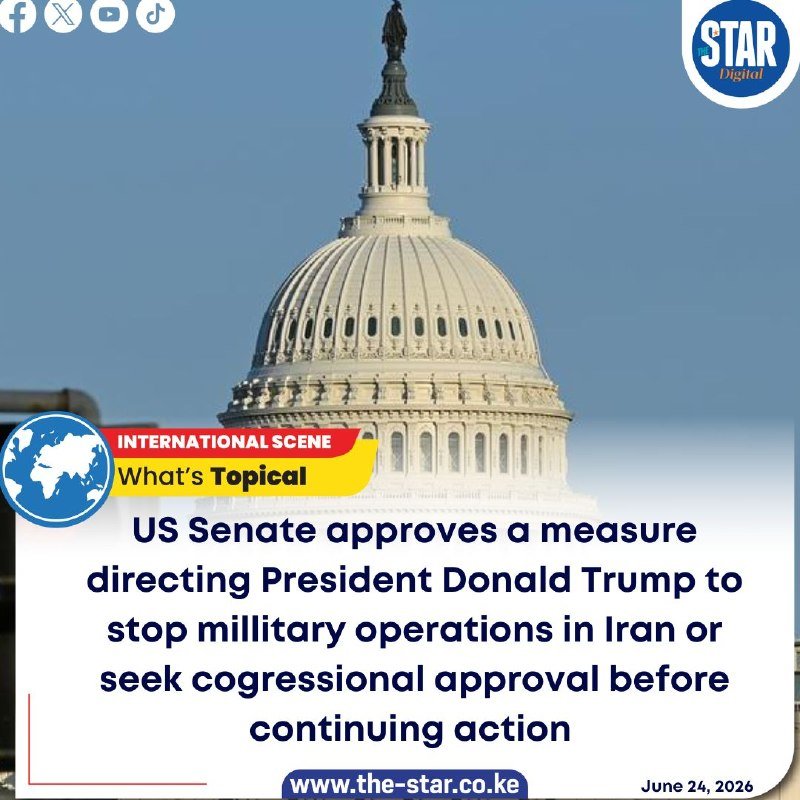
Foreign Ministry spokesperson Esmail Baqaei used a series of briefings on 23 June 2026 to redraw the boundaries of what Tehran will and will not accept from the post-Geneva negotiations with Washington. The message, delivered in short Telegram statements throughout the morning, was double-edged: Iran's missile programme is not for sale, and any final agreement that does not lock in the cessation of war in Lebanon is incomplete.
That posture matters because the talks that just ended were never billed as a comprehensive nuclear deal. They were framed as a confidence-building exercise designed to keep a wider confrontation from re-erupting after the June strikes on Iranian territory. Baqaei's language — issued across Tasnim and JahanTasnim channels between 07:53 and 08:06 UTC — signals that Tehran intends to expand the agenda rather than narrow it. The missiles stay. Lebanon enters. The quadrilateral format, which collapsed under US pressure before producing a communiqué, is shelved.
What Baqaei actually said
The headline claim, reported on the Tasnim English wire at 08:06 UTC, is unambiguous. Asked about media reports that missile capability had been discussed in the Swiss talks, Baqaei replied that "the issue of missiles and defense capabilities will never be discussed." That formulation — never, not currently — closes a door that some Western reporting had suggested was at least ajar. It also reasserts a position Tehran has held across two administrations: the missile programme is a sovereign deterrent, not a bargaining chip, and any framework that treats it as a concession will not fly at home.
The second strand, pushed through JahanTasnim at 08:02 UTC, is about accountability. Baqaei said the foreign ministry is "pursuing the role of some countries in the attack on Iran" and that "we have enough evidence" to make the case. That language is calibrated: it keeps the legal and diplomatic track alive, signals to European capitals that quiet complicity will be priced in, and stops short of naming the parties publicly while evidence is assembled. In a negotiation where the United States is treating European governments as useful messengers, that ambiguity is itself leverage.
The Lebanon caveat
The third thread, at 08:01 UTC, ties the diplomatic process to the southern front. "The cessation of war in Lebanon was one of the integral parts of the memorandum of understanding and the ceasefire," Baqaei told Tasnim, when asked about a conflict-prevention unit and the understandings governing the ceasefire. Read plainly, Tehran is telling mediators that the Lebanese file is not a parallel track to be parked while the nuclear file is processed. Any durable settlement has to absorb what is happening on the Litani border, not merely acknowledge it.
That linkage is not new in Iranian diplomacy, but it has hardened. The implication for Washington and the European mediators is that a narrow technical arrangement — centrifuges, enrichment caps, verification windows — will be insufficient if the wider regional architecture is still being contested in south Lebanon and across the occupied territories.
The quadrilateral that wasn't
The 07:57 UTC item is the procedural tell. The four-way meeting — Iran, the United States, and the two mediators — was meant to produce a joint statement. It ran for ninety minutes, then dissolved. Baqaei's framing: it "did not take place after the US threats." Washington's, in leaks to Western wires, has been that Iran introduced preconditions that made a communiqué impossible. Both stories can be true: a format that required unanimous language collapsed when one side insisted the other stop threatening regional escalation before any document could be signed. The procedural failure matters because it raises the cost of the next round — neither capital can easily re-enter the same room without a new face-saving mechanism.
Baqaei's fifth note of the morning, at 07:53 UTC, is the most quotable for European readers. "If Europe wants to play a role, it must change its approach," he said, on the question of whether London, Paris, and Berlin have standing in the final agreement. That is a public dressing-down, dressed in conditional language. It tells the E3 that quiet facilitation will not, on its own, buy them a seat at the table — and it warns that Europe's recent posture on Iran's nuclear file has eroded trust rather than built it.
What this means for the next round
Three things follow from the 23 June readout, and each one will set the terrain for the talks that come next. First, the missile file is functionally off the table until something more urgent than enrichment becomes the centre of gravity — which means any deal that emerges will be narrower than the 2015 framework. Second, the Lebanese file is now formally inside the envelope. Mediators who arrived in Geneva hoping to bracket regional security will find it bracketing them. Third, the European role has been downgraded in Iranian rhetoric before the E3 has even been offered a role in rhetoric.
The structural read is straightforward. Iran is reading the post-strike environment as one in which it can dictate the architecture of talks rather than merely respond to it. The United States, after a kinetic exchange that did not produce regime capitulation, is in a weaker position to insist on its original menu. Europe is being asked to choose between its transatlantic alignment and any independent mediating function. None of these dynamics are new in absolute terms; what is new is the speed at which Tehran has named them publicly, in real time, while the negotiations are still nominally live.
What remains uncertain
The honest caveats matter. The morning's briefings are Tehran's framing, not a joint statement, and they do not specify which "countries" the foreign ministry is investigating for their role in the strike, nor what threshold of evidence Baqaei considers sufficient. The collapse of the quadrilateral is described by Tehran as US sabotage and by Western readers as Iranian maximalism — the underlying disagreement about who walked away first will not resolve on the wire alone. And the linkage of Lebanon to the nuclear file, while clearly stated, is a negotiating posture; whether it survives contact with a future Israeli action on the northern border is an open question the 23 June briefings do not answer.
The next week will be a test of whether Washington's response to these public red lines is to widen the talks, narrow them, or simply let them drift. Geneva produced a format; Tehran has now produced the substance. The diplomatic ball, for the moment, is on the American side of the net.
Desk note: Monexus treats Iranian state-aligned outlets (Tasnim, JahanTasnim) as primary sources for Iranian government position, paraphrased with explicit attribution. The same standard is applied to Western-wire framing of the same events when those become available.
Wire provenance
This editorial synthesis draws on the following public wire/social posts:
- https://t.me/tasnimnews_en/
- https://t.me/JahanTasnim/
- https://t.me/JahanTasnim/
- https://t.me/JahanTasnim/
- https://t.me/JahanTasnim/