Iran's leverage, Hezbollah's script: what the latest diplomatic signals actually say
Two near-simultaneous statements from Tehran and Beirut's main Shia faction frame Israel's war in Lebanon and Gaza as an American-backed enterprise. The diplomatic subtext is harder to dismiss than the rhetoric suggests.
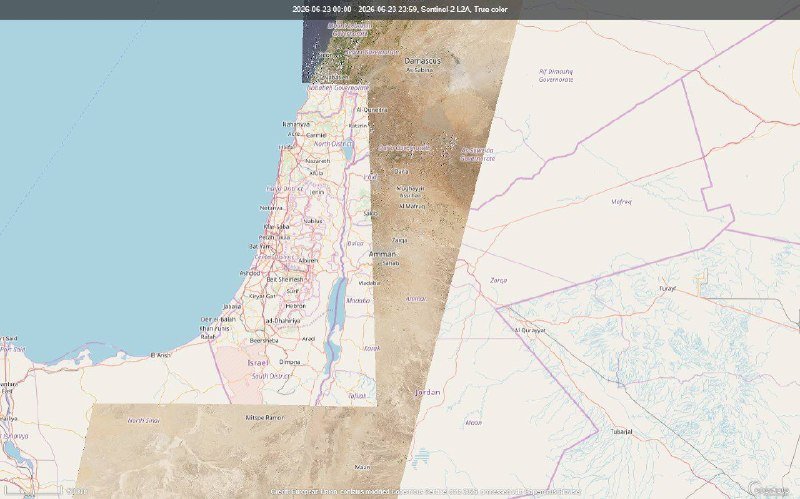
Two statements issued within five minutes of each other on the morning of 23 June 2026 have put a familiar regional dispute back into sharper relief. The first, carried by Iran's state-affiliated Mehr News, came from a former Iranian ambassador to Lebanon and accused Israel of using special munitions in Gaza and Lebanon with American acquiescence. The second, transmitted by Tehran's Tasnim News Agency, came from Mahmoud Qamati, the vice-chairman of Hezbollah's political council, and announced that Iran's "decisive position" is to guarantee an Israeli withdrawal from Lebanon. Read together, the messages do more than restate talking points. They sketch a coordination script — one in which the Iranian foreign-policy establishment and the political leadership of its most consequential non-state ally publicly ratify the same end-state for the war on Israel's northern front.
The point worth holding onto is that rhetoric in this corridor is rarely just rhetoric. The pattern visible on the morning of 23 June — an Iranian-aligned former diplomat amplifying atrocity framing in English-friendly terms, followed minutes later by a senior Hezbollah figure converting that framing into a specific, named demand — has been a reliable early indicator of negotiation positions for at least a decade. Statements of this kind should be read as positioning, not as policy announcements, but they are not noise. They tell outside observers what the axis wants the next round of diplomacy to be measured against.
What the wording does
The Mehr dispatch, attributed to the former ambassador Amani, leans on three specific claims: that Israel is using "special bombs," that those weapons are being deployed against both Lebanon and Gaza, and that the deployment proceeds with US agreement. The third clause is the load-bearing one. By locating ultimate responsibility in Washington rather than Jerusalem, the statement recasts a bilateral conflict as a multilateral one and offers Iranian-aligned media a frame that travels well in non-Western wire markets — and, increasingly, in sympathetic Western outlets that cover the war through the lens of great-power responsibility. The Tasnim dispatch, by contrast, is built around a single operational ask: an Israeli withdrawal from Lebanese territory, with Iran named as the guarantor. The architecture of the demand — guarantor, not mediator — is itself the message. It positions Iran as the senior party and Hezbollah as the locally rooted instrument of an externally decided outcome.
The two statements were released within roughly five minutes of each other, suggesting a deliberate sequencing rather than parallel improvisation. That timing is, in itself, a piece of information.
Why this is not a negotiating position yet
A withdrawal demand, on its own, is not a negotiating position; it is a precondition. Negotiating positions require the party making them to accept that some part of the demand will not be met in full. Iranian statements of this kind, including those aired by Tasnim, are typically framed in absolute terms — complete withdrawal, full guarantor status, unconditional Israeli compliance — precisely so that any later concession can be marketed domestically as a victory extracted under pressure. A reader who treats the 23 June statements as the actual text of a forthcoming deal will misread both the diplomacy and the propaganda function of the statements themselves.
What the structural frame looks like from here
The harder question is what this script is being read into. The United States, having spent much of 2025 and early 2026 trying to manage the southern-front war on its own terms, has been visibly reluctant to take ownership of a parallel track on the Israel-Lebanon border. A coordinated Iranian-Hezbollah demand for a US-backed Israeli withdrawal fits that reluctance like a key into a lock. It forces Washington into one of two responses: either it brokers a withdrawal it does not want, or it visibly blocks one and accepts the diplomatic cost of doing so. Both choices are useful to Tehran. The first restores Iranian influence through the back door of an American-led process. The second widens the rhetorical gap between Washington and the Arab and Global South capitals that have spent two years arguing that American complicity is the chief enabler of the war's continuation.
The stakes, plainly
If the coordination observed on 23 June deepens, the most likely consequence is a slowdown, not a breakthrough. Hezbollah can sustain a low-intensity posture on the border for extended periods; the Israeli political system, by contrast, treats a continued Hezbollah presence north of the Litani as a non-negotiable security failure. That asymmetry, more than any single statement, sets the tempo of the next quarter. Tehran can afford to wait. Jerusalem cannot.
What remains genuinely uncertain
The source material does not specify which "special bombs" the former ambassador is referring to, and casualty figures from both Gaza and Lebanon are contested across UN, Israeli, and Lebanese state sources. The Iranian framing of an American role in weapons selection is also an assertion rather than a documented finding in the materials available. None of this is unusual for this corridor — statements of this kind are issued precisely to fill the evidentiary gap before primary sources can be checked. The honest summary is that the 23 June statements tell us what Tehran and Hezbollah want the next round of diplomacy to be about, not what it will in fact be about.
Desk note: Where the Western wire tends to lead with the operational claim (bomb types, casualty counts) and treat the Iranian framing as backdrop, Monexus treats the framing itself as the news — because the framing, not the disputed specifics, is what will be cited back at negotiation tables in the weeks ahead.
Wire provenance
This editorial synthesis draws on the following public wire/social posts:
- https://t.me/mehrnews
- https://t.me/JahanTasnim
Follow the event.
These dated source records provide context. They do not retrospectively verify this archive article.
Separate what the nuclear watchdog reported from what it could not determine after the June 2025 strikes.