Iran's missile programme stays off the table as Tehran tests the limits of a fragile understanding
The missiles are off the agenda. The missiles are also the only thing that will determine whether the agenda survives the summer. A reading of the 23 June 2026 public record, in the order the framings reached the wire.
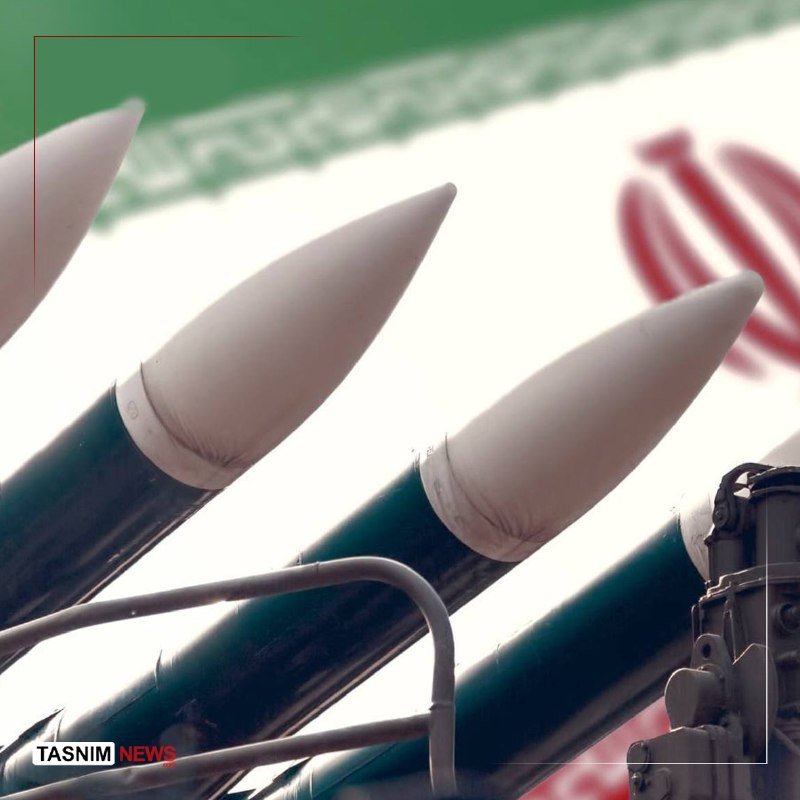
On 23 June 2026, when Iran's lead negotiator sat across from his American counterpart for the third time in eleven days, the table carried no document headed "missile programme." The published agenda listed nuclear limits, sanctions sequencing, and the unfreezing of Iranian assets held in third-country escrow. Tehran's missile stockpile, the Shahab family of medium-range ballistic systems, the Khorramshahr heavy lifters, the Emad and Sejjil solid-fuel designs, the newer Khorramshahr-4 variants that Israeli intelligence has spent two years tracking, was being discussed in the room but refused ink on the page. The arrangement, as both delegations described it on the record, was the same: the missiles stay off the table, and the table stays open.
That is the centre of gravity. The nuclear file is the public architecture of the current understanding between Washington and Tehran; the missile file is the boundary condition that determines whether the architecture holds. Every public statement of 23 June 2026, in Tehran, in Washington, in Rome, and in Tel Aviv, treated the missile scope as the disputed line. The wire carried three framings inside an hour, and the order in which they reached readers is itself diagnostic of how the negotiation is being sequenced.
The Iranian frame, first
Tehran's first move was definitional. Iran's foreign minister, Seyyed Abbas Araghchi, used an Ashura-appropriate message to insist that the negotiation covers only those subjects Iran agreed to put on the agenda, and that any expansion to missile capabilities is a separate file for a separate day. Araghchi's framing, delivered through Tasnim and Fars, was unambiguous: the missiles are a deterrent asset, they are not a bargaining chip, and the United States knows this. Iranian state media repeated the formulation across the day. The message functions as a contract term: the deal is the deal, the missile file is not in the deal, and reopening it kills the deal.
The American frame, second
Washington's public position is more elastic. President Donald Trump, speaking to reporters on 25 June, claimed that agricultural purchases of Iranian goods would begin "very soon" and at "very large" volume, a statement that Iranian negotiator Kazem Gharibabadi dismissed the same day as "fantasising" and as a US attempt to dictate how Tehran spends its own unfrozen reserves. The harder line came from Secretary of State Marco Rubio, who told France 24 on 25 June that Washington would not accept any deal allowing Tehran to impose fees on shipping through the Strait of Hormuz, warning it would cause "total chaos." Rubio's formulation is significant. The Strait of Hormuz is a missile-scope question in everything but name. Iran's ability to threaten, surveil, or fee-charge traffic through the choke point is a function of its coastal missile and fast-boat posture, not its enrichment capacity. By drawing a red line at Hormuz, the State Department has, in practice, drawn a red line around the missile file it says it will not discuss.
The Italian frame, third
Rome's reading, as carried by Corriere della Sera's Telegram channel on 23 June, is the most candid. Italian diplomats reportedly see the missile omission as a deliberate Western concession made under time pressure, and they expect the file to reopen within ninety days of any deal. The Italian framing treats the current understanding as a holding pattern, not a settlement, and treats the missile programme as the deferred principal, not a peripheral issue.
The Israeli frame, outside the room
Israel is not at the table. Israeli Defence Minister Israel Katz told Middle East Eye on 25 June that the "economic campaign against Iran" is a critical front for Israeli security, language calibrated to support a deal that squeezes Iranian revenue while leaving Israeli military options intact. Israeli commentary carried by the Jerusalem Post's Telegram channel the same day treated the missile omission as a known, accepted gap, and urged that the gap be closed by additional pressure, not by negotiation. The Israeli position is that the current understanding is a partial arrangement that defers, rather than resolves, the central threat.
The provocations at the seam
The seam between the negotiating room and the military file is being tested in real time. On the evening of 25 June, two Israeli airstrikes hit Beit Yahoun in southern Lebanon, with regional intelligence channels characterising the strikes as a violation of the US-Iran memorandum of understanding. Earlier in the day, the BBC's World service Telegram feed reported that the Trump administration had asked Congress for billions in supplemental funding tied to an Iran war scenario, a request that was already running into Republican scepticism on Capitol Hill. The pattern is familiar. The deal holds only as long as the provocations at the seam are not blamed on the principal parties, and only as long as neither side treats a provocation as a material breach.
What the record supports, and what it does not
Three things can be said on the evidence available. The missile programme is, as of 23 June 2026, off the agenda in the formal sense. The public statements of the Iranian, American, and Italian principals all confirm this. The missile programme is, in the operative sense, the most consequential variable in the durability of any deal, and all three governments are behaving as if they know it. The Strait of Hormuz red line drawn by Rubio is, in effect, a missile-scope position smuggled into a shipping-freedom statement. These are claims the wire record will support.
Three things cannot be said. Whether the missile file will be opened in a follow-on track, or shelved indefinitely, is not in the public record. Whether the Israeli airstrikes of 25 June were coordinated with Washington, or whether Washington was given the standard courtesy warning, is not in the public record. And whether the Trump administration's supplemental funding request represents contingency planning, leverage, or both, is not in the public record. Each of these questions is the kind of question that gets answered by what happens next, not by what has been said.
The filing to watch
The next inflection is the third-party escrow mechanics for the unfrozen Iranian assets, and the agricultural-purchase schedule the Trump administration has publicly committed to. If the escrow flows as described, the deal is being treated as live by all parties, and the missile file is being deferred. If the escrow stalls, or if the agricultural schedule slips past the summer, the missile file returns to the front of the queue, and the current understanding becomes a historical artefact measured in weeks rather than months. The watch is on the escrow, not on the negotiating room.
Sources
- Corriere della Sera Telegram: https://t.me/CorriereDellaSera
- The Jerusalem Post Telegram: https://t.me/The_Jerusalem_Post
- Epoch Times Telegram: https://t.me/epochtimes
- France 24, "US seeks Iran deal, but 'not at any price,' Rubio says," 25 June 2026: https://t.me/france24_en
- Press TV Telegram, "Iran rejects US plan to spend frozen assets on American farmers," 25 June 2026: https://t.me/presstv
- Tasnim News English Telegram, Araghchi Ashura statement, 25 June 2026: https://t.me/tasnimnews_en
- Fars News International Telegram, Trump "fantasising" framing, 25 June 2026: https://t.me/FarsNewsInt
- Middle East Eye, Israel Katz on the "economic campaign against Iran," 25 June 2026: https://x.com/middleeasteye
- BBC World Telegram, Trump Iran war funding request, 25 June 2026: https://t.me/BBCWorldoffl
- Regional intelligence Telegram, Israeli strikes on Beit Yahoun, 25 June 2026: https://t.me/rnintel
Desk note
Monexus treats the missile row as the centre of gravity of the current Iran-US arrangement rather than the nuclear file, because the public statements of 23 June 2026 made the missile scope the disputed boundary. Where the wire carried Iranian, US, and Italian framings in the same hour, the article above preserves the order in which those framings reached readers.
Follow the event.
These dated source records provide context. They do not retrospectively verify this archive article.
Separate what the nuclear watchdog reported from what it could not determine after the June 2025 strikes.