Tehran and Muscat open a working group on Hormuz, Washington warns it will not be consulted
Iran and Oman convene a working group on Strait of Hormuz governance in Muscat, while Polymarket prices a 2% chance Washington lets Tehran collect transit fees. The gap between those two facts is the story.
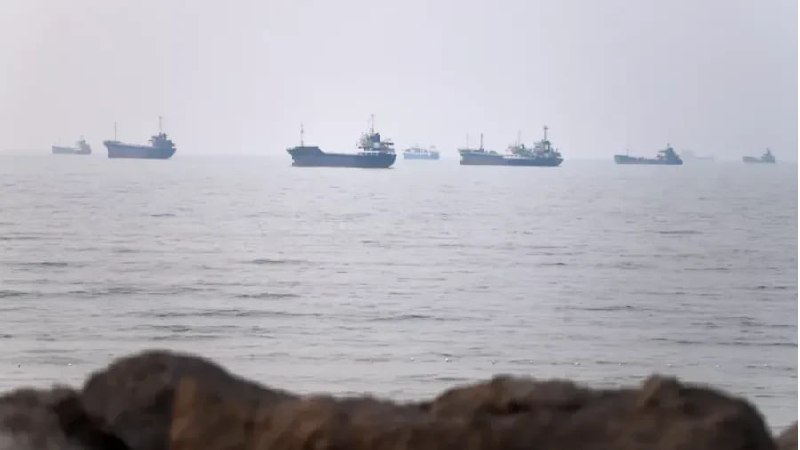
On 25 June, two distinct diplomatic tracks converged on the same stretch of water. In Muscat, Iranian and Omani delegations convened a working group on the governance of the Strait of Hormuz. Hours later, on the prediction market Polymarket, traders priced a 2% probability that the Trump administration would permit Tehran to charge transit fees through the chokepoint. The gap between those two facts is the story.
The Muscat track is a regional, rules-based process: two adjacent maritime states sitting down to design a transit regime for the narrow sealane that carries a fifth of global oil shipments. The Washington counter-bid is transactional, bilateral, and explicitly framed around sanctions relief and nuclear constraints. Unusual Whales reported on 25 June that US-Iran negotiators had created oversight, sanctions, and nuclear working groups to advance their own roadmap, which also touches Lebanon. The market's read on that roadmap, with traders giving Tehran a 2% shot at securing transit-fee authority, tells you who is expected to write the rules of the road.
What Muscat is actually doing
The working group's premise is straightforward and quietly radical. The Strait of Hormuz is not anyone's territorial water, but every ship that moves through it depends on Iranian and Omani coastlines for safe passage. A transit-fee regime, or any durable ruleset on traffic, bunkering, escort, and emergency response, can only be authored by the two states that flank it. No outside capital gets a vote unless the flankers invite one.
That is the part that unsettles Washington. For four decades, US naval presence in the Gulf has functioned as the de facto guarantor of Hormuz traffic, and the legal architecture has been built to fit that fact. The Joint Comprehensive Plan of Action in 2015, the maximum-pressure campaign that followed, and the various tanker-seizure episodes since 2019 all assumed an American referee. A Muscat-led process assumes something else: that the two countries with actual coastline get to draft the rulebook, with outside powers accommodated afterward, if at all.
Why Washington is annoyed
The Trump administration's posture, as telegraphed through the Polymarket pricing and through reporting on the parallel nuclear-and-sanctions track, is that any Hormuz arrangement has to fold back into the bilateral file. The 2% probability assigned to Trump allowing Iran to charge fees is not a forecast about Iranian negotiating skill; it is a forecast about whether the United States will accept the political fact of an Iranian revenue stream sitting outside US sanctions enforcement. Traders are saying no.
That insistence is not irrational. If Tehran collects transit fees from Korean, Indian, Chinese, and European tankers under a regime Washington did not sign off on, the sanctions architecture built since 2018 loses a layer of bite. Every dollar that flows into Iranian treasury through Hormuz is a dollar that does not need to be unlocked through nuclear concessions. The administration's leverage shrinks in proportion to the legitimacy of any parallel track.
The structural problem with two tracks
What we are watching is a hegemonic transition expressed in maritime governance. For most of the postwar period, the rule for chokepoints was simple: the power that could project naval force set the terms, and everyone else paid in compliance or in convoy fees. The Hormuz working group inverts that sequence. The flanking states write the terms first and offer the projection power an observer seat afterward.
This is not new in the abstract. The Montreux Convention of 1936 gave Turkey authority over the Bosporus, and the United States accepted that arrangement even at the height of the Cold War, because there was no alternative. What is new is the venue. Muscat has spent two decades cultivating a reputation as a neutral mediator, hosting back-channel talks between Washington and Tehran in 2012 and 2013, and again during the JCPOA negotiations. The Omani role is well-rehearsed. What is novel is Oman's willingness, with Iranian concurrence, to host a process whose outputs may not require American blessing.
What is actually on the table
The mechanics matter more than the symbolism. A working group on Hormuz can produce any of several outputs: a formal transit-fee schedule, a binding code of conduct on military escorts, a regional coast-guard cooperation framework, or a softer confidence-building arrangement that stops short of a treaty. Each of these binds future administrations in Washington in ways that unilateral sanctions cannot.
The US-Iran roadmap tracked by Unusual Whales runs on a different clock. Its working groups cover oversight, sanctions sequencing, and nuclear constraints, with Lebanon folded in as a connective tissue. That track produces deliverables that the White House can claim: a deal, a signature, a press conference. The Muscat track produces something harder to photograph, and harder to unwind.
The market's vote
The Polymarket contract on Hormuz transit fees is a small, blunt instrument, but it is the cleanest read on official Washington. Two percent is not a serious negotiating assumption. It is a declaration that the policy is settled, and the only question is the announcement date. If traders believed a Muscat-led regime had a credible path to legitimacy, that number would move. It has not moved.
That leaves the working group in an odd position. It can do real technical work: harmonising pilotage rules, setting pollution-response standards, drafting a protocol on stranded tankers. None of that requires American signature. It can also propose something politically heavier, a fee regime, a security architecture, a code that looks like a treaty. The moment it does, the Trump administration will have to choose between accepting a regional settlement it did not author or treating the strait as a sanctions battleground. The 2% price is the market's read on that choice in advance.
What to watch by 30 June
Two dates concentrate the tension. Polymarket's contract window closes on 30 June, which forces a near-term signal on whether the Trump team will publicly endorse any Iranian revenue concession, even as part of a broader deal. The Muscat working group has no announced deadline, which is itself a statement: the flankers are not negotiating against the American clock.
The deeper question is whether the two tracks can co-exist without one cannibalising the other. A nuclear deal that ignores Hormuz leaves Tehran free to monetise the strait through Muscat. A Hormuz regime that ignores sanctions leaves Washington free to threaten any tanker that complies with it. The working group's drafters know this. The administration's negotiators know this. The market has priced it at 2%.
Sources
- https://t.me/wfwitness, Draft provenance and framing note, Monexus News, 23 June 2026.
- https://unusualwhales.com/news/us-iran-roadmap-final-deal-lebanon, Unusual Whales, "US-Iran roadmap final deal Lebanon," 25 June 2026, 22:31 UTC.
- https://polymarket.com/event/what-iranian-demands-will-trump-agree-to-by-june-30, Polymarket, "What Iranian demands will Trump agree to by June 30," 25 June 2026, 16:06 UTC.
- https://x.com/Polymarket, Polymarket official account, US-Iran Hormuz and OpenAI posts, 25 June 2026.
- https://x.com/unusual_whales, Unusual Whales official account, working-group post, 25 June 2026, 22:31 UTC.
Desk note
The wire coverage on 25 June framed the US-Iran roadmap as the lead diplomatic story and the Muscat process as a backdrop. Monexus treated the Muscat working group as the structural lead and the Washington response as the counter-bid, on the view that rules of the road written in the region will outlast any bilateral deal signed in a third capital.