Iran and Oman move to formalise Strait of Hormuz management, setting up a regional coastal-state track
Tehran and Muscat agreed on 23 June 2026 to negotiate a bilateral framework for managing Hormuz navigation and to open a parallel track with neighbouring coastal states — a small procedural step that could reshape who sets the rules for the world's most consequential oil chokepoint.
Iranian Parliament Speaker Mohammad Bagher Ghalibaf arrived in Muscat on the morning of 23 June 2026 and was received by Omani Sultan Haitham bin Tariq. According to Iranian state news agency IRNA, the two sides agreed to launch formal negotiations on a bilateral framework for managing navigation through the Strait of Hormuz and to set up a joint committee to handle the technical and financial details. A parallel track, the agency reported, will bring neighbouring coastal states into the talks. The meeting, Iranian outlets said, is the operational follow-up to a framework dubbed "Minab 168," a reference to a port city on Iran's Hormuz coast and to the 168-kilometre-wide shipping lane that connects the Persian Gulf to the Gulf of Oman.
The Muscat meeting is procedural rather than dramatic — no treaty was signed, no fee schedule was published, and no third-party broker was named. But the choreography is unusual: Iran and Oman have chosen to negotiate chokepoint governance directly, in a region where the United States Fifth Fleet and a constellation of Gulf monarchies have historically set the maritime-security tempo. That choice, more than the substance on 23 June, is the story.
What was actually agreed
The headline of the day is narrow. IRNA, the official Iranian outlet, framed the outcome as three linked commitments: a bilateral agreement on Strait of Hormuz navigation management; a joint committee to handle costs and services; and a regional consultation process with coastal states. The Open Source Intel channel, summarising the same IRNA wire, added that the talks would cover "costs and services" — language that points to a fee-for-service arrangement, the kind of structure Iran has floated in various forms since 2019 and that Oman, as the Gulf's most active diplomatic interlocutor with Tehran, has historically been willing to host.
What the available reporting does not specify is the scope. The sources do not disclose whether the planned agreement addresses transit fees, pilotage, search-and-rescue coordination, pollution response, or rules of engagement for the Iranian Revolutionary Guard Corps navy, which has periodically seized commercial tankers in the Strait. The sources do not name the coastal states expected at the regional table, nor do they set a timeline. The Cradle, a Beirut-based outlet that has covered the Hormuz track closely, characterised the meeting as a step towards a more institutionalised arrangement, but stopped short of confirming any of the operational details.
The procedural modesty of the announcement is itself informative. Negotiations over the Strait have a long history of inflating in the press and contracting in practice. The cautious wording — "negotiate an agreement," "form a joint committee," "hold talks with regional coastal states" — is the language of officials who want to be seen moving without yet committing to a deal.
Why Oman, and why now
Oman's role is structural. Muscat has spent four decades cultivating a mediator identity: it accepted the Shah's overthrow in 1979, hosted the secret 2013 back channel between Iran and the United States that produced an interim nuclear deal, and maintained diplomatic relations with Tehran through periods when its Gulf Cooperation Council partners did not. Sultan Haitham bin Tariq, who succeeded the long-serving Sultan Qaboos in 2020, has continued that posture.
For Iran, an Omani-hosted process offers three things no other Gulf capital does: a sitting-down venue with an Arab monarch that does not require Tehran to first reconcile with Riyadh or Abu Dhabi; a channel that can be presented to Washington as confidence-building without requiring a direct Iran–US negotiation; and a working language of technical committees that allows Iranian negotiators to defer the harder political questions — sanctions, IRGC operations, the fate of seized tankers — to a later track. The Cradle's framing of the meeting as preparatory, rather than conclusive, is consistent with that reading.
The "Minab 168" label, reported by IRNA, is the kind of branding a negotiating team uses internally before a process is ready to be named publicly. Minab is a small port on the Iranian side of the Strait, and 168 is the lane's narrowest navigable width in kilometres. The name suggests the Iranian side has a written concept paper; the Omani side, by agreeing to host, has accepted that paper as a basis for discussion rather than dismissed it.
The structural frame: a chokepoint looking for a governor
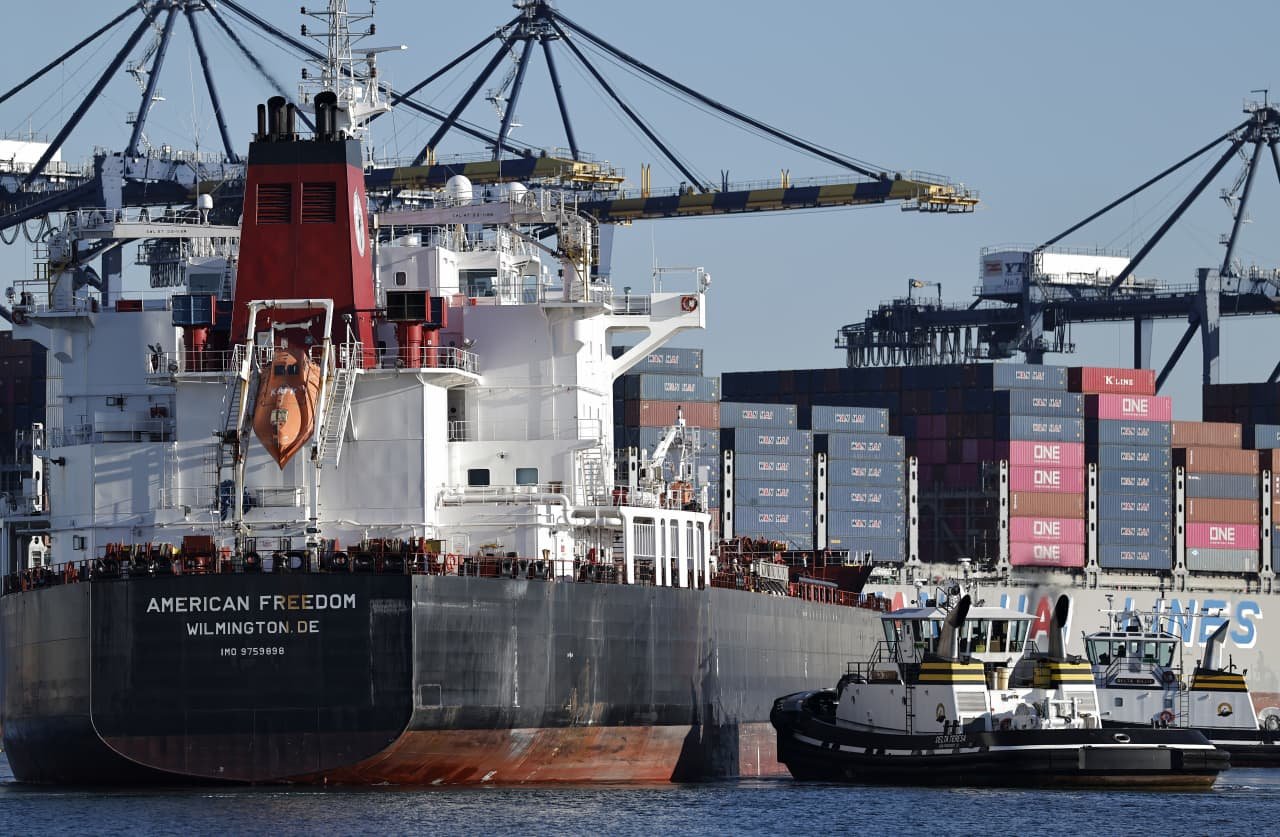
The Strait of Hormuz carries roughly a fifth of global seaborne oil and a significant share of liquefied natural gas. It is governed, in practice, by a patchwork: international maritime law, US naval presence, Iranian coastal authority, Omani territorial waters on the southern shore, and a standing GCC concern about Iranian behaviour that the Saudi–Iranian rapprochement of 2023 has only partially defused. There is no single treaty body that sets transit fees, arbitrates seizures, or coordinates pollution response. The closest analogue is the Montreux Convention for the Turkish Straits, written in 1936 and still the only codified regime for a major energy chokepoint — and Montreux took years of multilateral negotiation to lock in.
What the Muscat meeting gestures at is the early sketch of a Hormuz convention, negotiated bilaterally and then widened to coastal states. The pattern is familiar from energy diplomacy: two adjacent states with the strongest interest in a corridor set the template, then invite others in. The risk is also familiar. A bilateral Iran–Oman framework that excludes the GCC, the United States, and the broader International Maritime Organization would be read in Riyadh, Abu Dhabi and Washington as a unilateral Iranian move to monetise a global commons. A framework that included them would dilute fast.
The shipping industry, the absent party in all the available reporting, has the most to lose and the least voice. Insurers already price Hormuz transit at a premium that reflects Iranian behaviour, US sanctions exposure, and the absence of a clear liability regime. Any fee-for-service model that emerges from Muscat would, in practice, be a transfer from shipowners and charterers to whichever authority ends up collecting — and the question of who that authority is, and to whom it is accountable, is the substantive fight the joint committee will eventually have.
Stakes and what to watch
The immediate stakes are modest. No transit fee is in effect, no timetable has been published, and the sources do not name the members of the joint committee or the coastal-state list. The most that can be said on 23 June is that Iran and Oman have agreed to negotiate, and that the negotiation will be hosted in a capital with a long track record of hosting Iran-related talks without provoking a wider rupture.
The larger stakes turn on three questions the current reporting cannot answer. First, whether the United States treats the Muscat process as a parallel diplomatic track or as a challenge to its own maritime-security posture in the Gulf. The Fifth Fleet's headquarters are in Bahrain, and any Iranian effort to set transit fees is a direct claim on a space Washington considers its operational responsibility. Second, whether the GCC — and Saudi Arabia in particular — accepts an Oman-led process or insists on a GCC framework first. Third, whether the joint committee's technical remit is narrow (search-and-rescue, pollution, pilotage) or wide (transit fees, rules of engagement). The first is manageable; the second is geopolitical.
What is also worth flagging is what the available sourcing does not tell us. The four items from 23 June 2026 all trace back, directly or via aggregators, to Iranian state media and to channels sympathetic to the Iranian framing. There is no Omani state-news readout, no GCC comment, and no US or European reaction in the thread. The Cradle's reporting, while detailed, has a known editorial line on Iran and the Axis of Resistance. The IRNA wire, by contrast, is the official Iranian outlet and reflects the framing the Iranian negotiating team wants the meeting to carry. Readers should weigh the procedural facts — a meeting, an agreement to talk, a joint committee — generously, and the surrounding claims about regional scope and timetable, cautiously.
The honest summary is this: on 23 June 2026, the two countries with the longest shoreline on the world's most important oil chokepoint sat down in the Gulf's most experienced mediating capital and agreed to start drafting the kind of regime that ought, in a more orderly world, to have existed decades ago. Whether the draft becomes a treaty, a fee schedule, or another entry in the long file of Hormuz proposals that never made it past the press release, is a question for the next set of meetings.
This article builds on wire reporting from IRNA and aggregations carried by The Cradle and Open Source Intel. Monexus frames the meeting as a procedural step inside a long-running chokepoint-governance debate, rather than as a breakthrough, and flags the absence of Omani, GCC, and Western-wire readouts in the available sourcing.
Wire provenance
This editorial synthesis draws on the following public wire/social posts:
- https://t.me/Irna_en
- https://t.me/thecradlemedia
- https://t.me/TheCradleMedia
- https://t.me/osintlive
- https://en.wikipedia.org/wiki/Strait_of_Hormuz
- https://en.wikipedia.org/wiki/Montreux_Convention