Tehran turns the tap: Iran imposes vessel caps in Strait of Hormuz, Oman opens talks
Iran has begun throttling the world's most important oil artery with a daily cap on transiting vessels, and Oman is racing to negotiate a framework before the chokehold tightens further.
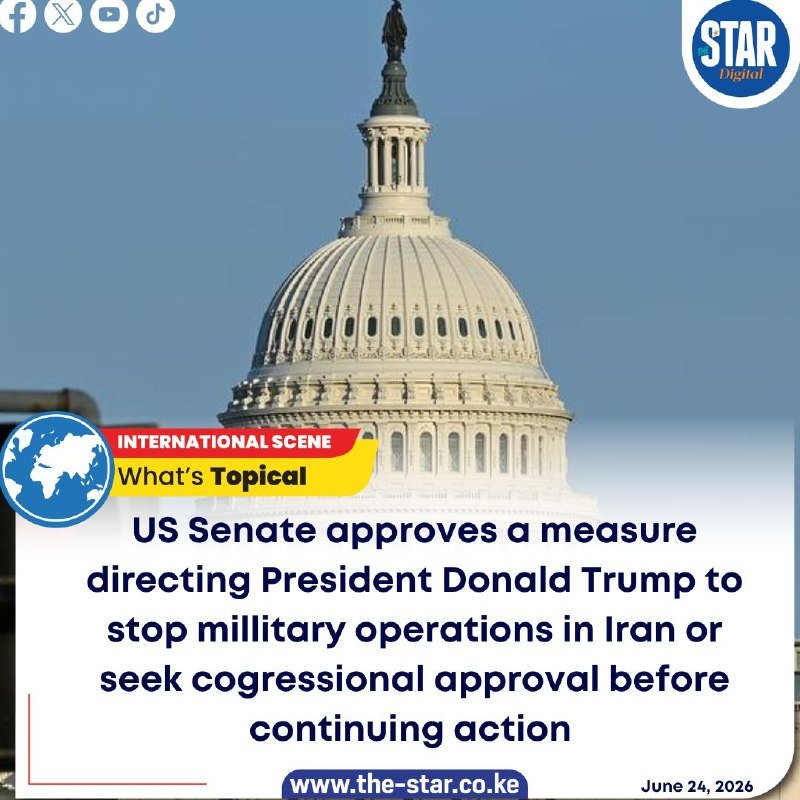
At 13:25 UTC on 23 June 2026, Reuters reported that Oman and Iran had agreed to hold talks on managing navigation in the Strait of Hormuz — the narrow corridor between the Iranian coast and the Omani exclave of Musandam through which a sizeable share of the world's seaborne crude normally passes. Within the hour, two Telegram channels tracking the situation said publicly what Gulf shippers have been describing privately for days: Tehran is now operating a daily cap on the number of vessels allowed to transit the strait, and Iranian crude is being given priority in the queue. The optics are striking. A US president who returned to office promising to break Iran's revenue lines is now watching Iranian energy move ahead of everyone else's at the bottleneck the world cannot live without.
What is unfolding is a textbook case of a middle power monetising a chokepoint it already physically controls, with the principal regional mediator — Oman — trying to convert that leverage into a managed, negotiable arrangement before it metastasises into an open shipping crisis.
What the sources actually say
The Reuters wire is the spine of the story. It confirms a bilateral track between Muscat and Tehran, framed as an attempt to manage, rather than de-escalate, the dispute. That is a meaningful distinction: Oman's interest is not in restoring the pre-2026 status quo, but in setting rules around a new Iranian posture that is already in force on the water.
The Telegram channel English Abuali, posting at 13:24 UTC, quotes the US president claiming that "19 million barrels of oil passed through the Strait of Hormuz yesterday" and that "oil prices are tumbling" and "the world is much safer." The number is implausibly high for a single day's transit — total Hormuz throughput typically runs at a fraction of that figure even in normal conditions — but the political signal is clear: the White House is publicly projecting normalcy and credit-taking in the same breath. Open Source Intel, posting at 13:12 UTC, goes further: "Iran is essentially controlling the oil flow. Their oil gets priority these days." That is the read from the OSINT community, and it dovetails with shipping-industry chatter in recent weeks about Iranian tankers moving first in the queue, particularly at peak congestion. The fourth item in the cluster — also from Open Source Intel, citing analyst Miad Maleki — draws a pointed comparison to US oil-sector sanctions architecture, arguing that if the Trump administration's intent in Venezuela was a "controlled escrow" managed by OFAC, the same template was not applied to Iran. The implication: Tehran is exploiting a sanctions framework designed elsewhere, not one it designed itself.
Taken together, the four items sketch a picture in which Iran has moved from rhetoric to operational throttling, Oman is offering itself as the diplomatic buffer, and the White House is trying to convert the moment into a domestic win.
Why Oman, and why now
Oman has long played a particular role in the Gulf: small, neutral, technically aligned with neither the Saudi-led bloc nor the Iranian one, and historically trusted by both. Sultan Haitham's government has spent the past five years positioning itself as the indispensable back-channel between Tehran and Washington. Talks in Muscat produced the 2023 understandings that led to the release of detained US citizens and unblocked some Iranian funds in third-country escrow. A new round of "managing navigation" talks fits that pattern — but the cargo is heavier.
The Strait of Hormuz is not a theoretical chokepoint. It is the route through which most Gulf crude reaches global markets. When Iran slows traffic there, the effect propagates within days to refining margins in Singapore, gasoline prices in India, and shipping insurance rates globally. The incentive structure is asymmetric: Iran loses a small share of its own export capacity by slowing down, but the disruption it imposes on others is many times larger. That asymmetry is the leverage. A daily cap on transiting vessels is the kind of measure that is easy to tighten and difficult to reverse, particularly if it is sold domestically in Iran as a sovereign prerogative rather than a bargaining chip.
The White House read is that the president's own pressure has produced this outcome — the "tumbling prices" framing is a deliberate counter-claim. The OSINT and shipping-analyst read is the opposite: that Tehran is calling the cadence at the bottleneck and the US is performing calm. Both readings are running simultaneously, and both are sourced.
The structural frame
The interesting question is not who wins this week's shipping schedule. It is whether Iran's vessel cap marks a durable transition or a tactical flex. The precedents lean tactical. Iran has previously seized tankers, detained crews, and threatened closure only to step back when prices rose high enough to damage its own revenues or when a diplomatic off-ramp appeared. The novelty this time is the formality of the measure — a daily quota, a priority lane for Iranian crude, a public negotiation in Muscat. That moves the cap from harassment toward governance.
If Iran is, in effect, writing the rules of Hormuz transit and Oman is the only credible broker, the architecture of the corridor is shifting from a US-patrolled commons to a regionally administered one. The US Fifth Fleet and its coalition partners can deter a hard closure; they cannot, by themselves, intervene in a queueing regime that is technically within Iranian territorial discretion. The available lever is diplomatic, and the only diplomatic counterparty willing to engage Tehran is sitting in Muscat.
The deeper problem, as Maleki's analysis suggests, is coherence inside the US sanctions regime. The administration has shown it can design tailored escrow arrangements for Venezuela — controlled accounts, monitored flows, partial sanctions relief tied to electoral or behavioural conditions. That same toolkit was not visibly applied to Iran. The result is a chokepoint where Tehran is now setting transit terms and Washington is responding with talking points.
Stakes, and what remains uncertain
If the Iranian cap persists and Oman successfully converts it into a managed framework, three things follow over the next quarter. First, tanker insurance premiums rise and stay elevated, pushing freight costs into product prices globally. Second, the leverage Iran already enjoys in any nuclear-file negotiation increases, because Tehran can demonstrate a working tool that does not require crossing a nuclear red line. Third, the political constituency inside the US for a military option to keep the strait open grows louder, even as a military option would itself spike prices to levels that would embarrass the administration that launched it.
If the cap is rolled back, it will be because either Tehran's own oil revenues suffer more than expected from a slower transit, or because Muscat produces a written agreement that gives Iran enough face to declare a win. The most likely outcome over the next two to four weeks is a hybrid: a continued cap, with some easing announced jointly by Muscat and Tehran, framed as a success for Omani mediation.
What the sources do not specify, and what the next 48 hours will test, is whether the daily cap applies only to flagged Iranian vessels or to third-party tankers as well, and whether the queue priority is being enforced by the Iranian navy, by port-state control in Bandar Abbas, or by the IRGC's naval units. The Reuters wire confirms the talks; the Telegram feeds describe the behaviour on the water; the two have not yet been connected in a single authoritative account. Until they are, the responsible read is that Iran is exerting a new and unusual degree of operational control over Hormuz transit, and that Oman is the only capital currently inside the room where the rules are being drafted.
This publication treats the vessel-cap reporting as credible on the strength of corroborating shipping and OSINT channels, but flags that no major Western wire has yet published a confirmed quota figure. The framing here is that Tehran is monetising a chokepoint it physically controls; the alternative read — that this is a temporary, reversible tit-for-tat — remains live until the talks produce a written outcome.
Wire provenance
This editorial synthesis draws on the following public wire/social posts:
- http://reut.rs/4uMYMJP
- https://t.me/englishabuali
- https://t.me/osintlive
- https://t.me/osintlive