Live Wire
09:52ZTASNIMNEWSQatar: We support the negotiations between Iran and the United StatesThe Ministry of Foreign Affairs of Qatar…09:52ZINDIANEXPRMonsoon update: Mumbai gets more rain, heatwave persists across Central India via The Indian Express https://…09:52ZINDIANEXPRNaresh Gujral duped of Rs 7.8 crore: Mule account holder nabbed, promised 5% cut via The Indian Express https…09:52ZINDIANEXPRAAP Gujarat leader Chaitar Vasava convicted in 2023 assault-extortion case via The Indian Express https://ift…09:52ZINDIANEXPRUPSC Mains Answer Practice — GS 3 : Questions on Ecologically Sensitive Area for Western Ghats and role of ag…09:52ZINDIANEXPRWhy doctors say heart, kidney and metabolic health mustn’t be treated separately anymore via The Indian Expre…09:52ZINDIANEXPRBengaluru PG owner dies after cricket bat assault; 2 students held via The Indian Express https://ift.tt/uqJg…09:52ZINDIANEXPRAmazon starts testing AI-powered Alexa+ in India ahead of wider rollout via The Indian Express https://ift.tt…
Markets
S&P 500735.26 1.23%Nasdaq26,167 1.32%Nasdaq 10030,347 0.19%Dow514.43 0.51%Nikkei93.07 4.03%China 5032.71 2.15%Europe86.78 1.67%DAX41.54 0.05%BTC$62,330 2.70%ETH$1,649 5.48%BNB$571.78 3.50%XRP$1.1 2.66%SOL$68.88 6.54%TRX$0.3295 0.31%HYPE$62.93 6.73%DOGE$0.079 5.62%RAIN$0.0158 9.60%LEO$9.57 0.12%QQQ$719.8 2.46%VOO$677.55 1.25%VTI$363.71 1.38%IWM$293.82 1.46%ARKK$76.13 2.93%HYG$79.8 0.18%Gold$377.75 1.78%Silver$56.47 4.14%WTI Crude$111.46 1.09%Brent$42.5 1.44%Nat Gas$11.71 0.51%Copper$37.72 2.81%EUR/USD1.1456 0.00%GBP/USD1.3249 0.00%USD/JPY161.78 0.00%USD/CNY6.7748 0.00%
CLOSEDNYSEopens in 3h 34m
The Monexus
Vol. I · No. 174
Tuesday, 23 June 2026
Saturday Ed.
Updated 09:55 UTC
  • UTC09:55
  • EDT05:55
  • GMT10:55
  • CET11:55
  • JST18:55
  • HKT17:55
← The MonexusOpinion

Tehran's $6 billion moment: what the Swiss meeting was actually about

Iran's foreign ministry used a Geneva press briefing to reframe the quadrilateral meeting as a working session, not a media event — and to put the onus for what happens next on Washington.

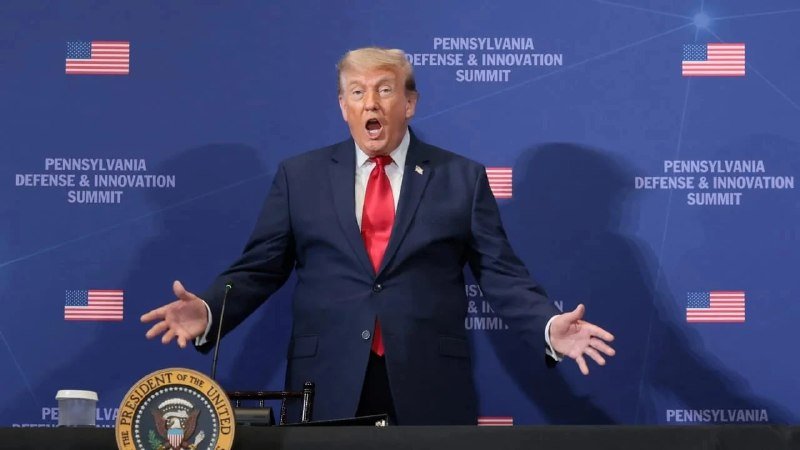
Iranian Foreign Ministry spokesperson addressing reporters after the quadrilateral meeting in Switzerland, 23 June 2026. Tasnim News

At 08:11 UTC on 23 June 2026, Iran's Foreign Ministry spokesperson used a televised briefing in Geneva to do what Iranian diplomacy has spent the better part of a year practising: turn a venue meant for headlines into a venue for leverage. The message was three sentences long and entirely deliberate. Tehran went to Switzerland to work, not to perform. The world, the spokesperson added, has already registered its opposition to American actions. And if Washington does not honour its side of any understanding reached, Tehran reserves the right to decide the fate of the released assets on its own terms.

The choreography is now familiar. The quadrilateral track — Iran, the United States, and two intermediaries meeting under Swiss facilitation — has become a recurring site where Iranian state media and Western wire reporting describe the same room differently. Tehran says implementation is on the table. Washington, in parallel reporting, describes the same session as a status check on a deal that may or may not survive. The Tasnim English wire framed the line bluntly: Survival: We will decide on the blocked property as it is in the best interest of the country.

What was actually on the table

The question underneath the press conference is narrower than the coverage suggests. It is not whether Iran and the United States are on the verge of a strategic settlement. They are not. It is whether a defined, dollar-denominated obligation — the release of frozen Iranian funds held in third-party jurisdictions under sanctions-monitoring arrangements — moves this week, next week, or stalls.

Iranian state media, via the Tasnim-affiliated Jahan Tasnim channel, reported at 08:29 UTC that a working group has been stood up specifically to monitor and implement the other party's obligations. The construction is revealing. In Iranian diplomatic grammar, "the other party" is almost always a single addressee, and the standing-up of a dedicated monitoring cell implies Tehran expects slippage, not compliance. Monitoring mechanisms, in this register, are not confidence-building measures. They are evidence-preservation tools for the moment the other side is accused of breach.

Why the media walkout mattered

The spokesperson devoted part of the briefing, at 08:10 UTC, to the absence of a press conference following the quadrilateral session and to the withdrawal of media from the room. The line — we had not gone to Switzerland for media and publicity work — is doing more work than it appears. It reframes the entire encounter as a working meeting whose outputs will be measured in implementation, not communiqués. That is a useful frame for Tehran for two reasons. First, it lowers the political cost of a session that produces no document: a non-paper is harder to attack than a signed text. Second, it allows Iran to claim, retroactively, that any Western characterisation of the meeting as "constructive" or "frustrating" is itself a media event that does not bind Tehran to anything.

Western reporting on the same episode, including scoops carried by Axios's Barak Ravid on parallel tracks, has tended to read these quadrilateral sessions through the lens of who blinked. The Iranian counter-frame insists the metric is implementation, not body language. Both frames are partly correct. The dispute is over which frame will be cited in three months if the funds do not move.

The structural reality underneath the rhetoric

Strip the press conference of its atmospherics and the underlying structure is straightforward. Iran holds claims on roughly six billion dollars of oil revenue held in restricted accounts, released in tranches under a 2023 arrangement and replenishment talks that have continued in pieces since. The funds are a hostage to behaviour on three fronts: nuclear limits, regional proxy management, and the detention of foreign nationals in Iranian custody. Washington holds the sanction-relief and disbursement authority. The intermediaries hold the channel. The two sides hold, between them, a long list of grievances about who has moved first and by how much.

The Iranian position, as articulated at 08:16 UTC, is the simple proposition that obligations are reciprocal: if the other party does not fulfil its commitments, it should not expect Iran to fulfil its commitments unilaterally. That formulation is the diplomatic equivalent of a prenuptial. It does not threaten to walk away. It threatens to stop going first.

What the next ten days will test

The working group announced this morning is, in practice, a clock. If funds are verified as released into usable accounts within the next reporting cycle, the track holds. If Tehran spends the next two weeks describing its expectations in detail rather than announcing movement, the track is effectively in suspension. Iranian state media coverage will be the leading indicator: Tasnim and PressTV, for all their rhetorical volume, do not normally describe a working group as "monitoring" unless they expect the monitoring to produce a public verdict.

The plausible alternative read of the same facts is more generous to the diplomacy. A quadrilateral session with no paper and a public exchange of position papers is consistent with a track that is alive and fragile rather than a track that is dead. Negotiators who expect to fail do not stand up monitoring cells. They also do not, typically, withdraw the press from the room. The Iranian decision to remove the cameras may simply reflect a judgment that the marginal value of a televised press conference was negative for the diplomacy itself. That is a reasonable judgment, and it does not require any of the more theatrical interpretations to hold.

What the source material does not resolve, and what this publication cannot determine from the available wire, is the dollar amount and disbursement schedule under active discussion. The figure most often cited in the broader reporting environment — approximately six billion dollars in restricted oil-revenue funds — is not specified in the items the desk reviewed for this article. Readers should treat the headline number as the background context, not as a sourced claim of this piece.

What can be said with confidence is that Tehran has chosen, for now, to keep the channel open while making clear that the cost of leaving it open is borne first by Washington. That is a position, not a breakthrough. It is, however, a position that has held for longer than most Western commentary on Iran expected it to, and the people watching the next ten days most closely are the ones least inclined to bet against its persistence.


Desk note: where Western wires led on the meeting's atmospherics, this piece follows Iranian state media's framing as a working session and reads the absence of a communiqué as a feature rather than a failure — a posture consistent with Monexus's coverage of reciprocity-based sanctions diplomacy since the 2023 arrangement.

Wire provenance

This editorial synthesis draws on the following public wire/social posts:

  • https://t.me/JahanTasnim
  • https://t.me/JahanTasnim
  • https://t.me/JahanTasnim
  • https://t.me/JahanTasnim
  • https://t.me/tasnimnews_en
© 2026 Monexus Media · reported from the wire