Tehran's red lines on the table: what the Iran-US quadrilateral in Geneva actually settled
Foreign Ministry spokesperson Esmail Baqaei drew firm lines after a four-hour Geneva meeting: missiles and defence are off the table, the Lebanon ceasefire is binding, and Tehran is still building a file on who helped attack it.
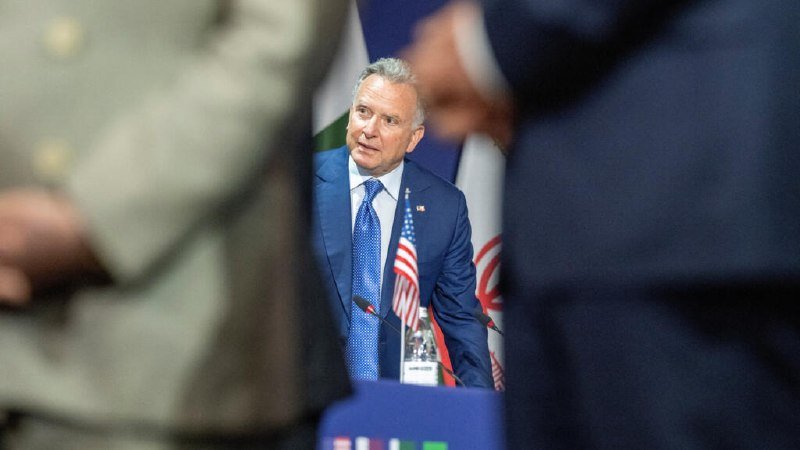
Foreign Ministry spokesperson Esmail Baqaei walked into his weekly press briefing in Tehran on the morning of 23 June 2026 with a familiar set of messages, and the timing was not accidental. Roughly eighteen hours earlier, on the afternoon of 22 June, he had sat across from a US delegation and two mediators in Geneva for what Iranian state media described as a quadrilateral meeting that ran about four hours. By 07:54 UTC, Fars News International was already publishing his line that Iran has "no plan to inspect the damaged facilities" struck during the recent war; by 08:04 UTC, the same Tasnim wire carried his warning that missiles and defence capabilities "will never be a subject of negotiations." The choreography was deliberate. Tehran wanted the world to read its positions before anyone read Washington's.
What the Geneva session actually settled is narrower than the framing on either side suggests. A working diplomatic channel exists, it lasted four hours, and the two mediators — the same pair who have shuttled between the capitals in recent months — kept it from collapsing. What it did not settle is the substance. Iran drew three red lines in a single briefing: no concession on missiles, no IAEA-style inspection of bombed sites, and no renegotiation of the Lebanon ceasefire that Baqaei described as an "integral part" of the memorandum of understanding. Each line is also a message to a domestic audience that watched Iranian cities burn two weeks ago.
The Geneva meeting, in Tehran's telling
The most detailed read-out came from Baqaei himself, distributed in near-real-time by Tasnim and Fars. The quadrilateral — Iran, the United States and two mediating states, identified in Iranian coverage as the same pair that have run the back-channel since spring — convened at around 15:00 local Geneva time on 22 June and ran roughly four hours. Tehran's framing is consistent across both wires: the meeting was substantive, not theatrical, and Iran did not attend to perform. "We had not gone to Switzerland for media and publicity work," Baqaei said, referring to the decision by Iranian media to withdraw from the press pool tied to the session. The line is a quiet rebuke of the Western reporting template that treats each round as a photo-op rather than a working meeting.
Baqaei also pushed back on a specific claim that had circulated in the hours before the briefing: that the Swiss-hosted talks had included a discussion of Iran's missile programme. "The issue of missiles and defence capabilities will never be a subject of negotiations," he said, in a formulation carried by Tasnim at 08:04 UTC. For a sanctions-weary Iranian public, that is not a negotiating position — it is a constitutional one. Missiles are the deterrent that survived the bombing.
The Lebanon file and the "integral" ceasefire
The second front Baqaei opened is the one most likely to be misread in Western wires. The cessation of hostilities in Lebanon, he said, is "one of the integral parts of the memorandum of understanding and the ceasefire." The phrasing matters. Tehran is signalling that any future deal in Geneva is layered on top of the Lebanon arrangement, not parallel to it. If the Israel-Hezbollah front is reopened, in Iranian framing, the entire architecture collapses — and with it the political cover Iran needs to keep talking to Washington at all.
This is also where the counter-narrative sharpens. Western reporting on the Lebanon track tends to treat the ceasefire as a discrete Israeli-Hezbollah file, brokered separately and held together by a UN mechanism and US guarantees. Tehran's framing treats it as a regional security instrument with Iranian fingerprints and Iranian interests. Both can be partly true. What is not in dispute is that Baqaei raised the file unprompted in his Geneva-day briefing, which means Tehran wants it on the record before the next round.
What Iran is not letting the IAEA see
The most under-covered line of the briefing is the one about the bombed sites. "We do not have a plan to inspect the damaged facilities by the Agency," Baqaei said, in the formulation carried by Fars at 07:54 UTC. The Agency is the International Atomic Energy Agency, and the damaged facilities are the sites struck during the twelve-day war. Iran's position is that the IAEA's mandate does not extend to facilities Iran considers damaged by an act of war rather than a safeguards question, and that access now is a sovereignty issue dressed up as a technical one.
This is also where Tehran is constructing a different evidentiary record. Baqaei said the Foreign Ministry is "pursuing the role of some countries in the attack on Iran" and that "we have enough evidence" — language carried by Tasnim at 08:02 UTC. Tehran is signalling that it intends to publish a file naming the third-party enablers of the strike package, a move that would put diplomatic distance between Washington and several of its regional partners. The file, when it lands, will be contested. But the announcement that it is being prepared is itself a negotiating instrument.
What remains genuinely uncertain
Three things are not in the public record and should not be asserted as fact. First, the identity of the two mediators: Iranian state media refers to them consistently but does not name them in these items, and the thread context does not fill the gap. Second, whether the Geneva session produced any written text at all. Baqaei's language describes positions held and lines drawn, but not a communique. Third, the state of the nuclear file proper. Baqaei spoke about the damaged sites and the IAEA's standing, not about enrichment levels or stockpile figures — and the source items do not contain numbers a reader could verify independently. The honest framing is that Geneva was a channel-management meeting, not a substantive round, and that the next data point will be whether the mediators can convert four hours of talking into a sequenced agenda.
Stakes
If the trajectory holds, the regional architecture splits into two tracks running in parallel: a US-Iran working channel that can absorb missile and enrichment tensions without breaking, and a Lebanon-Israel file that Tehran has now publicly tethered to it. The first track lowers the temperature; the second raises the cost of any Israeli move north. For Washington's partners in the Gulf, the Baqaei briefing is also a warning — that Tehran is preparing a public file on which states helped enable the strike, and that neutrality in the next round will be priced accordingly. For the IAEA, the message is sharper still: the bombed sites are not on the inspection calendar, and Iran's sovereign right to keep them off it is now a stated negotiating position, not an opening gambit.
This publication framed the Geneva read-out through Tehran's own wire — Tasnim and Fars — because those are the sources carrying the Iranian government's positions in real time. Where Western wires have characterised the same meeting as a stalemate or a publicity exercise, the underlying fact pattern is more interesting: a working channel held open for four hours, with both sides using the read-out phase to lock in red lines rather than to claim movement.
Wire provenance
This editorial synthesis draws on the following public wire/social posts:
- https://t.me/JahanTasnim
- https://t.me/FarsNewsInt
- https://t.me/FarsNewsInt
- https://t.me/JahanTasnim
- https://t.me/JahanTasnim
- https://t.me/JahanTasnim
- https://t.me/JahanTasnim
- https://t.me/JahanTasnim