Tehran's 60-Day Clock: What Baqaei's Working Group Actually Buys Iran
Iran's foreign minister says a working group now sits between Tehran and Washington, with the nuclear file and sanctions on a 60-day docket and Lebanon ceasefire language attached. The structure looks procedural; the politics are not.
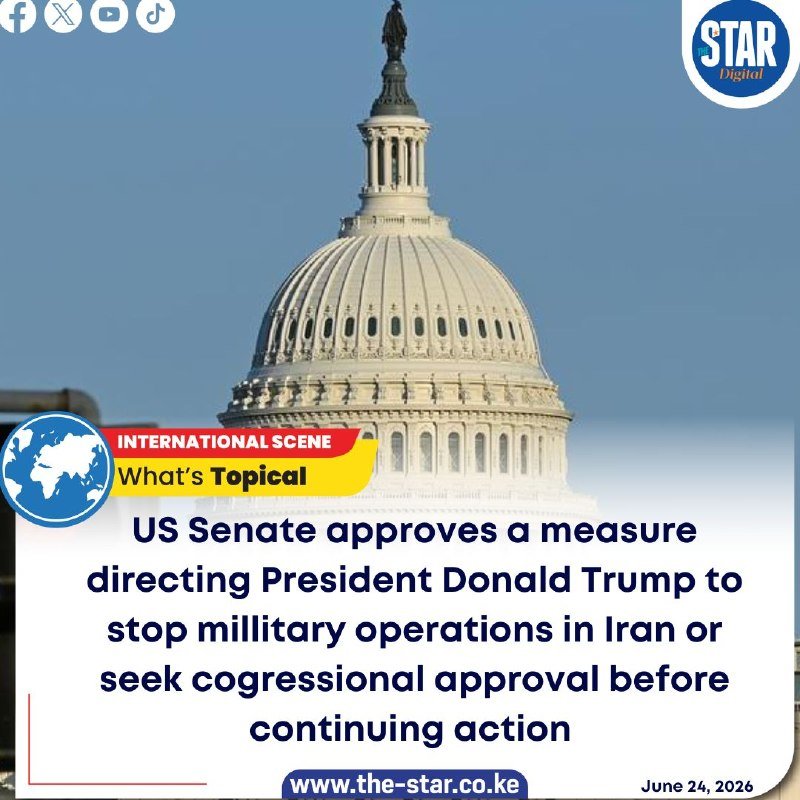
On 23 June 2026, Iran's foreign minister Abbas Baqaei told state-linked media that a "specialised working group" had been stood up to implement the provisions of a memorandum of understanding signed with the United States, and that the document binds the two sides to put the nuclear file and sanctions on the table within sixty days of signature. Reporting from Al-Alam Arabic and Tasnim, both carrying the minister's remarks in the same hour, frames the arrangement as procedural — calendars, committees, deliverables. That framing is convenient, and almost certainly incomplete. The same memorandum, Baqaei added in a separate bulletin carried by Al-Alam Arabic, codifies a US pledge to halt the war in Lebanon. A four-party meeting between Iran, the United States and two mediators ran for ninety minutes before US objections shelved it, according to Tasnim. Sixty days is, in other words, not a negotiating window. It is a fuse.
The thesis this publication holds: what is being signed is less a settlement than a managed interregnum. Both governments need the appearance of forward motion; neither is ready to pay the price of resolution.
What Baqaei actually announced
Three things, in sequence. First, a joint implementation cell — not a negotiating table, but a body charged with translating the MoU into administrative acts on both sides. Second, a hard sixty-day shelf life on the two hardest items: the nuclear question and the sanctions architecture. Third, a separate track that ties American behaviour on Lebanon to the same document, meaning that any escalation on the Israeli-Lebanese front inside the next two months is, on Tehran's reading, a violation of the very text the United States has just signed. Each of these is a procedural claim. Read together they amount to a constraint on Washington's freedom of movement.
Reporting from Al-Alam Arabic on 23 June 2026 at 08:20 UTC carries Baqaei directly: a working group has been formed, the nuclear file and sanctions are scheduled for discussion inside the sixty-day window from signature, and the cessation of the war in Lebanon is identified as a US commitment under the MoU. Tasnim's separate bulletin the same morning records that the quadrilateral format — Iran, the United States, and two mediators — did not survive Washington's posturing, and ran for only ninety minutes before being suspended.
The counter-read from inside the region
Coverage that leans Atlanticist has spent the last week describing this file as a sanctions-for-concessions swap, with enrichment caps and IAEA access as the headline deliverables. The Iranian state-aligned framing — Tasnim, Al-Alam Arabic, the foreign minister's own statements — describes the same document as a political instrument that recognises Iranian equities: the file is not merely a list of demands against Tehran, but a two-sided ledger in which Lebanon, sanctions relief and the timing of nuclear diplomacy are co-equal. The Tasnim report on the failed quadrilateral underlines the point. Washington, on that account, was unwilling to sit in a room with the two mediators for the duration of a working session; that unwillingness is itself data.
There is a third reading worth taking seriously. A sixty-day horizon with a built-in complaint mechanism is, structurally, exactly the architecture one side would build if it expected the other side to defect inside the window. The clock is not a confidence-building measure. It is an evidence-gathering device.
Structural frame
What is happening here is not unusual in the long history of US-Iran diplomacy. It is unusual in its combination of three features: a public timetable, an explicit linkage to a third theatre (Lebanon), and a working-group mechanism rather than direct principals' talks. The structural effect is to push the difficult decisions off the bilateral track and into a bureaucratic process that produces paper. Paper is what governments that cannot yet agree need. It is also what governments that intend to walk away later produce first.
The asymmetry of exposure matters. Tehran is the party under primary sanctions pressure and the party whose regional allies are under fire in Lebanon; Washington is the party with the wider margin of error and the wider menu of next moves. The MoU, on the text Baqaei describes, binds the side with fewer degrees of freedom less than it binds the side with more. That is why the sixty-day clock matters: at the end of it, one side either delivers or is in default, and the public ledger of who did what is on the table.
Stakes and the next sixty days
Inside the window, three outcomes are plausible. The first is a quiet extension by mutual acquiescence, with the working group producing enough procedural output to justify another MoU on top of the MoU. The second is an Iranian decision to treat US behaviour on Lebanon as the test case, and to surface a complaint inside the sixty days if the kinetic situation there deteriorates. The third is a US decision that the working group has served its domestic-political purpose, declaration of Iranian non-compliance, and a return to the escalatory baseline.
The losing party, on the most likely scenario, is the Lebanese one. A document that names Lebanon as a deliverable but routes implementation through a Tehran-Washington cell gives Beirut neither agency nor timetable of its own. The winning party is whichever government can credibly claim at the end of the window that the other one failed to perform. The sources do not specify which side's filing cabinet is more prepared for that argument; that is the open variable inside this MoU.
What remains contested
The two threads published on the morning of 23 June 2026 agree on the existence of the working group, the sixty-day clock and the Lebanon linkage. They diverge on tone — Tasnim emphasises the collapsed quadrilateral, Al-Alam Arabic emphasises the procedural machinery — and they do not establish the text of the memorandum itself. The published reporting does not name the two mediators, does not specify whether enrichment or IAEA access is on the working group's agenda, and does not confirm the MoU's signature date. Any of those gaps could matter inside the window. For now, the clock is the only fact both sides have agreed to share.
This piece led with Iranian state-aligned sources because the news of the morning originated there. Where Western-wire confirmation of the MoU text emerges, this desk will update; the structural argument does not depend on which briefing room produces the cleanest transcript.
Wire provenance
This editorial synthesis draws on the following public wire/social posts:
- https://t.me/alalamarabic
- https://t.me/alalamarabic
- https://t.me/alalamarabic
- https://t.me/JahanTasnim
Follow the event.
These dated source records provide context. They do not retrospectively verify this archive article.
Separate what the nuclear watchdog reported from what it could not determine after the June 2025 strikes.