Lavrov's 'Fuhrer' slur is not diplomacy — it is the cover for a war that has run out of language
Moscow's top diplomat reached for Nazi vocabulary to describe Ukraine's elected president, then asked Washington for a meeting. The contradiction is the story.
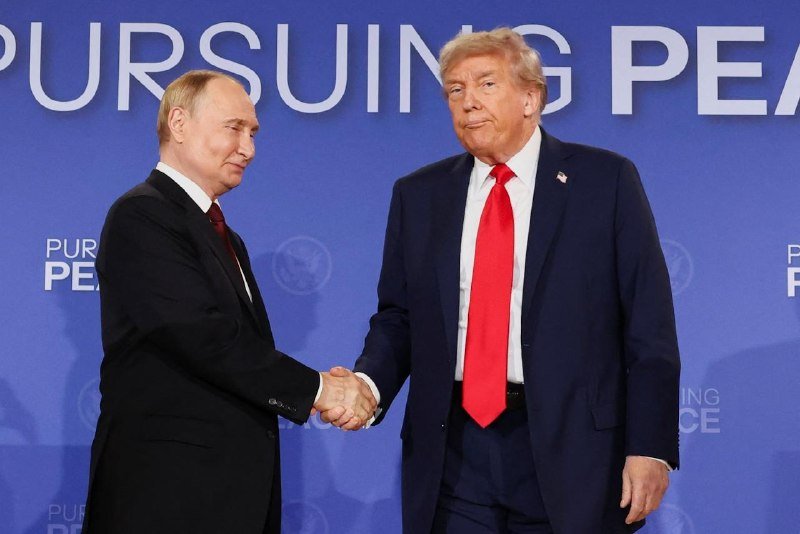
On the morning of 23 June 2026, Russian Foreign Minister Sergei Lavrov reached for the most radioactive word in the European political lexicon. Speaking to journalists in Moscow, he described President Volodymyr Zelensky of Ukraine as a "Fuhrer," then doubled down — "he really is the Fuhrer," he added, in remarks carried by the @SprinterPress account and aggregated by the Kyiv Post official Telegram channel on 09:48 UTC. Within the same news cycle, Lavrov said Moscow was ready to resume "serious" peace talks, and floated the suspicion that the recent Alaska meeting with Washington had been designed "to buy time for Kiev to arm itself." The contradiction is the story. A negotiator does not call the other side's leader a Nazi and then ask for a date.
This is not diplomacy failing. It is diplomacy performing a different function: signalling to domestic audiences, to the Russian security elite, and to Western negotiators that Moscow's maximalist position has not moved by a millimetre. The insult and the offer are two clauses of the same sentence.
The word is the message
Nazi-comparison rhetoric from the Kremlin is not new. It has been a stock device since at least 2014, and it accelerated sharply after February 2022. But there is a hierarchy inside that repertoire. "Nazi" as a generic descriptor for Ukrainian governance is one tier. "Fuhrer" — the German word the regime has spent eighty years treating as the worst insult available in any language — applied to a Jewish head of state whose relatives were killed in the Holocaust, is another. The choice tells you which register the Russian foreign ministry is currently trying to set. It is the register of dehumanisation, not negotiation. The accompanying "to hell with it!" interjection, again circulated by @SprinterPress on 23 June at 10:10 and 10:11 UTC, is the punctuation mark: this is performance, not policy paper.
The Alaska overhang
Lavrov's other substantive claim is that the Alaska meeting was a delaying tactic — a way for Washington to keep Kyiv armed while pretending to mediate. The framing serves two audiences. For Russian state media, it confirms a long-running line: that the United States is not a serious broker but a co-belligerent. For Western capitals, it is a softer message: don't be surprised if Moscow walks. The Kyiv Post Telegram account, citing Lavrov directly on 09:48 UTC, noted he does not want to "believe" the Alaska session was a ruse — the careful, almost wounded phrasing of a man who knows the line is contestable. He is leaving himself the option of returning to the table without owning the contradiction.
What the word does to the table
Naming an elected head of state a Fuhrer is not a colour choice. It forecloses the only framework under which a sovereign Ukraine could accept any settlement: recognition. You cannot ask a government to sign documents with a counterpart you have formally compared to the most genocidal regime in modern history. By the same token, it makes it politically impossible for European leaders — and very expensive for American ones — to be seen pressing Zelensky toward a deal with a man who just used that word about him. The insult, in other words, is itself a negotiating posture: it widens the diplomatic space for Russia by shrinking the space for compromise on the Ukrainian side.
Stakes and what we do not yet know
If the pattern continues, expect a familiar sequence: rhetorical escalation, a week of bellicose state-media coverage, then a managed de-escalation ahead of a planned contact. The open question is whether Washington, having spent political capital on the Alaska process, treats Lavrov's language as breaking a tacit decorum — or as a price of doing business. The sources available on 23 June do not specify the State Department's read. They do not specify whether Ukrainian negotiators were formally notified in advance, or whether the EU foreign-policy arm has issued a response. What they show, plainly, is that Moscow believes it can ask for a meeting and call the other side a Nazi in the same press conference — and that the assumption of impunity is now the working baseline of the Kremlin's diplomatic style.
Wire provenance
This editorial synthesis draws on the following public wire/social posts:
- https://t.me/Kyivpost_official
- https://t.me/noel_reports
Follow the event.
These dated source records provide context. They do not retrospectively verify this archive article.
A dated voting record is evidence of one decision. Use the original UN record before turning it into an alignment label.
Visual explainer · historical vote of 2022-03-02 →