The Last Tally: How Messi Reshaped the World Cup’s Scoring Record
A brace against Austria at the 2026 World Cup took Lionel Messi past the tournament’s all-time goalscoring mark — and reframed what a 39-year-old’s role in elite football can look like.
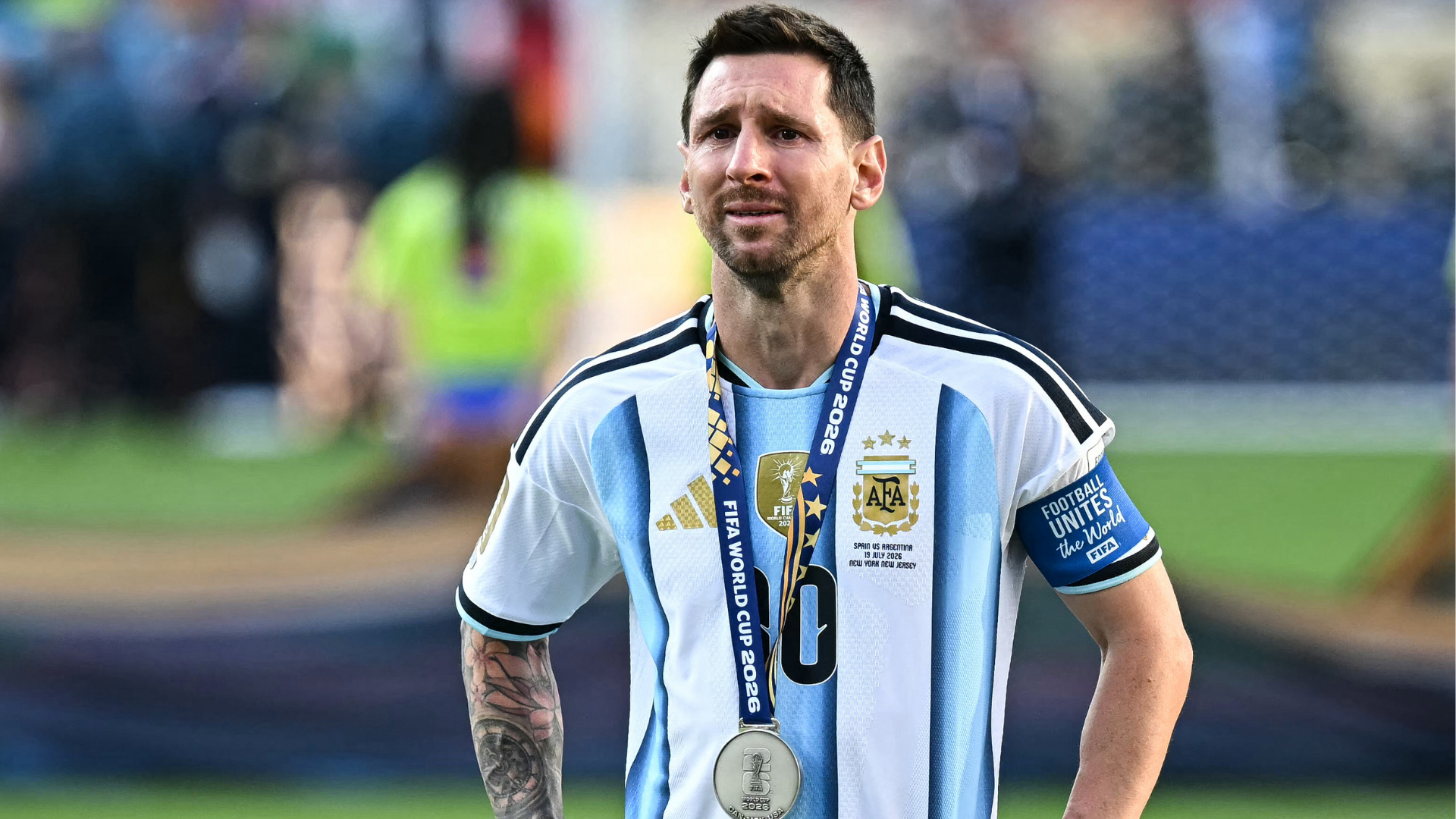
On the evening of 22 June 2026, in the United States, an Argentine forward tucked the ball past an Austrian goalkeeper and did something that had seemed, for two decades, almost structurally impossible: he became the World Cup’s all-time leading goalscorer. Al Jazeera English’s breaking-news account, posted to its global channel at 01:16 UTC on 23 June, recorded the moment in spare terms — "Lionel Messi scores brace as Argentina beat Austria 2–0 at World Cup 2026" — but the framing of the surrounding coverage was anything but spare. Within minutes, the same broadcaster had run a separate piece declaring Messi "the World Cup’s all-time top goalscorer," with the tally now standing at 17 and 18 tournament goals. A prediction market account on X mirrored the consensus at 18:09 UTC the previous day: "NEW: Lionel Messi officially becomes the all-time leading World Cup scorer." The record was not a footnote. It was the story.
What the brace settled, more than the mathematics, is the question of what elite ageing looks like at a World Cup. The conventional wisdom inside football is that a forward past his physical peak becomes a gravitational organiser at most — a passer, a screen, a player whose value is measured in the chances he creates for others. Messi, at 39, is not playing that role. He is finishing. That distinction matters for how the rest of this tournament, and the next, is going to be covered.
A brace, a record, and what the line-up tells us
Argentina’s group-stage fixture against Austria was not, on paper, a glamour tie. Austria arrived as a disciplined, defensively organised European side, the sort of opponent a top seed schedules to bank points before the knockout rounds. The 2–0 result, reported by Al Jazeera at 01:16 UTC, was a working win — clean sheet, two goals, three points — but the manner of both goals is the part that will dominate the next 48 hours of coverage. Messi took them himself. He did not play provider; he played scorer.
Argentina’s head coach Lionel Scaloni, in remarks carried by Al Jazeera’s longer report at 03:47 UTC on 23 June, framed the captain’s contribution in team-architecture terms rather than individual-accolade terms. Scaloni has spent his tenure building what the report described as "an ecosystem around Messi," a phrase that does more analytical work than it first appears. A traditional Argentina team is built around a No. 9 or a No. 10 as a focal point. An ecosystem, by contrast, is a system designed to maximise the output of one player without concentrating the ball with him. That Messi can both anchor such a system and still finish it himself is the tactical point Scaloni was making, even if the headline was about the record.
The second-order read is that Argentina are no longer managing a superstar. They are managing a finisher who happens to be the captain, in a team that has internalised his movement patterns so completely that the goals look like releases rather than interventions. That is a different kind of problem for opposition defenders than the one they prepared for.
The counter-narrative: what a record does and does not prove
Records are seductive, and the temptation to treat a goalscoring milestone as a verdict on greatness is the default mode of tournament journalism. The counter-narrative, which deserves explicit airtime, runs the other way.
A goalscoring record measures frequency of finishing, not the difficulty of finishes, the quality of service, or the stage at which the goals were scored. The previous benchmark, set by Germany’s Miroslav Klose across four tournaments between 2002 and 2014, included a higher proportion of knockout-stage goals than Messi’s distribution. Klose’s record was built against a wider spread of opponents, several of them elite, and at a period when international football’s tactical variety was arguably narrower. The structural conditions matter.
There is also a longevity argument running in the other direction. The 2026 tournament is being played in the United States, with expanded squad sizes and a match calendar that has become, over two decades, more accommodating to veteran players than the congested 1990s and 2000s ever were. Messi is fit to play at 39 because sports science, nutrition, and recovery protocols have extended the careers of top-tier players. That is a structural shift, not a personal miracle. To credit the record entirely to the individual obscures the platform underneath him.
The honest framing is that Messi has now separated himself from the field by a margin that no longer needs a counter-narrative to make sense. He has played in five World Cups. He has scored at every one. He has scored in group stages and knockouts. The longevity claim is itself a record. The argument that the record is "only" about counting is true and beside the point.
Structural frame: a tournament that keeps finding him
Look past the celebration and the structural pattern is plain. International football, at the elite level, is a tournament of attrition. Squads shrink through injury, suspension, and the cumulative wear of four games in eleven days. The teams that win the World Cup are usually the ones whose best players are still standing in the semi-final. Messi has now done that five times — a feat the sport has not previously produced. Most great forwards peak in one or two tournaments; a smaller set peaks across three; almost none cross the four-tournament line and remain a top-three finisher in the fifth.
What this tells us about the structure of the 2026 tournament is that the field has been built to extend careers. The expanded format, the larger squad sizes, the rest-day protocols, and the commercial interest in keeping marquee players on view for as long as possible all push in the same direction. Argentina’s coaching staff have made a deliberate bet on managing Messi’s minutes within that structure — starting him selectively, withdrawing him in games that are functionally over — so that he arrives at the sharp end of the competition with full legs. So far, the bet has paid.
The economic subtext is worth naming. A World Cup in which Messi, the sport’s most bankable name, plays through to the quarter-finals is a World Cup that broadcasters, sponsors, and host-city tourism boards have priced in. The structural alignment between his individual incentive (one more record, one more run) and the tournament’s commercial incentive (one more marketable match) is unusually clean. The two do not need to be in tension to be visible.
The forward view: what the record changes and what it does not
The remaining question is whether the record changes the way this Argentina team is approached by the rest of the field. The conventional response to a team with a single high-volume finisher is to overcommit defensively against that finisher, accept a low share of possession, and try to win the game on a set piece or a counter. That approach worked against a younger Messi; it is less likely to work against this Messi, whose assist volume in the group stage has been high. The structural read of the brace against Austria is that the goals were taken at moments when Austria’s defence had decided, on balance, to live with Messi shooting from distance. Each goal is a price for that decision. As the knockout rounds begin, that price is going to be re-priced by every scouting department that watched the match.
The other forward-looking point concerns the squad around him. Argentina’s supporting cast — the Julián Álvarez–style pressers, the late-arriving midfield runners, the full-backs who have learned to invert into the half-space — is now mature enough to absorb the attention that a Messi double-team will create. The team’s ceiling is no longer a function of his individual ceiling. It is a function of how many of those supporting players are firing on the same night. The record, in that sense, is a floor-setter rather than a ceiling-marker.
Stakes: legacy, longevity, and the bracket
If Argentina are eliminated in the round of 16, the record will be remembered as a milestone. If they reach the semi-final, it will be remembered as the launchpad. If they win the tournament, the question of Messi’s standing in the all-time pantheon — already settled in the court of public opinion — will become, briefly, a settled question in the court of football history as well.
The stakes for the rest of the field are equally concrete. A team that draws Argentina in the knockout rounds is now drawing a side whose captain has scored 18 World Cup goals and shows no sign of slowing. The information asymmetry that usually favours the underdog in a knockout tie is, this tournament, unusually compressed. Argentina have shown their hand. There is no longer a question of what the system around Messi looks like; the system has been on television. The remaining question is whether any team in the bracket has a counter for it.
On the evidence of the group stage, the answer is not yet. The Austrian performance, taken on its own, was a routine win. Taken as a data point in a five-tournament arc, it is the moment at which a record stopped being a question and started being a fact.
How Monexus framed this: the wire cycle on 22–23 June treated the brace primarily as a record-breaking event, with Scaloni’s tactical remarks as supporting colour. This piece treats the record as a function of Argentina’s structural management of a 39-year-old finisher inside an expanded tournament format — and reads the brace, accordingly, as a marker of the system rather than as a personal verdict.
Wire provenance
This editorial synthesis draws on the following public wire/social posts:
- https://t.me/aljazeeraglobal
- https://x.com/polymarket/status/